CM Bhupendra Patel Hails PM Modi's Historic New Zealand Visit

Synopsis
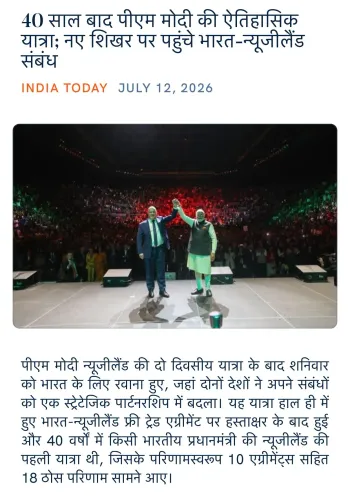
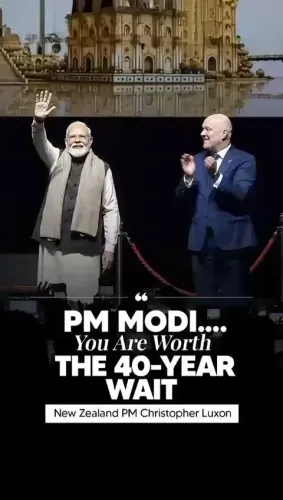
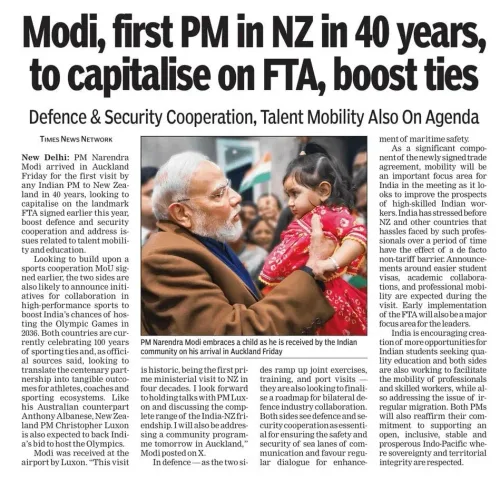
Gujarat Chief Minister Bhupendra Patel has lauded Prime Minister Narendra Modi's visit to New Zealand — the first in over four decades — as a historic milestone that deepens people-to-people ties, strategic cooperation, and trade prospects between the two democracies.
Key Takeaways
Gujarat CM Bhupendra Patel publicly praised PM Narendra Modi 's visit to New Zealand on 12 July 2026 .
The visit is the first by an Indian Prime Minister to New Zealand in over four decades .
Patel highlighted stronger people-to-people ties , strategic cooperation, and a shared vision as key outcomes.
India and New Zealand have been negotiating a Comprehensive Economic Partnership Agreement (CEPA) since 2010, with renewed rounds after 2016.
The visit aligns with India's broader Indo-Pacific outreach strategy toward Pacific democracies.
Follow-up defence, education MoUs and trade talks are anticipated in 2026-27 .
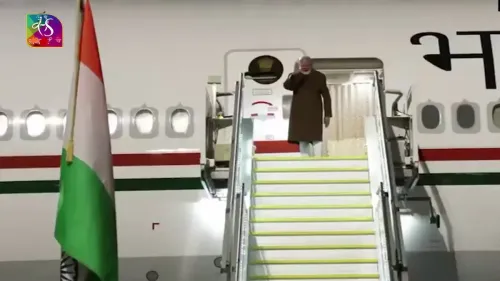
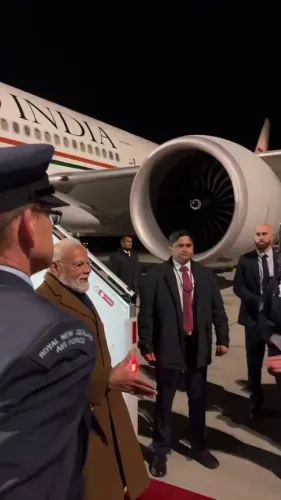
Gujarat Chief Minister Bhupendra Patel on Sunday, 12 July 2026 praised Prime Minister Narendra Modi's visit to New Zealand — the first by an Indian Prime Minister in over four decades — calling it a landmark moment that has brought the two democracies closer through people-to-people ties, strategic cooperation, and a shared vision for the future.
Context
Patel, writing on X, described the visit as yielding 'historic outcomes' driven by 'heartfelt public affection' for the Prime Minister. The post underscores the significance of the visit as a diplomatic milestone, noting that no Indian Prime Minister had made an official trip to New Zealand in more than four decades before this visit. The warm reception Modi received from the Indian diaspora and the New Zealand government alike has been widely noted across political circles.
India and New Zealand share longstanding ties rooted in migration, education, and agricultural trade. The two nations are fellow democracies with a growing convergence of interests across the Indo-Pacific region, making high-level engagement increasingly strategic rather than merely ceremonial.
Policy Backdrop
The visit fits into India's broader Indo-Pacific outreach, which has seen New Delhi steadily deepen engagement with Pacific democracies over the past decade. Bilateral trade negotiations — including discussions toward a Comprehensive Economic Partnership Agreement (CEPA) that began as far back as 2010 and saw renewed momentum after 2016 — have long been a pillar of the relationship awaiting a decisive push.
High-level visits of this nature typically serve as catalysts for progress on pending agreements in areas such as education, defence dialogue, and trade diversification. The Modi visit, coming after such a prolonged gap, signals a deliberate elevation of the bilateral relationship as part of India's wider diplomatic recalibration toward the Pacific.
Stakeholders and Impact
The Indian diaspora in New Zealand — one of the country's fastest-growing communities — stands to benefit most immediately from stronger people-to-people frameworks, including potential easing of mobility and education pathways. Trade negotiators on both sides are expected to use the political momentum generated by the visit to accelerate stalled economic discussions.
For Gujarat, a state with a significant diaspora presence in New Zealand and deep roots in global trade, Chief Minister Patel's public endorsement of the visit also carries a domestic political dimension — reinforcing the BJP's narrative of proactive, globally respected leadership under Modi.
What's Next
Diplomatic observers will watch closely for follow-up action in the form of defence or education memoranda of understanding, as well as the next formal round of India-New Zealand trade talks, both of which are anticipated in the 2026-27 period. The visit has raised expectations that the long-pending CEPA negotiations could see a meaningful breakthrough in the months ahead.
If the political goodwill generated by this historic trip translates into concrete agreements, it could mark the beginning of a substantially upgraded bilateral partnership — one that positions India and New Zealand as key partners in a rules-based Indo-Pacific order.
Point of View
Reinforcing the BJP's brand of assertive global diplomacy. The framing of 'historic outcomes' and 'heartfelt public affection' is carefully chosen to personalise Modi's diplomatic record ahead of what could be a busy bilateral calendar. More substantively, the visit breaks a four-decade hiatus in India-New Zealand prime ministerial engagement, and the pressure is now on trade negotiators to convert political goodwill into a CEPA breakthrough. If that happens, the Modi visit will be remembered not just as symbolic but as the inflection point in a relationship long underperforming its potential.
NationPress
11 Oct 2026
Frequently Asked Questions
When did PM Modi visit New Zealand?
PM Narendra Modi visited New Zealand in July 2026, making it the first visit by an Indian Prime Minister to the country in over four decades.
What did Gujarat CM Bhupendra Patel say about Modi's New Zealand visit?
Gujarat CM Bhupendra Patel praised the visit as a landmark moment that brought the two democracies closer through people-to-people ties, strategic cooperation, and a shared vision for the future.
What is the India-New Zealand CEPA?
The India-New Zealand Comprehensive Economic Partnership Agreement (CEPA) is a proposed free trade deal that has been under negotiation since 2010, with renewed rounds after 2016, aimed at boosting bilateral trade and investment.
Why is Modi's New Zealand visit historically significant?
No Indian Prime Minister had visited New Zealand for more than four decades before this trip, making it a rare and symbolically important diplomatic engagement that signals India's elevated focus on the Indo-Pacific region.
What are the expected outcomes of the India-New Zealand bilateral visit?
Diplomatic observers expect follow-up defence and education memoranda of understanding, along with a fresh round of trade talks, potentially including progress on the long-pending CEPA, in the 2026-27 period.