CM Rekha Gupta: Centre Approves ₹1,647 Cr for 28 Delhi Projects
Synopsis
Delhi Chief Minister Rekha Gupta announced on 12 July 2026 that the Centre has approved ₹1,647 crore for 28 infrastructure projects — including metro expansion, Barapulla Corridor and EV stations — and granted Delhi an additional ₹756 crore performance incentive for capital expenditure excellence.
Key Takeaways
The Central government has approved ₹1,647 crore for 28 infrastructure projects in Delhi .
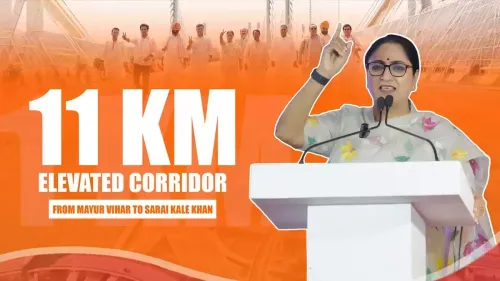
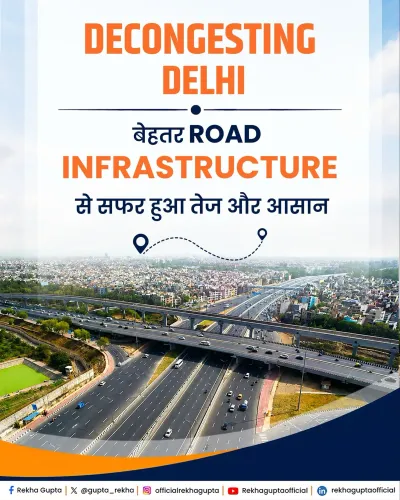
Projects include metro expansion , the Barapulla Elevated Corridor , the Karawal Nagar Flyover , and EV charging stations .
Delhi government has received an additional ₹756 crore performance incentive for outstanding capital expenditure utilisation.
The incentive framework was introduced in Union Budgets from 2022 onwards to reward productive public spending by states and the national capital.
The announcement was made by CM Rekha Gupta on 12 July 2026 under the hashtag #ViksitDelhi .
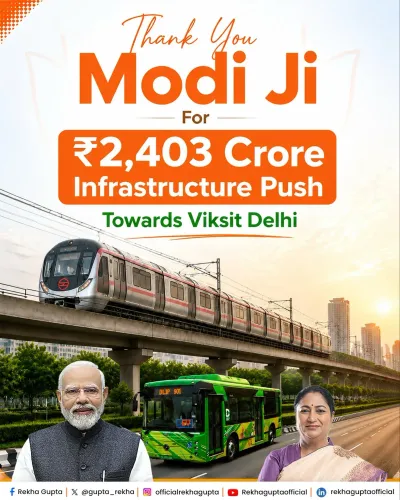
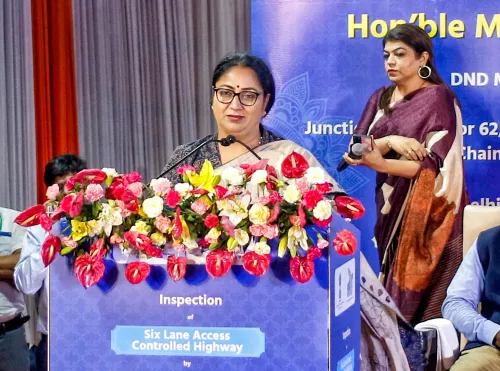
Delhi Chief Minister Rekha Gupta on Sunday, 12 July 2026, announced that the Central government has sanctioned ₹1,647 crore for 28 infrastructure projects in the national capital, crediting the approval to Prime Minister Narendra Modi's leadership. The announcement, made via a post on X, also flagged an additional ₹756 crore in performance-linked incentives awarded to the Delhi government for outstanding capital expenditure utilisation.
Context
In her post, CM Gupta wrote — 'केंद्र सरकार ने 28 महत्वपूर्ण इंफ्रास्ट्रक्चर परियोजनाओं के लिए ₹1,647 करोड़ की स्वीकृति प्रदान की है' ['The Central government has approved ₹1,647 crore for 28 important infrastructure projects']. She listed metro expansion, the Barapulla Elevated Corridor, the Karawal Nagar Flyover, and EV charging stations among the projects set to be fast-tracked. Gupta concluded by expressing gratitude to the Prime Minister on behalf of 'समस्त दिल्लीवासियों' ['all residents of Delhi'], tagging the announcement under #ViksitDelhi.
Policy Backdrop
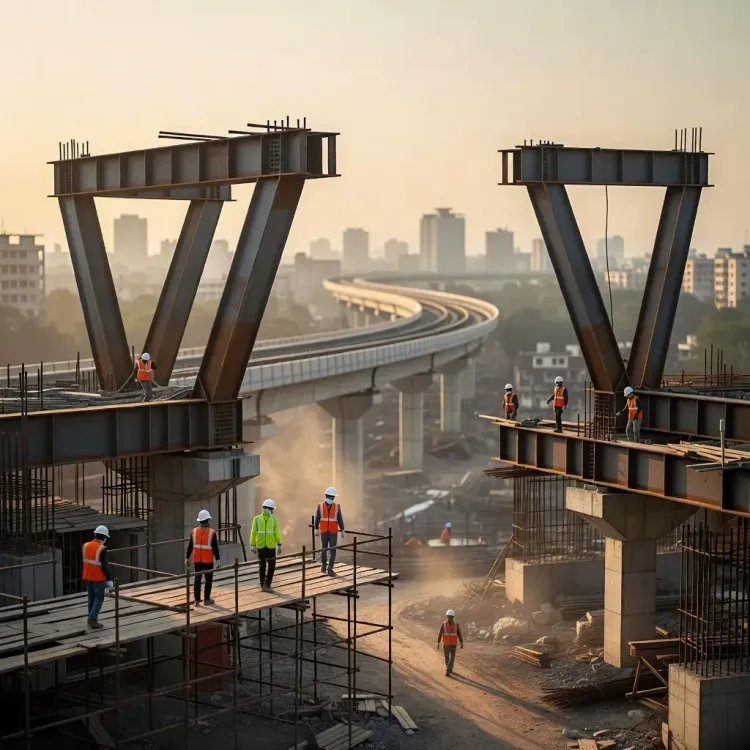
Central funding for Delhi's urban infrastructure has a long lineage — most prominently through phased approvals for the Delhi Metro, whose Phase 4 received central clearance in 2019. The Barapulla Elevated Corridor is a long-running south Delhi road project designed to ease chronic traffic congestion across the city's arterial routes.
The ₹756 crore performance incentive draws from a framework introduced in Union Budgets from 2022 onwards, under which states and the national capital receive additional central assistance tied to measurable capital expenditure outcomes. This mechanism is part of the broader fiscal compact between the Centre and sub-national governments aimed at accelerating productive public spending.
Stakeholders and Impact
Delhi's estimated population of over 2 crore residents stands to benefit directly from the sanctioned projects. Metro expansion will add commuter capacity on congested corridors, while the Karawal Nagar Flyover targets traffic relief in north-east Delhi — a densely populated zone historically underserved by elevated road infrastructure. The inclusion of EV charging stations aligns with national green-mobility targets under the Viksit Bharat 2047 agenda, signalling a push to accelerate electric vehicle adoption in the capital.
For the BJP-led Delhi government, the central sanction provides political and administrative momentum following its return to power in the capital. The performance incentive, in particular, reinforces the administration's claim of improved fiscal discipline compared with its predecessors.
What's Next
Attention will now shift to tendering timelines and on-ground execution for all 28 sanctioned projects. Delays between central approval and physical commencement have historically been a point of public scrutiny in Delhi's infrastructure cycle. The next central budget cycle will also be watched for follow-up tranches, particularly for the metro corridors where multi-year funding commitments are standard. If the capital expenditure performance that earned the ₹756 crore bonus is sustained, Delhi could position itself as a model for the Centre's incentive-linked fiscal framework for urban bodies across India.
Point of View
CM Gupta reinforces the party's cooperative-federalism narrative while distinguishing her government's record from the previous administration. The performance-incentive mechanism, now embedded in the Centre-state fiscal framework, is quietly becoming a competitive tool that rewards execution over announcement — and Delhi's early gains here could set a benchmark other state capitals will be pressed to match.
NationPress
11 Oct 2026
Frequently Asked Questions
What projects has the Centre approved funding for in Delhi in 2026?
The Central government approved ₹1,647 crore for 28 infrastructure projects in Delhi, including metro expansion, the Barapulla Elevated Corridor, the Karawal Nagar Flyover, and EV charging stations, as announced by CM Rekha Gupta on 12 July 2026.
What is the ₹756 crore incentive given to Delhi government?
The ₹756 crore is a performance-linked additional central assistance awarded to the Delhi government for outstanding utilisation of capital expenditure funds — a framework introduced in Union Budgets from 2022 onwards to incentivise productive public spending.
What is the Barapulla Elevated Corridor?
The Barapulla Elevated Corridor is a long-running elevated road project in south Delhi designed to ease traffic congestion on key arterial routes; it has received central funding in previous phases as well.
What is the Karawal Nagar Flyover?
The Karawal Nagar Flyover is a proposed elevated road project in north-east Delhi, a densely populated zone, aimed at providing traffic relief in an area historically underserved by elevated road infrastructure.
What is #ViksitDelhi?
#ViksitDelhi is a hashtag used by the Delhi BJP government to communicate its development agenda for the capital, aligned with the broader national Viksit Bharat 2047 vision of a developed India.