CM Rekha Gupta hails ₹9,585 cr Delhi-NCR clean vehicle plan
Synopsis
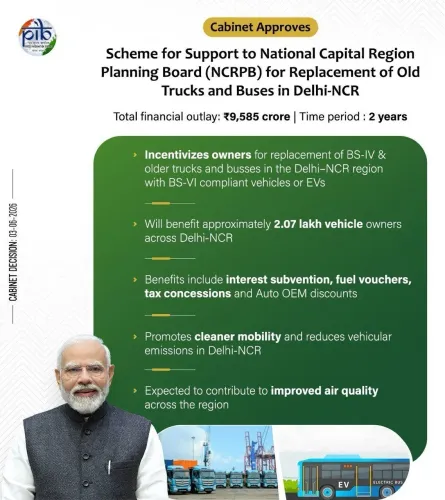
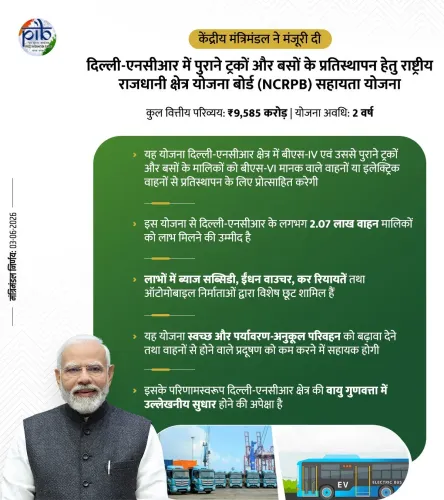
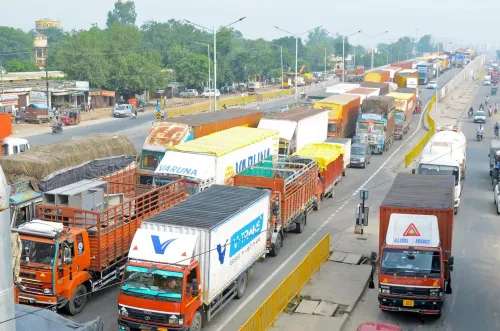
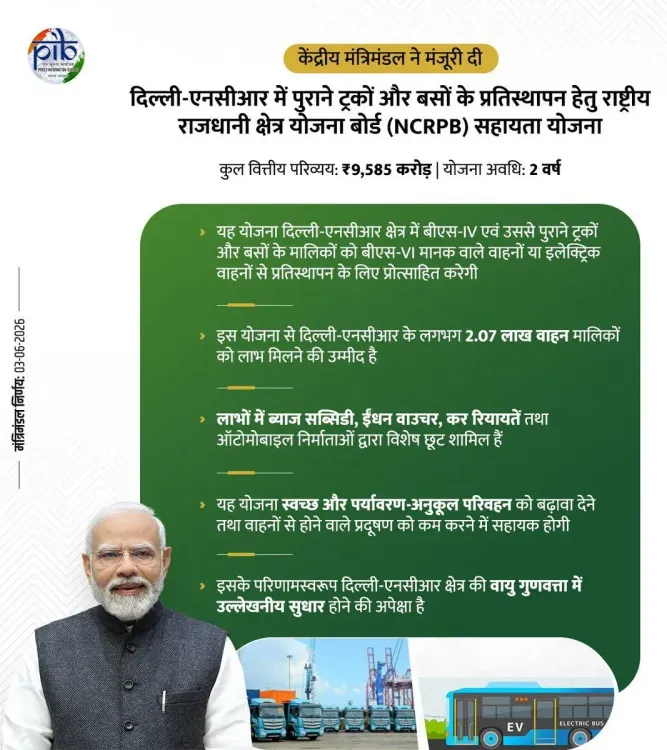
Delhi Chief Minister Rekha Gupta welcomed a Union Cabinet clearance of a ₹9,585 crore scheme to convert about 2.07 lakh old trucks and buses in Delhi-NCR to BS-VI or electric vehicles, alongside mandatory EV norms for new light goods vehicles and fresh subsidies for fleet owners.
Key Takeaways
Union Cabinet cleared a ₹9,585 crore Delhi-NCR clean vehicle scheme, per CM Rekha Gupta.
About 2.07 lakh old trucks and buses to be replaced with BS-VI or electric vehicles in two years.
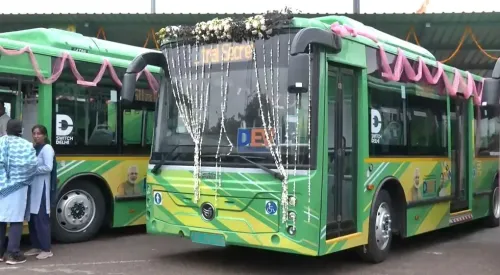
All new light goods vehicles in Delhi must be electric; buses restricted to BS-VI CNG or EV.
5% interest subsidy for five years and monthly fuel vouchers up to ₹4,800 announced.
Manufacturers to offer 8% direct showroom discount; registration fees and old dues waived.
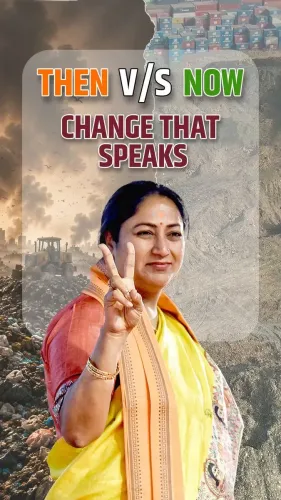
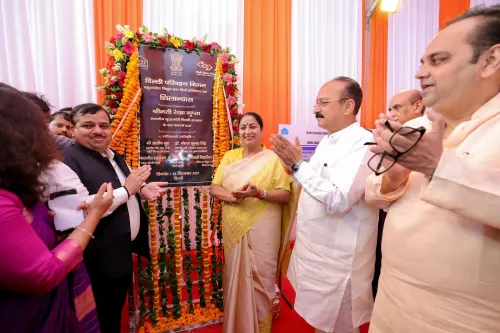
Delhi Chief Minister Rekha Gupta on Wednesday welcomed a Union Cabinet decision, chaired by Prime Minister Narendra Modi, clearing a ₹9,585 crore scheme aimed at modernising the commercial vehicle fleet across Delhi-NCR as part of a sustained push against vehicular air pollution. In a post on X, Gupta said the move would lend 'new and unprecedented momentum' to collective efforts to free the capital of toxic air.
Context
The Chief Minister's post outlines a two-pronged intervention: replacement of older diesel fleets and tighter mandates on new purchases. According to her statement, around 2.07 lakh old trucks and buses in Delhi-NCR will be converted to BS-VI or electric vehicles over the next two years.
She added that all light goods vehicles purchased in Delhi will now compulsorily be electric, while buses will be restricted to BS-VI CNG or electric models. 'दिल्ली के पर्यावरण की सुरक्षा के प्रति हमारे संकल्प' (our resolve to protect Delhi's environment), she wrote, framing the rules as a non-negotiable shift for commercial operators.
Policy backdrop
The announcement sits within a layered national framework. Bharat Stage VI emission norms have applied to all new vehicles sold in India since April 2020, while the Vehicle Scrappage Policy announced in the 2021 Union Budget introduced incentives for retiring older polluting fleets.
At the state level, the Delhi Electric Vehicle Policy notified in 2019 already offers purchase subsidies and registration waivers to accelerate EV adoption. The fresh cabinet package, as described by Gupta, complements those instruments and aligns with the mandate of the Commission for Air Quality Management, the statutory body set up in 2020 to coordinate pollution control across the capital region.
Stakeholders and impact
The Chief Minister listed four headline sweeteners for fleet owners: a 5% interest subsidy on loans for five years, monthly fuel vouchers of up to ₹4,800, a direct 8% discount on showroom price from manufacturers, and full waivers on registration fees and pending dues.
Truck and bus operators, who carry the bulk of the capital's freight and inter-state passenger load, stand to bear the largest transition cost — and the largest share of the benefits. Light commercial vehicle buyers, including small logistics firms and e-commerce delivery operators, will face a hard switch to electric powertrains.
For Delhi-NCR residents, the stakes are public health. Vehicular emissions remain a dominant contributor to particulate matter during the winter inversion months, when the capital's air quality index routinely breaches severe thresholds.
What's next
Implementation will hinge on detailed guidelines from the Union environment ministry and state transport departments on how interest subsidies, fuel vouchers and manufacturer discounts will be routed to eligible owners. Disbursement mechanics, eligibility cut-offs for 'old' vehicles, and the certification chain for scrapping will determine the pace of fleet turnover.
Gupta closed her post by thanking the Prime Minister 'on behalf of the entire people of Delhi' for what she called a 'far-sighted and effective decision'. The political messaging dovetails with the BJP's positioning of clean-air policy as a centrally coordinated effort spanning the Union government and the Delhi administration.
The real test will arrive with the next winter pollution cycle, when monitoring data will indicate whether accelerated fleet modernisation translates into measurable gains on the ground.
Point of View
As framed by the Chief Minister, marks the most explicit attempt yet to tie Delhi-NCR's clean-air agenda to a fleet-renewal subsidy stack rather than purely regulatory bans. By bundling interest relief, fuel vouchers and manufacturer discounts, the Union government appears to be acknowledging that earlier scrappage and EV policies stalled on affordability for small operators. Politically, the announcement also reinforces the BJP's narrative of double-engine delivery between the Centre and the Delhi government. The decisive metric, however, will be winter PM2.5 readings two years from now.
NationPress
18 Oct 2026
Frequently Asked Questions
What did the Union Cabinet approve for Delhi-NCR pollution?
The Union Cabinet, chaired by PM Narendra Modi, approved a ₹9,585 crore scheme to replace around 2.07 lakh old trucks and buses in Delhi-NCR with BS-VI or electric vehicles over two years, as announced by Delhi CM Rekha Gupta.
Are all new light commercial vehicles in Delhi now mandatorily electric?
Yes, as per the announcement, all light goods vehicles purchased in Delhi will compulsorily be electric, while new buses must be BS-VI CNG or electric.
What incentives are offered to truck and bus owners under the new scheme?
Owners get a 5% interest subsidy on loans for five years, monthly fuel vouchers up to ₹4,800, an 8% direct discount from manufacturers on showroom price, and a full waiver of registration fees and pending dues.
How many vehicles will be replaced under the Delhi-NCR scheme?
Approximately 2.07 lakh old trucks and buses across Delhi-NCR are slated to be converted to BS-VI or electric vehicles within the next two years.