Puri: Cabinet clears NCRPB scheme to replace old trucks, buses in NCR
Synopsis
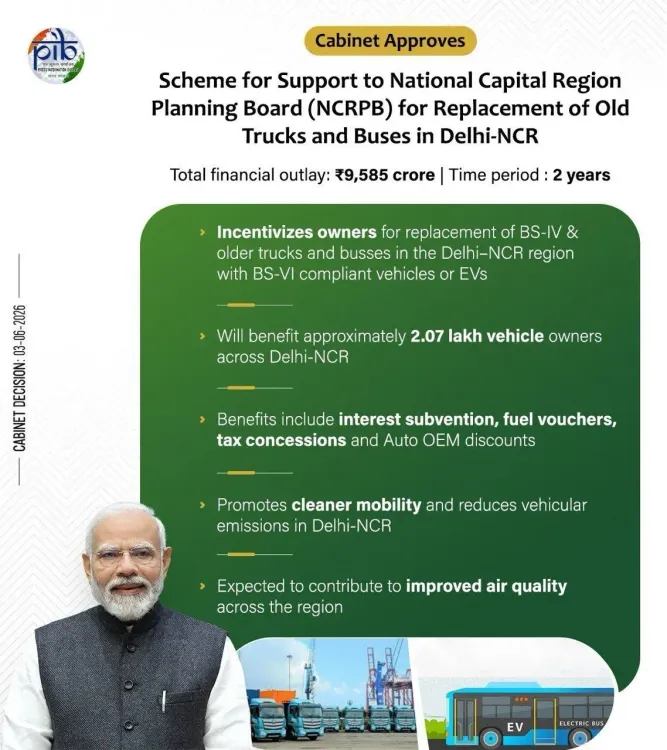
Union Petroleum Minister Hardeep Singh Puri announced a Union Cabinet-approved, two-year NCRPB scheme to replace BS-IV and older trucks and buses in Delhi-NCR with BS-VI or electric vehicles. He said over 2 lakh vehicle owners would benefit, with the move aimed at cutting vehicular emissions and improving the region's air quality.
Key Takeaways
Union Cabinet approved a two-year NCRPB-routed scheme to replace old trucks and buses in Delhi-NCR.
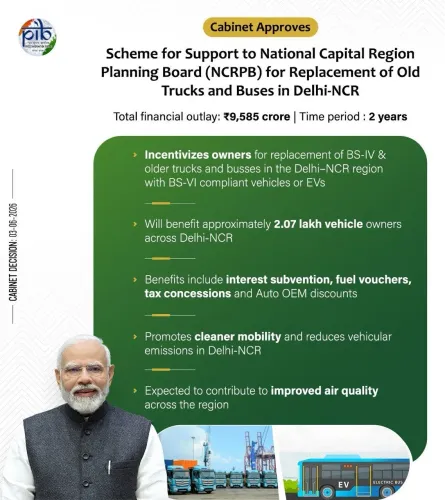
Targets owners of BS-IV and older commercial vehicles, incentivising a switch to BS-VI or electric.
Minister Hardeep Singh Puri said over 2 lakh vehicle owners are expected to benefit.
Aim is to cut vehicular emissions and improve Delhi-NCR air quality.
Builds on the BS-VI rollout from April 2020, the 2021 Vehicle Scrappage Policy and FAME-II.
Operational guidelines, subsidy structure and funding split awaited from the Centre and NCRPB.
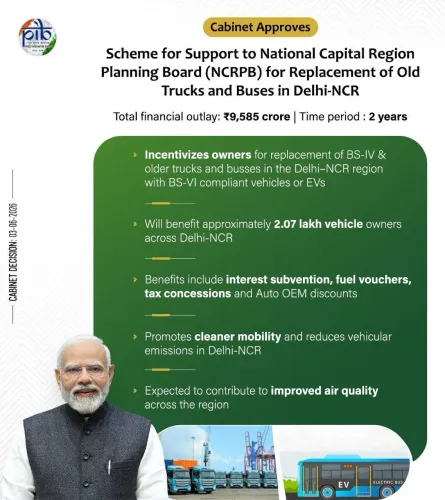
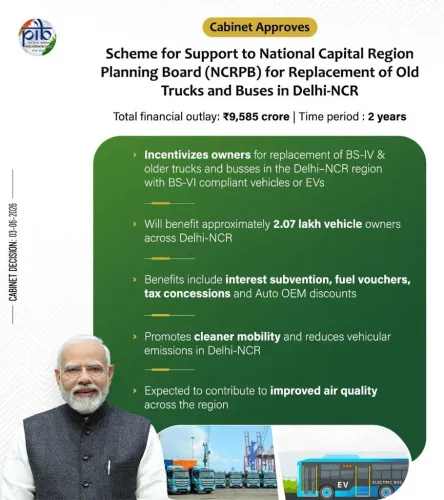
Union Petroleum Minister Hardeep Singh Puri on Wednesday announced that the Union Cabinet has approved a scheme routed through the National Capital Region Planning Board (NCRPB) to replace ageing trucks and buses operating in the Delhi-NCR region with cleaner alternatives. The two-year programme is aimed at curbing vehicular emissions, one of the largest contributors to the capital region's seasonal air pollution crisis.
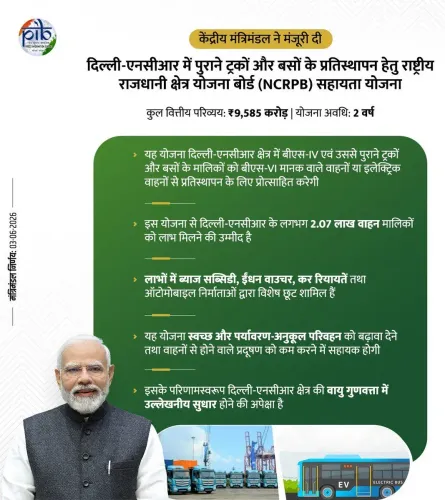
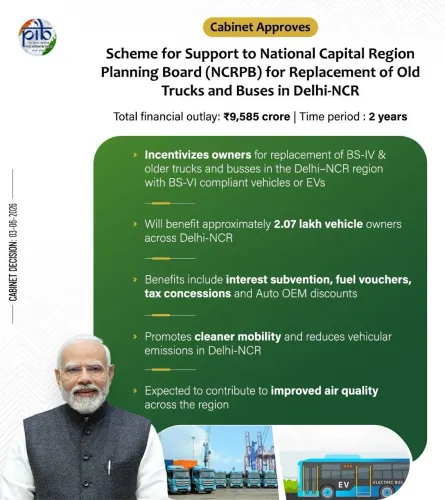
In his post on X, the minister said the Cabinet had taken 'an important step towards reducing pollution in the Delhi-NCR region' by clearing 'a significant scheme for the replacement of old trucks and buses through the NCRPB'. He added that under the two-year plan, owners of BS-IV and older trucks and buses would be incentivised to switch to BS-VI or electric vehicles, with more than 2 lakh vehicle owners expected to benefit.
Context
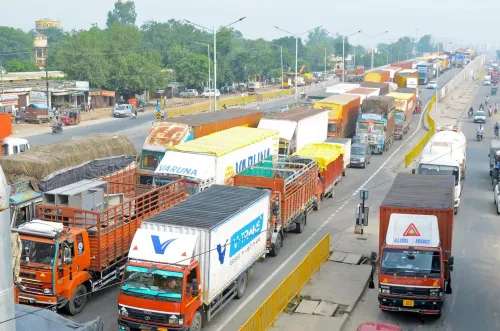
The announcement comes against the backdrop of recurring air quality emergencies in Delhi-NCR, where vehicular exhaust, construction dust, stubble burning and industrial activity combine each winter to push pollutant levels well past hazardous thresholds. Commercial freight and passenger fleets, many of them running on older diesel engines, have been repeatedly flagged as a dominant on-road source of particulate matter and nitrogen oxides.
By channelling the new scheme through the NCRPB — the statutory body constituted under the NCRPB Act, 1985 to coordinate planning across Delhi and adjoining districts of Haryana, Uttar Pradesh and Rajasthan — the Centre is anchoring the rollout in an inter-state framework rather than a single city administration.
Policy backdrop
India transitioned directly from BS-IV to BS-VI emission norms for new vehicles in April 2020, skipping an intermediate stage to bring tailpipe limits closer to European standards. BS-VI engines sharply cut permissible particulate matter and nitrogen oxide outputs compared with BS-IV, but the existing on-road fleet of older commercial vehicles has remained a structural bottleneck for air quality gains.
Parallel interventions include the Vehicle Scrappage Policy announced in the Union Budget 2021, which set out incentives for retiring ageing commercial and government vehicles, and the FAME-II scheme launched in 2019 to subsidise electric mobility, including buses. The Commission for Air Quality Management (CAQM), set up by ordinance in 2020 and codified by Act in 2021, has additionally used graded response measures to restrict polluting vehicles during peak smog episodes.
The NCRPB scheme cleared this week sits within that lineage, layering a targeted fleet-replacement push for the country's most pollution-stressed urban agglomeration on top of the broader national framework.
Stakeholders and impact
The direct beneficiaries, as described by the minister, are owners of older trucks and buses plying within the NCR — a mix of small operators, fleet companies and intercity bus services. The minister said the shift would 'accelerate the move towards clean transport technologies' and lead to 'a significant reduction in vehicular emissions and a notable improvement in air quality in the Delhi-NCR region'.
For residents of Delhi, Gurugram, Noida, Ghaziabad, Faridabad and other NCR towns, the practical test will be whether incentives are attractive enough to drive large-scale voluntary replacement, particularly among small operators for whom upfront capital cost is the binding constraint. Bus and truck manufacturers, as well as electric vehicle players and charging infrastructure providers, stand to gain from any sustained switch to BS-VI and electric platforms.
What's next
Detailed operational guidelines — including the subsidy structure, eligibility criteria, scrappage linkage and funding allocation between the Centre, NCRPB and participating state governments — are expected to follow the Cabinet nod. The pace at which these rules are notified will determine whether visible numbers of old trucks and buses are taken off NCR roads before the 2026-27 winter pollution season, when air quality typically deteriorates sharply.
If implementation tracks the minister's framing, the scheme could become one of the most concrete fleet-modernisation interventions in the NCR since the BS-VI transition itself, with implications for how India tackles vehicular pollution in other large metros.
Point of View
Region-specific layer over India's broader vehicular emission strategy, moving from rule-making to fleet turnover in the country's most pollution-stressed corridor. Routing it through the NCRPB rather than a single state signals an inter-state coordination push, recognising that NCR pollution does not respect Delhi's borders. The political stakes are high: Delhi's winter air quality has become an annual referendum on governance across party lines. The real test will be the fineprint — subsidy depth, scrappage linkage and charging or BS-VI fuel availability — which will decide whether small operators actually convert.
NationPress
18 Oct 2026
Frequently Asked Questions
What has the Union Cabinet approved for Delhi-NCR pollution?
The Union Cabinet has approved a two-year scheme, routed through the National Capital Region Planning Board (NCRPB), to replace old trucks and buses in Delhi-NCR with BS-VI or electric vehicles, Union Petroleum Minister Hardeep Singh Puri said.
Which vehicles are covered under the new NCRPB scheme?
The scheme targets BS-IV and older trucks and buses operating in the Delhi-NCR region, encouraging owners to switch to BS-VI compliant or electric vehicles.
How many vehicle owners will benefit from the scheme?
More than 2 lakh vehicle owners are expected to benefit, according to Union Petroleum Minister Hardeep Singh Puri's announcement.
How long will the truck and bus replacement scheme run?
The scheme is a two-year programme, as announced by the minister, with detailed operational guidelines expected from the Centre and NCRPB.
How will this help Delhi-NCR air quality?
By accelerating the shift from older diesel trucks and buses to BS-VI or electric vehicles, the scheme is designed to cut vehicular emissions, a major contributor to Delhi-NCR's poor air quality.