PM Modi: Cabinet clears scheme to cut Delhi-NCR pollution, push clean mobility
Synopsis
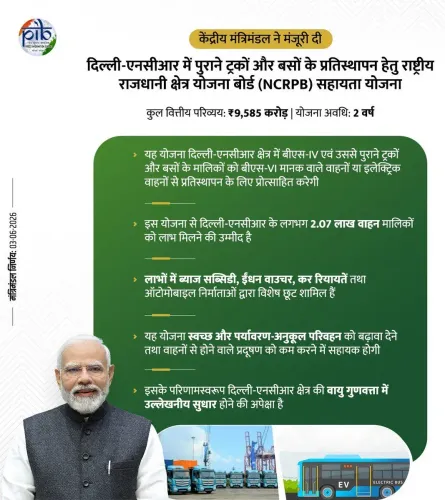
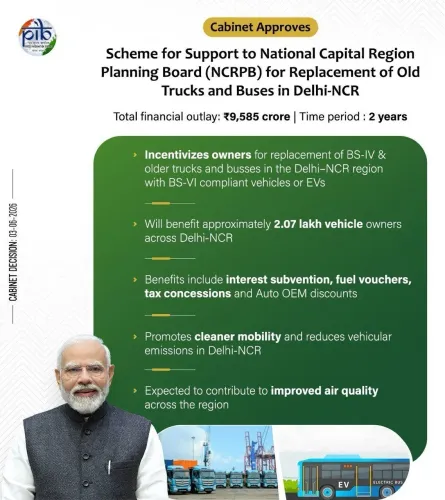
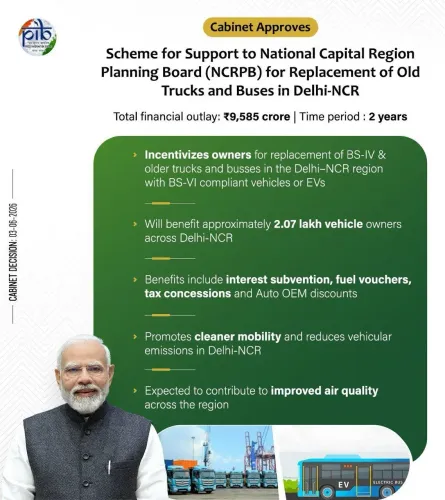
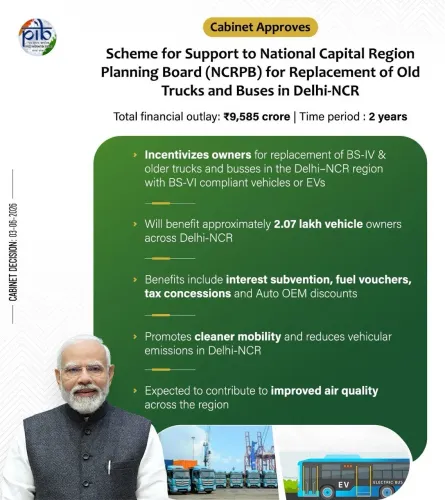
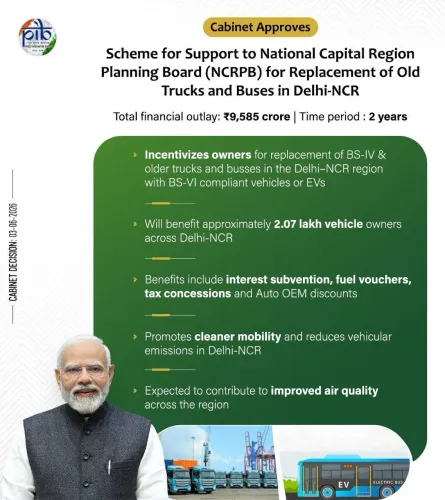
Prime Minister Narendra Modi announced that the Union Cabinet has cleared a new scheme to curb pollution in the Delhi-NCR region and promote cleaner mobility. He said the initiative will improve air quality, support sustainable transport and benefit vehicle owners, with detailed guidelines and budget expected via formal notifications.
Key Takeaways
The Union Cabinet has approved a new scheme targeting pollution reduction in the Delhi-NCR region.
PM Narendra Modi said the scheme will promote cleaner mobility and sustainable transport.
The initiative is expected to benefit vehicle owners, suggesting incentive or subsidy components.
It builds on existing frameworks like NCAP (2019), FAME-II (2019), BS-VI norms (2020) and the 2021 Vehicle Scrappage Policy.
Detailed guidelines, outlay and rollout timeline are awaited through official gazette notifications.
Implementation will require coordination with Delhi, Haryana, Uttar Pradesh and Rajasthan governments.
Prime Minister Narendra Modi on Wednesday announced that the Union Cabinet has approved a new scheme aimed at curbing air pollution in the Delhi-NCR region while promoting cleaner mobility. In a post on X, the Prime Minister said the scheme would improve air quality, support sustainable transport and deliver tangible benefits to vehicle owners.
'The Union Cabinet has approved a scheme that will work towards reducing pollution in the Delhi-NCR region and promote cleaner mobility,' the Prime Minister wrote, adding that the initiative 'will improve air quality, support sustainable transport and benefit vehicle owners.' The post did not specify the scheme's financial outlay, operational design or rollout timeline, which are expected to follow through official gazette notifications.
Context
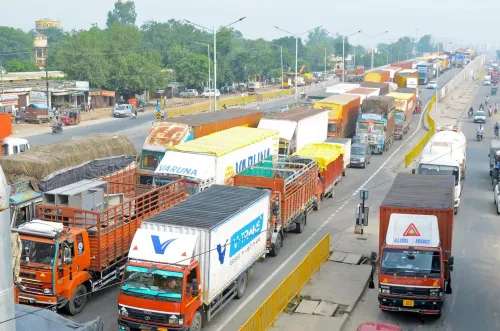
The Delhi-NCR region — comprising the national capital and adjoining districts of Haryana, Uttar Pradesh and Rajasthan — has for years figured among the world's most polluted urban zones, with vehicular emissions identified as one of the principal contributors alongside stubble burning, industrial activity and construction dust.
Winter episodes of severe smog have repeatedly pushed the region's air quality index into the 'severe' band, triggering school closures, construction halts and curbs on older diesel and petrol vehicles under the staged Graded Response Action Plan (GRAP), first notified in 2017.
Policy backdrop
The cabinet decision sits within a layered policy architecture the Union government has built over the past decade to address urban air pollution and decarbonise transport. The National Clean Air Programme, launched in 2019 by the Ministry of Environment, Forest and Climate Change, set a target of cutting particulate pollution by 20-30% across 131 non-attainment cities, including Delhi.
On the mobility side, the FAME India scheme — Faster Adoption and Manufacturing of Electric Vehicles, launched in 2015 and extended as FAME-II in 2019 — has provided demand-side incentives for electric and hybrid vehicles. The shift to Bharat Stage-VI emission norms from 1 April 2020, which skipped the BS-V stage, tightened limits on nitrogen oxides and particulates from new vehicles, while the Vehicle Scrappage Policy, announced in the 2021 Union Budget, sought to phase out older polluting vehicles through automated testing centres and replacement incentives.
Stakeholders and impact
The Prime Minister's framing — that the scheme will 'benefit vehicle owners' alongside improving air quality — suggests a consumer-facing component, potentially through incentives, subsidies or assistance linked to cleaner vehicles. The most direct stakeholders are Delhi-NCR residents who bear the public-health burden of toxic winter air, vehicle owners whose purchase and replacement decisions are shaped by such schemes, and electric vehicle manufacturers and component suppliers who stand to gain from any expansion of clean-mobility demand.
State governments in the NCR footprint — Delhi, Haryana, Uttar Pradesh and Rajasthan — will also be central to implementation, given that vehicle registration, scrappage infrastructure and public-transport electrification are largely executed at the state level.
What's next
Detailed scheme guidelines, the budget allocation and the implementation timeline are expected to be released through official notifications from the ministries of Environment, Forest and Climate Change and Road Transport and Highways. Coordination between the Centre and NCR state governments, together with measurable uptake of vehicle scrappage and EV adoption, will shape whether the new scheme delivers a discernible improvement in the region's air quality.
The announcement also reinforces Delhi-NCR's role as a policy laboratory for clean-air and clean-mobility interventions that have, in earlier iterations, been considered for replication in other Indian cities — and feeds into India's broader commitments under its updated Nationally Determined Contributions to the Paris Agreement on climate change.
Point of View
GRAP, scrappage rules — with fiscal carrots like FAME to confront the Indo-Gangetic plain's chronic air crisis. Anchoring the new scheme in Delhi-NCR keeps the capital region as the country's de facto laboratory for clean-air interventions, with the political optics of visible action ahead of the next winter pollution cycle. The reference to benefits for vehicle owners hints at a consumer-facing incentive layer, possibly tying scrappage or EV adoption to direct relief. Its credibility will rest less on the headline announcement and more on the fine print: outlay, eligibility and whether NCR state governments move in lockstep.
NationPress
17 Oct 2026
Frequently Asked Questions
What did the Union Cabinet approve for Delhi-NCR pollution?
The Union Cabinet has approved a new scheme aimed at reducing pollution in the Delhi-NCR region and promoting cleaner mobility, as announced by Prime Minister Narendra Modi on X. The scheme is intended to improve air quality, support sustainable transport and benefit vehicle owners, with detailed guidelines expected through official notifications.
How will the new clean mobility scheme benefit vehicle owners?
Prime Minister Narendra Modi has said the scheme will 'benefit vehicle owners', indicating a consumer-facing component, though specifics have not yet been disclosed. Based on the policy lineage, such schemes have typically involved incentives linked to electric vehicles, scrappage of older vehicles or support for cleaner fuel adoption.
Which areas does Delhi-NCR cover under the scheme?
Delhi-NCR refers to the National Capital Region, which includes Delhi and adjoining districts of Haryana, Uttar Pradesh and Rajasthan. These areas have long been identified among the world's most polluted urban zones, with vehicular emissions a major contributor.
How does this scheme relate to FAME and the Vehicle Scrappage Policy?
The new scheme adds to an existing policy stack that includes FAME-II for electric vehicle incentives, the 2021 Vehicle Scrappage Policy for phasing out old vehicles, BS-VI emission norms and the National Clean Air Programme. Together, these aim to cut vehicular pollution and accelerate cleaner transport in Indian cities.
When will the Delhi-NCR clean mobility scheme be implemented?
An implementation timeline has not been specified in the announcement. Detailed guidelines, the financial outlay and rollout schedule are expected through gazette notifications from the ministries of Environment and Road Transport in the coming weeks.