Is a Time-bound Plan Being Implemented to Combat Air Pollution in Delhi?
Synopsis
Delhi's Chief Minister Rekha Gupta declares a comprehensive, time-sensitive strategy to tackle air pollution in the Delhi-NCR region. With the backing of the Central Government, the plan aims to significantly reduce pollution levels and enhance public health over the next four years. Discover the ambitious goals set for the transport sector and electric vehicle initiatives.
Key Takeaways
Delhi government is implementing a comprehensive plan to tackle air pollution.
Support from the Central Government is crucial to the initiative.
Ambitious goals for the transport sector include increasing the bus fleet significantly.
Electric vehicle initiatives aim to promote cleaner transportation.
Public health improvement is a primary focus of the pollution control strategies.
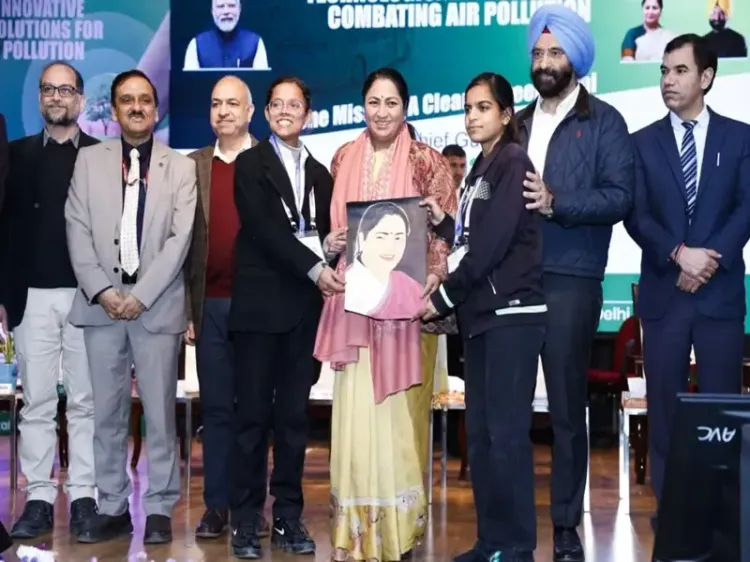
New Delhi, Jan 16 (NationPress) Delhi Chief Minister Rekha Gupta announced on Friday that the government is committed to combating pollution in the Delhi-NCR region throughout the year, with a meticulous, time-sensitive plan being put into action to address this critical issue.
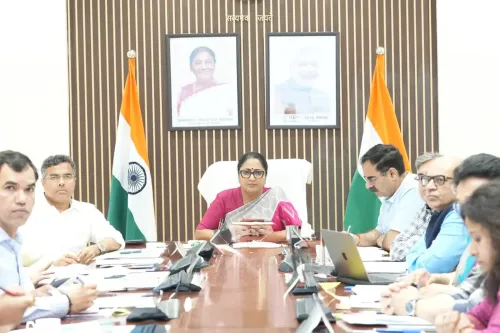
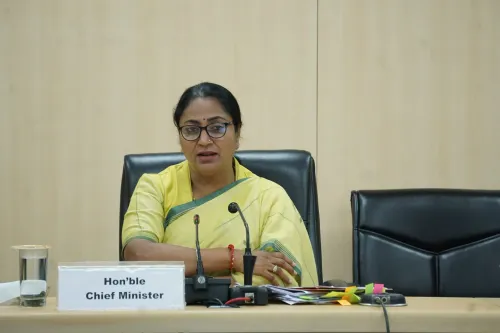
After presiding over a high-level review meeting on air pollution control at the Delhi Secretariat, she stated that both short-term and long-term strategies have been developed and are actively being implemented.
Chief Minister Gupta emphasized that the battle against pollution is ongoing, with all relevant agencies collaborating under a unified strategy.
She noted that they are receiving essential guidance and support from the Central Government, which plays a crucial role in formulating a comprehensive and time-sensitive plan to effectively combat air pollution.
According to her, these initiatives are expected to enhance air quality and protect public health.
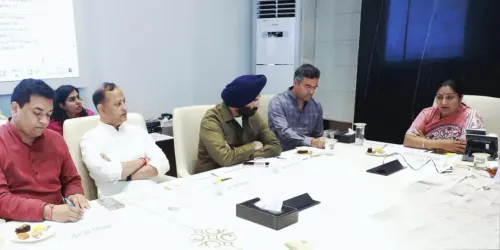
The review meeting saw participation from Cabinet Ministers Parvesh Verma, Manjinder Singh Sirsa, and Pankaj Kumar Singh, along with Chief Secretary Rajiv Verma and senior officials from various departments including the DDA, Delhi Traffic Police, the Municipal Corporation of Delhi, PWD, and the Environment Department.
The Chief Minister instructed all department heads to adhere closely to the approved pollution control framework and ensure that implementation is carried out within the specified timelines.
She reaffirmed that the Delhi government is consistently receiving strategic direction from Prime Minister Narendra Modi and the Central Government to effectively manage air pollution in the Delhi-NCR area.
She highlighted that both governments are dedicated to this cause, asserting that there are no procedural or budgetary obstacles.
The Chief Minister elaborated that her government is developing a clear, measurable, and results-driven action plan aimed at achieving a significant reduction in PM2.5 levels over the next four years.
Regarding the transportation sector, she shared that Delhi aims to expand its bus fleet to 6,000 by December 31, 2026, 7,500 by December 2027, 10,400 by March 2028, and reach 14,000 by March 2029.
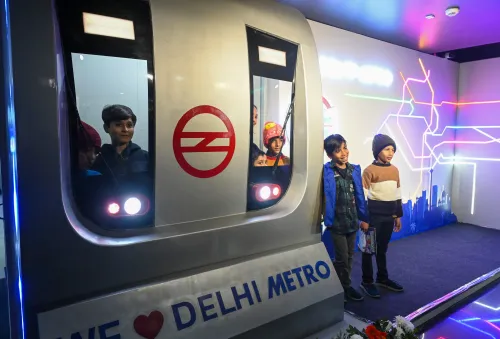
Of the anticipated 14,000 buses, 500 will be shorter 7-meter buses to enhance last-mile connectivity, ensuring a seamless integration with the Delhi Metro system to improve public transport accessibility in high-density and residential areas. Currently, last-mile connectivity is being facilitated through 100 electric metro feeder buses.
By January 31, 2026, a pilot integration of e-autos, bike taxis, and feeder cabs at 10 major metro stations is scheduled, according to her.
She mentioned that under the new Electric Vehicle Policy, the 5.8 million two-wheelers in Delhi are being targeted through subsidies and scrappage incentives.
The number of public charging and battery-swapping stations will increase from 9,000 to 36,000. Additionally, interest subvention for commercial trucks and three-wheelers, alongside advantages provided by the Centre’s PM E-Drive scheme, are being utilized to support a transition to cleaner fuels.
Point of View
It is imperative to recognize the significance of Delhi's proactive stance on air pollution. The government's comprehensive approach, combining short-term and long-term strategies, highlights the urgency of addressing environmental challenges. The collaboration with the Central Government and the commitment to measurable outcomes reflect a strong determination to protect public health and improve air quality in one of the world's most polluted regions.
NationPress
29 Sept 2026
Frequently Asked Questions
What is the main goal of the time-bound plan announced by the Delhi CM?
The main goal is to effectively combat air pollution in the Delhi-NCR region through comprehensive strategies and measurable outcomes.
How will the transport sector contribute to reducing air pollution?
The transport sector will expand its bus fleet significantly and integrate with the metro system to enhance public transport, thus reducing reliance on personal vehicles.
What support is the Delhi government receiving in this initiative?
The Delhi government is receiving guidance and support from the Central Government, particularly in formulating effective pollution control strategies.
What measures are being taken to promote electric vehicles?
The Delhi government is targeting two-wheelers through subsidies and scrappage incentives and planning to increase the number of charging stations.
When is the pilot integration of e-autos and bike taxis expected?
The pilot integration is planned for January 31, 2026, at 10 major metro stations.