Delhi's Bold Strategy to Combat Pollution: 62 Traffic Hotspots Addressed
Synopsis
On April 3, Delhi Chief Minister Rekha Gupta introduced a comprehensive plan to combat air pollution, targeting 62 traffic hotspots. This initiative emphasizes technology-driven solutions and strict enforcement for clean air.
Key Takeaways
Delhi's Chief Minister has unveiled a comprehensive pollution control strategy.
The plan targets 62 traffic hotspots for congestion relief.
Implementation includes an Intelligent Traffic Management System .
Strict enforcement of the 'No PUC, No Fuel' rule is prioritized.
Investment in public transport will expand the bus fleet significantly.
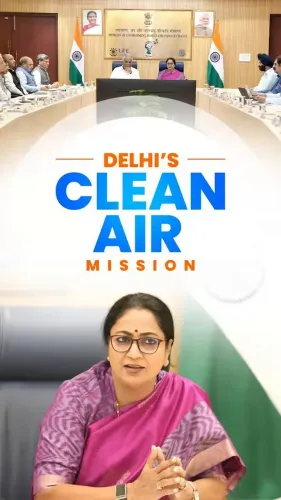
New Delhi, April 3 (NationPress) The Chief Minister of Delhi, Rekha Gupta, officially launched a robust and comprehensive initiative aimed at tackling air pollution in the city, announcing stringent actions to alleviate traffic congestion at 62 identified hotspots through scheduled interventions.
During the announcement of the Air Pollution Mitigation Action Plan 2026, she highlighted that this initiative is an extension of the government’s groundbreaking Green Budget for the fiscal year 2026-27 and strives to turn clean air objectives into tangible results.
She stated that measures are being implemented to reduce traffic bottlenecks at the 62 hotspots through time-sensitive actions.
“An innovative Intelligent Traffic Management System is being introduced, along with smart parking solutions and pricing reforms to enhance road efficiency and lower emissions,” she noted.
According to her, this plan, crafted under the direction of Prime Minister Narendra Modi, provides a detailed framework for sustainable urban growth, emphasizing accountability, technology, and timely execution.
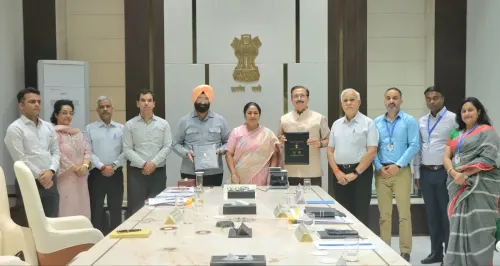
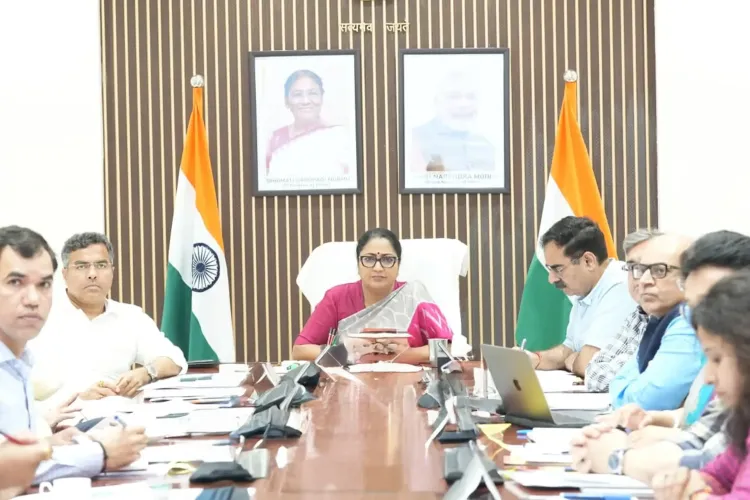
A high-level review meeting focusing on pollution control was convened on Friday at the Mukhyamantri Janseva Sadan, led by the Chief Minister.
The meeting saw participation from Cabinet Ministers Pravesh Verma, Manjinder Singh Sirsa, and Pankaj Kumar Singh; Chief Secretary Rajeev Verma; representatives from the Delhi Metro Rail Corporation and the Traffic Police; alongside senior officials from all pertinent government departments.
Chief Minister Gupta reiterated that the priorities of clean air and environmental conservation are integral to the government’s policy agenda, supported by targeted budget allocations for clean mobility, dust management, waste management, greening efforts, and pollution monitoring.
“This is not merely a policy declaration—it is a campaign driven by enforcement, resources, technology, and rigorous oversight,” she asserted, aiming to guarantee cleaner air for every resident of Delhi.
The action plan focuses on major pollution sources—such as vehicular emissions, road dust, construction activities, industrial discharges, and biomass combustion—through a scientific and data-oriented strategy. It highlights 11 priority sectors, with clear responsibilities, deadlines, and real-time monitoring systems to ensure adherence.
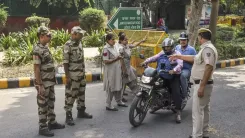
Taking a firm stance on vehicle emissions, the Chief Minister declared that there will be zero tolerance for violations. The ‘No PUC, No Fuel’ regulation is being strictly enforced, she added.
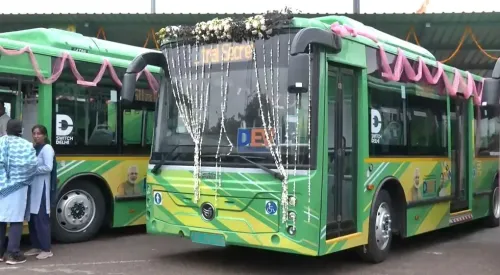
The government is significantly increasing investments in public transport, aiming to expand the bus fleet to 13,760 by 2028-29, with a focus on electric buses.
The forthcoming EV Policy 2026 will prioritize two-wheelers and commercial vehicles while transitioning government fleets to cleaner fuel options, she mentioned.
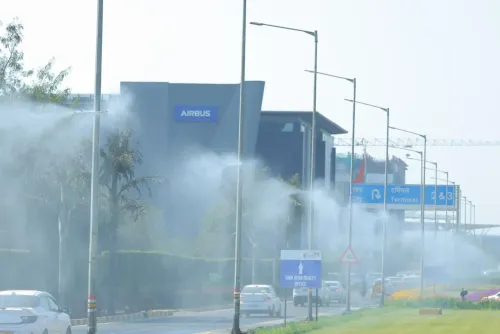
Recognizing road dust as a significant pollutant, she stated that the government is deploying mechanical road sweepers, water sprinklers, and anti-smog guns extensively.
Mist spray systems will be installed on roads and are mandated for large buildings. All operations will be tracked in real time using GPS technology and a centralized dashboard, she explained.
Point of View
The launch of the Air Pollution Mitigation Action Plan 2026 is a pivotal moment for Delhi, reflecting a commitment to sustainable urban development and addressing air quality challenges. The involvement of key government figures underscores the importance of this initiative in improving public health and environmental conditions.
NationPress
10 Oct 2026
Frequently Asked Questions
What is the main goal of the Air Pollution Mitigation Action Plan 2026?
The plan aims to combat air pollution in Delhi by implementing measures to reduce traffic congestion at identified hotspots and enhancing overall air quality.
How many traffic hotspots are being addressed in Delhi?
The initiative targets 62 identified traffic hotspots in the city.
What technologies are being introduced to manage traffic in Delhi?
An Intelligent Traffic Management System, smart parking solutions, and pricing reforms are part of the new strategy.
What is the significance of the 'No PUC, No Fuel' rule?
This rule aims to enforce compliance with pollution control norms by denying fuel access to vehicles without a valid Pollution Under Control (PUC) certificate.
What investments are being made in public transport?
The government plans to expand the bus fleet to 13,760 by 2028-29, focusing on electric buses.