CM Rekha Gupta Signs AI Air Quality MoU with IIT Kanpur
Synopsis
Delhi Chief Minister Rekha Gupta signed an MoU with IIT Kanpur's AIRAWAT Research Foundation on 22 May 2026 to develop an AI-based Air Quality Management System for real-time monitoring, pollution forecasting, and data-driven policy for Delhi.
Key Takeaways
The Delhi government signed an MoU with IIT Kanpur's AIRAWAT Research Foundation on 22 May 2026 .
The partnership will develop an AI-based Air Quality Management System for Delhi.
Key features include real-time monitoring, pollution forecasting, hotspot identification, and data-based policy formulation .
Cabinet minister Manjinder Singh Sirsa was present at the MoU signing ceremony.
The initiative aligns with the National Clean Air Programme and the mandate of the Commission for Air Quality Management covering the NCR.
The system's success will be measured against Delhi's winter pollution episodes , with potential for replication in other Indian cities.
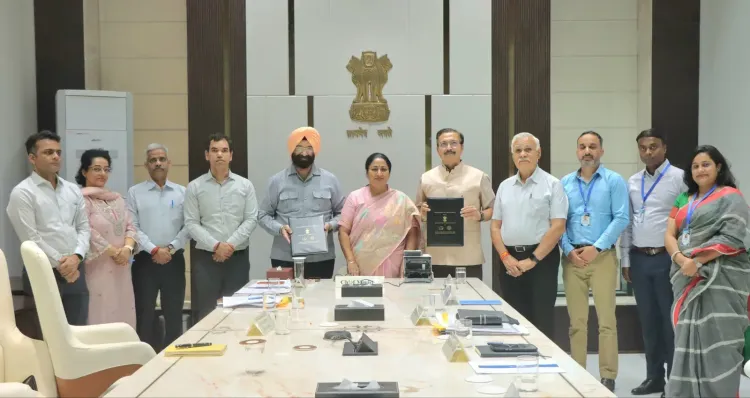
Delhi Chief Minister Rekha Gupta on Friday, 22 May 2026, announced that the Delhi government has signed a Memorandum of Understanding with the AIRAWAT Research Foundation of IIT Kanpur to develop an Artificial Intelligence-based Air Quality Management System for the capital. The agreement marks a significant step in the city's push to deploy data-driven technology for tackling its chronic pollution crisis. Cabinet colleague Manjinder Singh Sirsa was also present at the signing ceremony.
Context
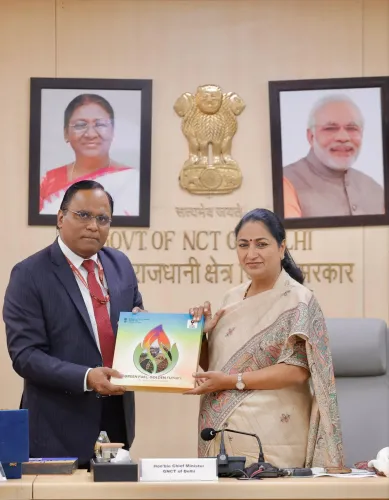
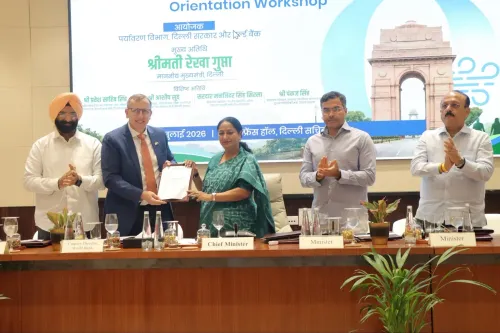
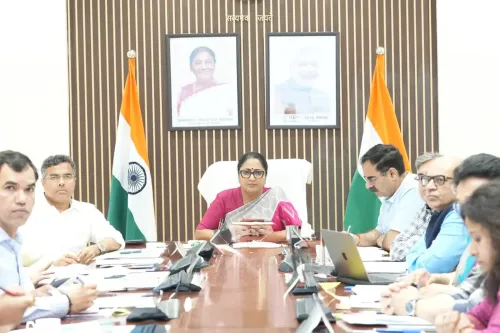
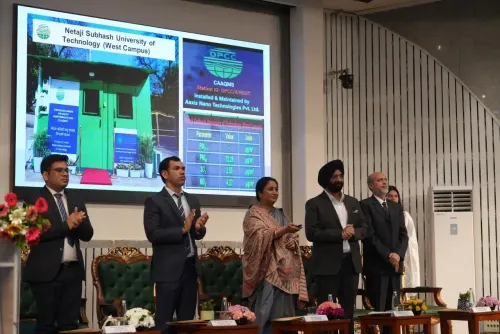
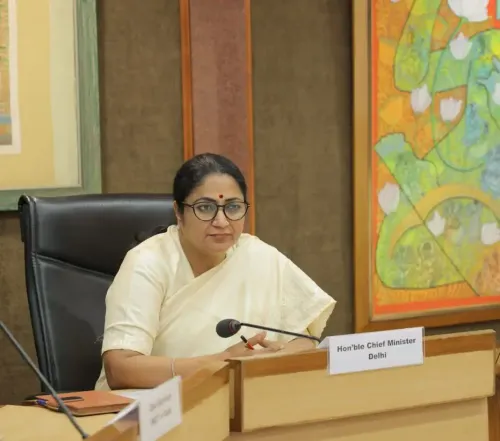
Chief Minister Gupta shared the development on social media, stating: 'आज दिल्ली सरकार और IIT कानपुर के AIRAWAT Research Foundation के बीच MoU साइन किया गया' ('Today an MoU was signed between the Delhi government and the AIRAWAT Research Foundation of IIT Kanpur'). The system to be developed will focus on real-time monitoring, pollution forecasting, hotspot identification, and data-based policy formulation. The announcement was accompanied by three images from the signing event, with @mssirsa — Manjinder Singh Sirsa — tagged in the post under the hashtag #ViksitDelhi.
Policy Backdrop
Delhi has been at the centre of India's air pollution emergency for over a decade, consistently recording hazardous air quality index levels, particularly during winter months. The National Clean Air Programme, launched by the Union Ministry of Environment in 2019, designated Delhi among 131 non-attainment cities requiring city-specific action plans to reduce PM2.5 and PM10 concentrations. The Commission for Air Quality Management, constituted in 2020, further mandated coordinated action across the National Capital Region and adjoining states, incorporating tiered response frameworks such as the Graded Response Action Plan.
Against this regulatory backdrop, successive Delhi administrations have supplemented enforcement with academic and technological partnerships. The current MoU fits squarely within this pattern, extending the government's reliance on institutions such as IIT Kanpur — which has an established track record in environmental engineering and AI applications — to strengthen the scientific basis for pollution control decisions.
Stakeholders and Impact
The primary beneficiaries are Delhi's estimated 33 million residents, who face documented health risks from prolonged exposure to particulate matter and other pollutants. An AI-driven system capable of identifying pollution hotspots in real time could allow agencies such as the Delhi Pollution Control Committee (DPCC) and the Central Pollution Control Board (CPCB) to deploy resources more precisely, rather than relying solely on broad seasonal restrictions. Data-backed policy formulation could also improve coordination with neighbouring states, whose agricultural and industrial activities contribute significantly to Delhi's winter smog.
IIT Kanpur's AIRAWAT Research Foundation brings computational and modelling expertise to the partnership. The collaboration reflects a wider national trend of state governments engaging premier technical institutes to bridge the gap between environmental regulation and on-ground enforcement capacity.
What's Next
Key milestones to watch include the timeline for a pilot deployment of the AI system and its integration with existing monitoring infrastructure operated by the CPCB and DPCC. The effectiveness of the system will ultimately be measured against Delhi's pollution levels during the critical October–January winter season, when air quality typically deteriorates most sharply. Should the model demonstrate measurable improvements in forecasting accuracy and hotspot response, it could serve as a template for replication in other severely polluted Indian cities under national clean air frameworks.
Point of View
The administration seeks to move beyond the perception that Delhi's air quality interventions are reactive and seasonal. The collaboration fits a broader national pattern of state governments using AI and data analytics to demonstrate policy rigour, particularly ahead of winter when smog dominates public discourse. Whether the system delivers measurable forecasting improvements — and how quickly — will determine whether this MoU translates into electoral and policy capital for the ruling dispensation.
NationPress
20 Sept 2026
Frequently Asked Questions
What is the Delhi government IIT Kanpur MoU about?
The Delhi government signed an MoU with IIT Kanpur's AIRAWAT Research Foundation to develop an AI-based Air Quality Management System that will provide real-time pollution monitoring, forecasting, hotspot identification, and support data-driven policy decisions for the capital.
What is the AIRAWAT Research Foundation?
The AIRAWAT Research Foundation is associated with IIT Kanpur and focuses on AI-driven research applications. It is partnering with the Delhi government to build an advanced air quality management platform for the city.
Who was present at the Delhi air quality MoU signing?
Delhi Chief Minister Rekha Gupta and Cabinet colleague Manjinder Singh Sirsa were present at the MoU signing ceremony between the Delhi government and IIT Kanpur's AIRAWAT Research Foundation.
How will AI help improve Delhi's air quality?
The AI-based system will enable real-time monitoring of pollution levels, predict pollution spikes, identify specific hotspot areas, and generate data that can inform targeted government interventions — making the response to Delhi's air quality crisis faster and more precise.
What is India's National Clean Air Programme?
The National Clean Air Programme was launched by the Union Ministry of Environment in 2019 to reduce PM2.5 and PM10 pollution levels across 131 non-attainment cities, including Delhi, through city-specific action plans and coordinated regulatory measures.