CM Rekha Gupta Deploys Filterless Air Purifiers Across Delhi
Synopsis
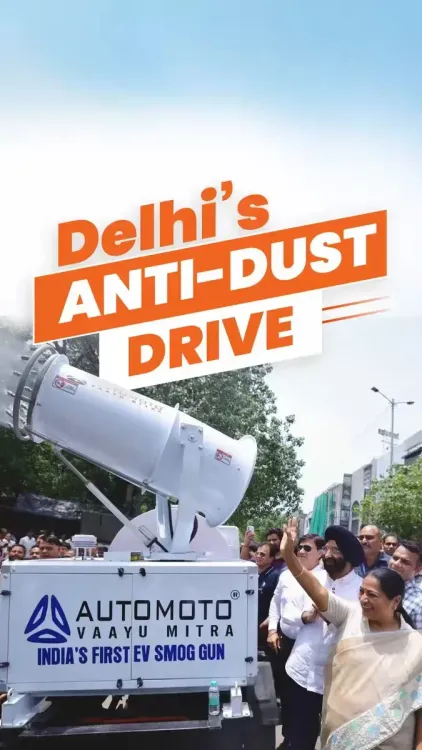
Delhi Chief Minister Rekha Gupta has announced the deployment of three ultra-modern, filterless air purification systems built on domestic technology to tackle smoke, dust, and vehicular emissions in the capital — framing the move as a Made-in-India answer to Delhi's chronic air-quality crisis.
Key Takeaways
Three filterless air purification units have been deployed across Delhi under Chief Minister Rekha Gupta's direction.
The systems use advanced filterless technology to target smoke, dust, and vehicular emissions directly at the source.
The initiative is positioned as a Made in India innovation, aligning with the national Atmanirbhar Bharat self-reliance push.
The deployment is tagged under the #ViksitDelhi campaign, linked to the broader Viksit Bharat 2047 national vision.
Performance during the 2026-27 winter season will be the key test for potential city-wide expansion.
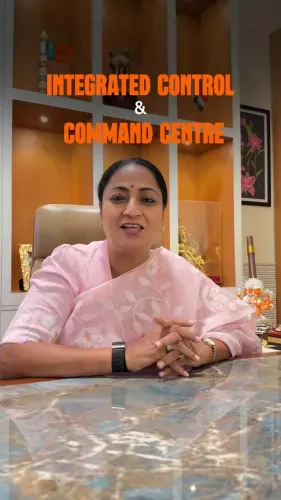
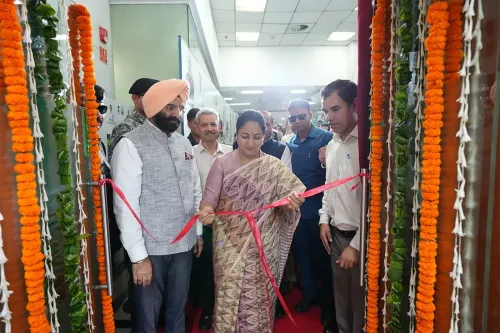
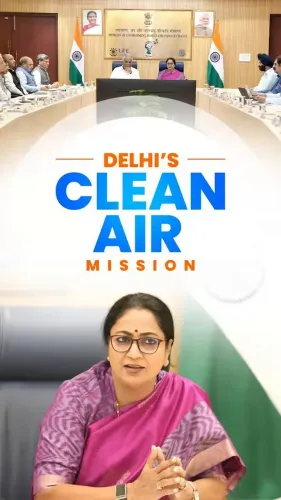
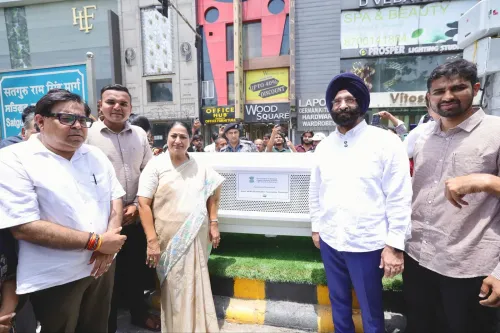
Delhi Chief Minister Rekha Gupta announced on Saturday, 23 May 2026 that three ultra-modern, filterless air purification systems — developed under India's domestic innovation push — have been deployed across the capital to combat smoke, dust, and vehicular emissions at the source.
Context
Delhi ranks among the world's most polluted capital cities, facing acute air-quality crises each winter driven by vehicular exhaust, construction dust, and seasonal crop-residue burning from neighbouring states. The city has seen successive administrations trial technological interventions — from smog towers to water-sprinkling trucks — alongside regulatory emergency measures under the Graded Response Action Plan (GRAP), which has been in force since 2017.
Gupta's post, tagged #ViksitDelhi, frames the new systems as a 'Made in India' solution, invoking the national manufacturing initiative launched in September 2014 to promote indigenous technology and reduce import dependence. The emphasis on domestic development also aligns with the broader Atmanirbhar Bharat self-reliance drive.
Policy Backdrop
The Commission for Air Quality Management (CAQM), established by Parliament in 2020, coordinates pollution control across Delhi-NCR and has repeatedly called for source-specific interventions beyond blanket restrictions. Filterless air purification technology — which typically uses electrostatic, ionic, or plasma-based mechanisms rather than physical filters — has gained traction as a lower-maintenance alternative to conventional filter-based units in high-pollution urban environments.
The deployment fits within the Viksit Delhi campaign, the capital's contribution to the national Viksit Bharat 2047 vision of a fully developed India, which includes modernising urban environmental infrastructure using domestically produced technology.
Stakeholders and Impact
Delhi's approximately 33 million residents — particularly daily commuters, outdoor workers, and children — stand to benefit most directly if the systems deliver measurable reductions in particulate and gaseous pollutants at targeted locations. Urban commuters navigating high-traffic corridors, where vehicular emissions are most concentrated, are the primary intended beneficiaries of source-level purification.
For domestic manufacturers and startups working in clean-air technology, the government procurement signals a potential market opening. A successful pilot could trigger city-wide tendering for additional units, with implications for the broader Indian environmental-tech sector.
What's Next
The critical test will come during the 2026-27 winter season, when Delhi's air quality typically deteriorates most sharply and falls under the highest GRAP alert tiers. Independent air-quality monitoring data from those months will determine whether the filterless systems produce verifiable improvements at deployment sites compared with baseline readings.
Any decision to scale the programme city-wide — or to expand procurement through open tendering — will hinge on that performance data, making the coming months a pivotal window for this particular technological bet on homegrown innovation.
Point of View
' Rekha Gupta is doing double duty — addressing a tangible civic grievance while reinforcing the BJP's Atmanirbhar Bharat narrative at the state level. Delhi's air-pollution problem has long been a political flashpoint, and technological deployments allow incumbents to project action without waiting for the slower results of regulatory enforcement. The filterless framing is notable: it signals a shift toward lower-maintenance, scalable infrastructure, which, if backed by credible air-quality data, could set a procurement template for other Indian cities. The real political and policy verdict, however, will arrive with winter smog — a deadline no announcement can defer.
NationPress
10 Oct 2026
Frequently Asked Questions
What are the filterless air purification systems deployed in Delhi?
Delhi Chief Minister Rekha Gupta announced three ultra-modern air purification units that use advanced filterless technology — such as electrostatic or ionic mechanisms — to remove smoke, dust, and vehicular emissions directly at the source, without relying on conventional physical filters.
Where are the new air purifiers installed in Delhi?
The Chief Minister's announcement did not specify exact installation locations; the systems are described as targeting high-pollution sources across Delhi, with precise site details expected to emerge as the programme is operationalised.
What is the Viksit Delhi campaign?
'Viksit Delhi' is Delhi's state-level contribution to the national 'Viksit Bharat 2047' vision, which aims to make India a fully developed nation by 2047 and includes modernising urban infrastructure, including environmental systems.
How does Made in India relate to Delhi's pollution fight?
The 'Make in India' initiative, launched in September 2014, promotes domestic manufacturing and innovation. CM Gupta's deployment of indigenously developed air purifiers frames pollution control as a homegrown technological achievement aligned with the Atmanirbhar Bharat self-reliance push.
Will Delhi's air quality improve with these new purifiers?
The effectiveness of the filterless systems will be assessed through independent air-quality monitoring, with the 2026-27 winter season — when Delhi's pollution peaks — serving as the critical performance test for any potential city-wide expansion.