Anurag Thakur Meets Goa CM on One Nation One Election Bill
Synopsis
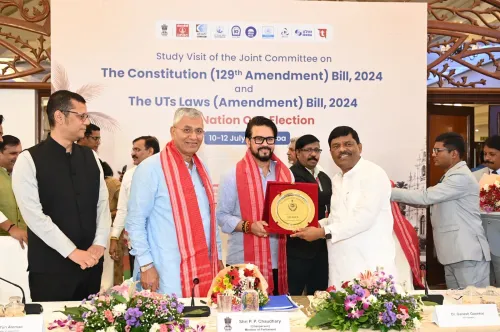
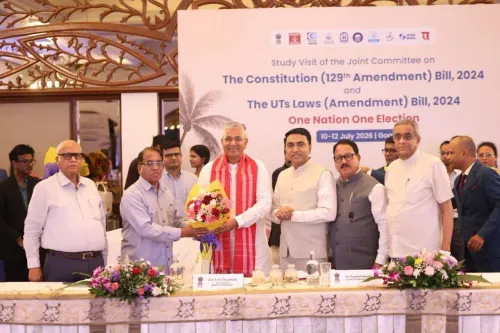
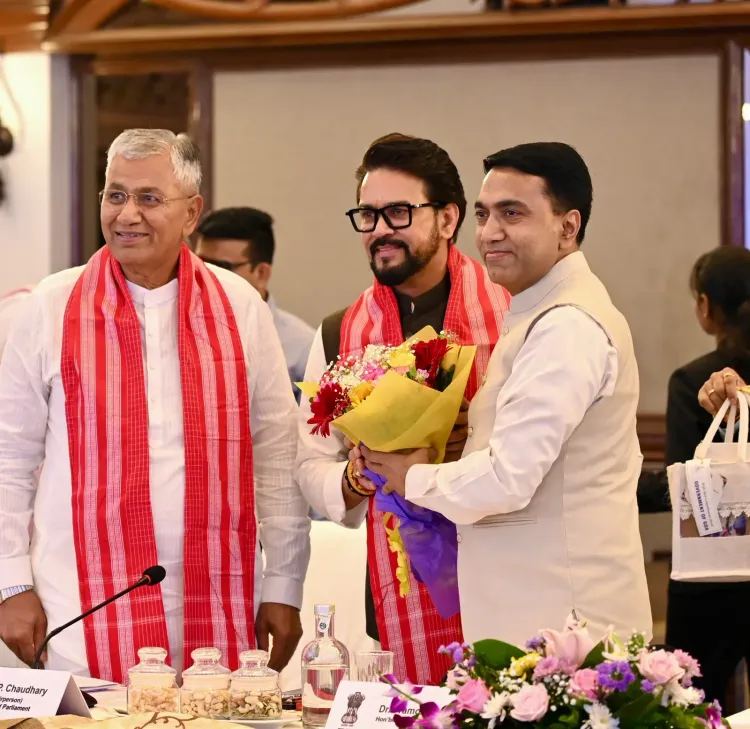
BJP MP Anurag Thakur, as part of the Joint Parliamentary Committee, met Goa Chief Minister Dr. Pramod Sawant on 11 July 2026 to discuss the Constitution (129th Amendment) Bill on One Nation One Election, emphasising policy continuity, resource optimisation, and cooperative federalism.
Key Takeaways
BJP MP Anurag Thakur met Goa CM Dr.
Pramod Sawant on 11 July 2026 as part of the JPC's state-level visit.
The meeting focused on the Constitution (129th Amendment) Bill, 2024 , which proposes simultaneous Lok Sabha and state assembly elections.
A high-level committee under former President Ram Nath Kovind was formed in September 2023 to study the feasibility of synchronised polls.
The Law Commission's 2018 draft report had earlier recommended constitutional amendments for simultaneous elections.
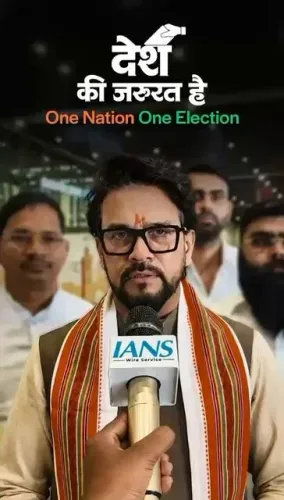
Thakur cited four benefits: reduced electoral disruptions, policy continuity, resource optimisation, and stronger cooperative federalism.
The bill requires a special majority in Parliament and ratification by at least half of state assemblies under Article 368 .
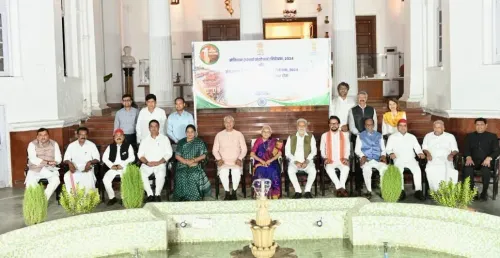
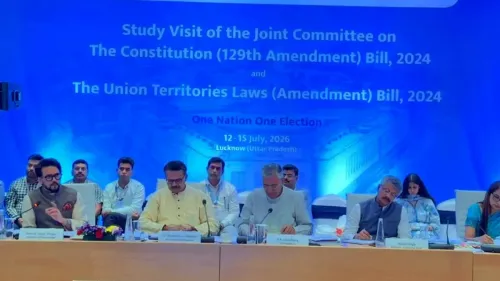
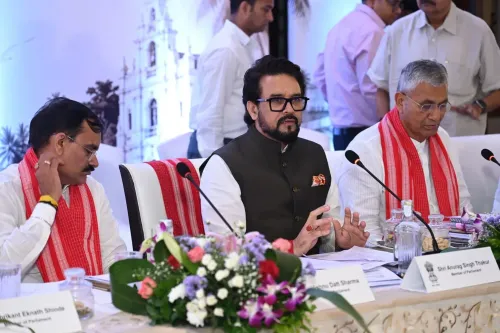
BJP MP Anurag Thakur, a member of the Joint Parliamentary Committee examining the Constitution (129th Amendment) Bill, 2024, met Goa Chief Minister Dr. Pramod Sawant on Saturday, 11 July 2026, as part of the JPC's ongoing state-level consultations on the One Nation One Election proposal.
Context
Thakur described the meeting as a 'productive discussion' on synchronised elections, stating that Goa's 'progressive vision under his leadership perfectly aligns with PM Modi's dream of Viksit Bharat 2047.' The JPC's visit to Goa is part of a broader outreach to state governments to build consensus around the constitutional amendment before the bill advances in Parliament.
The Constitution (129th Amendment) Bill, 2024 seeks to align Lok Sabha and state assembly election cycles so that polls are held simultaneously across the country. Proponents argue this would reduce the frequency of model code of conduct periods that freeze policy implementation at both central and state levels.
Policy Backdrop
The legislative push for simultaneous elections has a substantial policy lineage. In September 2023, the Union government constituted a high-level committee under former President Ram Nath Kovind to examine the feasibility of holding synchronised polls. The committee's recommendations fed into the drafting of the 129th Amendment Bill, which was subsequently referred to the Joint Parliamentary Committee for scrutiny.
Earlier, the Law Commission's 2018 draft report had recommended constitutional amendments to enable simultaneous elections for Parliament and state assemblies, flagging the fiscal and administrative burden of staggered electoral cycles. Successive Union budgets and NITI Aayog policy papers have echoed the concern about public expenditure on repeated elections.
Stakeholders and Impact
Thakur outlined four core arguments in favour of synchronised polls during his talks with Chief Minister Sawant: reducing repeated electoral disruptions, ensuring policy continuity, optimising resources, and strengthening cooperative federalism. State governments are among the most directly affected stakeholders, as their legislative calendars and development programmes are frequently interrupted by assembly election schedules.
Goa, a smaller state with a unicameral assembly, has previously aligned with several central governance reform initiatives. The BJP government in Goa's endorsement — if formalised — would add to the list of state-level voices supporting the amendment. Opposition-ruled states have, in broader national discourse, raised concerns about the proposal's implications for federalism and the autonomy of state electoral cycles.
What's Next
The JPC is expected to continue its state-level consultations before submitting its report to Parliament. The bill's fate will depend on whether it secures the required special majority in both Houses and ratification by at least half of the state assemblies, as mandated for constitutional amendments under Article 368. Parliamentary debates during the upcoming sessions will be a key indicator of whether the bill has sufficient cross-party support to advance. The outcome of the JPC's nationwide consultations, including this Goa visit, will shape the final contours of the proposed legislation.
Point of View
Even as opposition-ruled states remain sceptical. Anurag Thakur's direct involvement — as a senior MP with a background in Union cabinet portfolios — lends the consultations political weight beyond routine committee visits. The broader arc here is an attempt to convert a long-debated governance idea into a constitutional reality before the next general election cycle.
NationPress
10 Oct 2026
Frequently Asked Questions
What is the Constitution 129th Amendment Bill 2024?
The Constitution (129th Amendment) Bill, 2024 proposes to synchronise Lok Sabha and state assembly elections so they are held simultaneously, reducing repeated electoral cycles and associated disruptions to governance.
What is One Nation One Election?
One Nation One Election is a proposal to hold elections for the Lok Sabha and all state assemblies at the same time, rather than on staggered schedules, with the aim of cutting costs and minimising model-code-of-conduct freezes on policy.
Why did Anurag Thakur visit Goa in July 2026?
Anurag Thakur visited Goa as a member of the Joint Parliamentary Committee examining the Constitution (129th Amendment) Bill, as part of the JPC's consultations with state governments on the One Nation One Election proposal.
What did the Kovind committee recommend on simultaneous elections?
The high-level committee formed in September 2023 under former President Ram Nath Kovind examined the feasibility of simultaneous elections; its recommendations informed the drafting of the 129th Amendment Bill referred to the JPC.
How many states need to ratify the One Nation One Election amendment?
As a constitutional amendment under Article 368, the bill requires a special majority in both Houses of Parliament and ratification by at least half of India's state assemblies to come into force.