Goa CM Sawant backs One Nation One Election before JPC
Synopsis
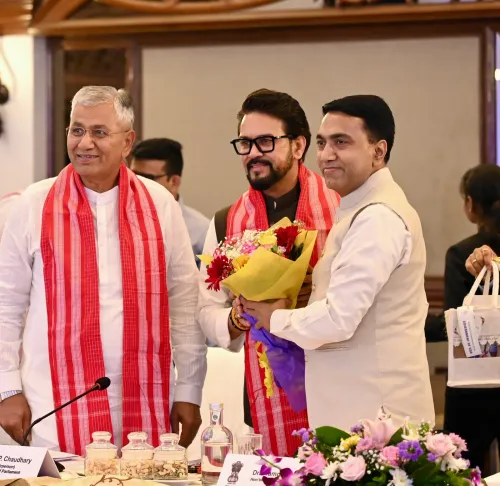
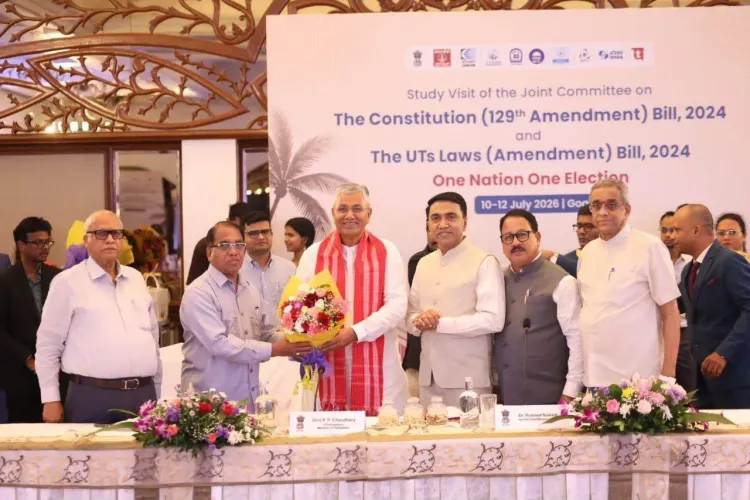
Goa Chief Minister Pramod Sawant appeared before the Joint Parliamentary Committee on One Nation One Election in Benaulim on 10 July 2026, presenting the state's formal backing for the Constitution (129th Amendment) Bill and linking electoral synchronisation to the Viksit Bharat 2047 vision.
Key Takeaways
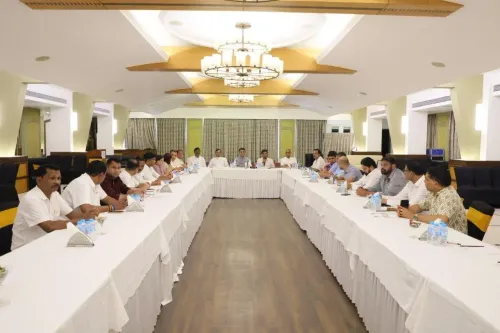
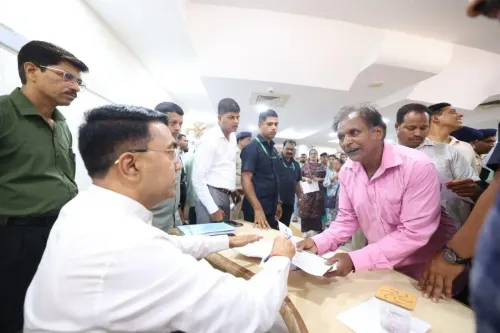
Goa CM Pramod Sawant met the JPC on One Nation One Election at Benaulim on 10 July 2026 .
The JPC is chaired by BJP MP P.
Chaudhary and is consulting state governments on the Constitution (129th Amendment) Bill, 2024 .
Sawant argued that frequent staggered elections disrupt 'governance, administrative continuity, policy formulation and budgetary planning.' The Government of Goa extended its 'full support' to the consultative exercise and the broader reform.
The proposal has a lineage stretching back to the 2018 Law Commission draft report and a 2023 Kovind committee study.
Any constitutional amendment will require a special parliamentary majority plus ratification by at least half of state legislatures.
Goa Chief Minister Pramod Sawant met the Joint Parliamentary Committee (JPC) on One Nation One Election at Benaulim, Goa, on 10 July 2026, presenting the state government's formal support for the Constitution (One Hundred and Twenty-Ninth Amendment) Bill, 2024. The JPC is chaired by BJP MP P. P. Chaudhary and is conducting stakeholder consultations across the country ahead of a potential parliamentary vote on the bill.
Context
CM Sawant used the interaction to convey Goa's perspective that 'while elections are the cornerstone of our democracy, the frequent election cycle across different states often impacts governance, administrative continuity, policy formulation and budgetary planning.' He congratulated Prime Minister Narendra Modi for initiating what he called a 'transformative and futuristic reform.' The meeting in Benaulim is part of a broader outreach by the JPC to state governments, constitutional experts, and civil society organisations.
Policy Backdrop
The idea of simultaneous elections has been part of BJP election manifestos since 2014. In 2018, the Law Commission of India published a draft report recommending synchronised electoral cycles, citing the recurring administrative and financial burden of staggered polls. In 2023, the Union government constituted a high-level committee under former President Ram Nath Kovind to study the proposal in depth; that committee's recommendations formed the basis for the 129th Amendment Bill now before the JPC.
The bill, if passed, would require constitutional amendments to align the terms of state legislative assemblies with the Lok Sabha cycle, effectively eliminating the current system where different states hold elections in different years. Proponents argue this would allow governments at all levels to focus on long-term development rather than remaining in a near-permanent campaign mode.
Stakeholders and Impact
State governments, the Election Commission of India, and national and regional political parties are the primary stakeholders. Supporters, including the Government of Goa, argue that a synchronised cycle would optimise public resources, reduce the deployment of central forces and administrative machinery for repeated elections, and strengthen Cooperative Federalism. Critics — primarily opposition parties and several state governments — contend that the reform could undermine the constitutional autonomy of states and concentrate electoral power at the Centre.
CM Sawant specifically framed Goa's support around the Viksit Bharat 2047 vision, the government's long-term goal of making India a developed nation by 2047. He argued that governance stability enabled by simultaneous elections would directly accelerate progress toward that target.
What's Next
The JPC is expected to complete its consultations with remaining state governments and submit its report to Parliament. Any constitutional amendment under the bill will require ratification by at least half of the state legislatures in addition to a special majority in both Houses of Parliament. The Government of Goa has stated it 'remains committed to contributing constructively towards reforms that make governance more efficient, transparent and people-centric,' signalling it would support ratification if and when the bill advances.
Point of View
Goa is positioning itself as a model of Centre-state consensus — useful optics for both the state and the ruling party at the national level. The reform's fate, however, will hinge on whether non-BJP states can be brought on board, making each state consultation a political data point as much as a legislative formality. The JPC process itself is now the key arena where the bill's momentum will be tested.
NationPress
9 Oct 2026
Frequently Asked Questions
What is the Constitution 129th Amendment Bill 2024?
The Constitution (One Hundred and Twenty-Ninth Amendment) Bill, 2024 proposes to synchronise Lok Sabha and state assembly elections so that all polls are held simultaneously, reducing the frequency of elections across India.
Why did Goa CM Pramod Sawant support One Nation One Election?
CM Sawant argued that the current staggered election cycle disrupts governance, policy formulation, and budgetary planning in states, and that a synchronised cycle would enable long-term development and optimise public resources.
Who is heading the JPC on One Nation One Election?
The Joint Parliamentary Committee examining the 129th Amendment Bill is chaired by BJP MP P. P. Chaudhary.
What is the history of One Nation One Election in India?
The idea featured in BJP manifestos from 2014 onwards. The Law Commission recommended it in a 2018 draft report, and in 2023 the Union government set up a high-level committee under former President Ram Nath Kovind, whose findings underpinned the current bill.
What happens after the JPC submits its report on One Nation One Election?
Parliament will debate and vote on the bill, which requires a special majority in both Houses and ratification by at least half of India's state legislatures before it can become law.