Jaishankar Meets Indian Diaspora in Oman, Hails Bilateral Ties
Synopsis
External Affairs Minister Dr. S. Jaishankar met the Indian diaspora in Oman on 10 July 2026, praising their enthusiasm for India-Oman ties and their contributions to both societies. The interaction reflects India's sustained diaspora diplomacy across the Gulf as part of its broader 'Think West' foreign policy approach.
Key Takeaways
Jaishankar met members of the Indian diaspora in Oman on the morning of 10 July 2026 .
The minister described the community's enthusiasm for strengthening India-Oman relations as 'palpable.' India and Oman have maintained diplomatic relations since 1955 , with a strategic partnership formalised in 2008 .
The engagement is part of India 's broader 'Think West' foreign policy, which treats Gulf diaspora communities as diplomatic bridges.
Observers will monitor whether the visit leads to concrete announcements on labour mobility or investment facilitation .
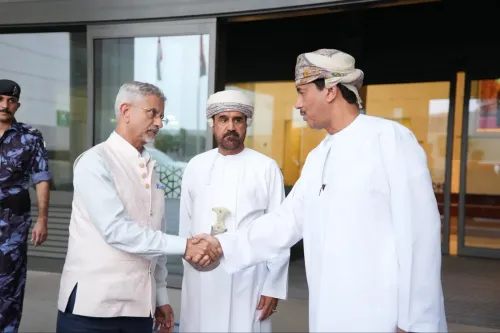
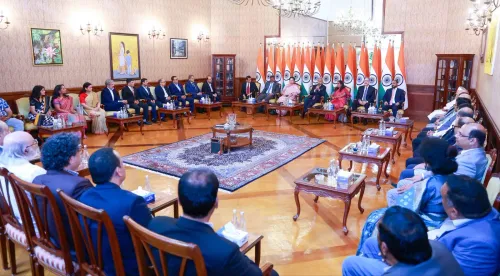
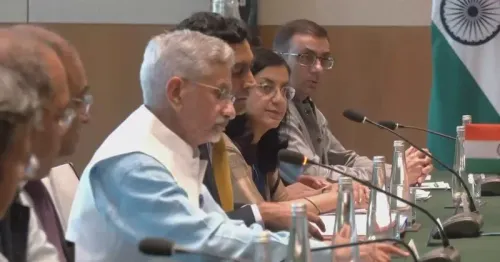
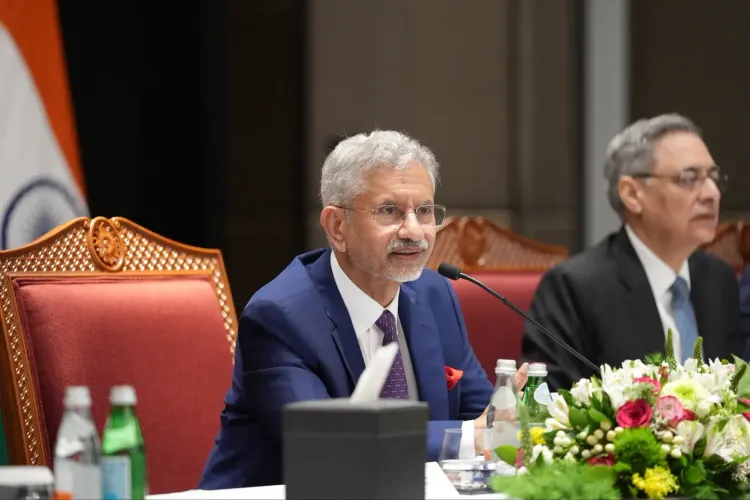
Union External Affairs Minister Dr. S. Jaishankar met members of the Indian diaspora in Oman on the morning of Friday, 10 July 2026, describing the interaction as productive and praising the community's enthusiasm for deepening India-Oman relations.
Context
Posting on X, Dr. Jaishankar said the diaspora's 'enthusiasm in strengthening India-Oman relations was palpable' and expressed appreciation for their 'many contributions to the society as well as to the India-Oman partnership.' The minister's engagement with the expatriate community underscores New Delhi's sustained practice of treating overseas Indians as active stakeholders in bilateral diplomacy, not merely beneficiaries of consular services.
The Indian community in Oman is one of the largest expatriate groups in the Gulf Cooperation Council region, contributing significantly to the sultanate's workforce across construction, healthcare, trade and services sectors, while also serving as a vital source of remittances to families across India.
Policy Backdrop
India and Oman established diplomatic relations in 1955, and the relationship was elevated to a strategic partnership in 2008, expanding cooperation across defence, energy and economic domains. Prime Minister Narendra Modi's visit to Muscat in February 2018 gave further momentum to maritime security coordination and people-to-people linkages between the two countries.
Oman occupies a distinctive place in India's 'Think West' foreign policy framework — a stable, non-adversarial Gulf partner with which New Delhi maintains regular high-level exchanges on maritime connectivity and regional security. Diaspora engagement of the kind conducted by Dr. Jaishankar typically complements or precedes formal bilateral mechanisms such as the India-Oman Joint Commission.
Stakeholders and Impact
The interaction directly concerns the Indian diaspora in Oman and the broader network of India-Oman trade and investment partners. For the expatriate community, a meeting with the External Affairs Minister signals continued governmental attention to their welfare and to the legal and economic frameworks that govern their stay in the sultanate.
For bilateral relations, such diaspora outreach reinforces soft-power channels alongside official diplomatic tracks, helping sustain goodwill at the community level even between formal state-to-state engagements. The minister's acknowledgement of diaspora contributions also carries symbolic weight, recognising the community's role as a human bridge between the two nations.
What's Next
Observers will watch for any follow-up announcements on labour mobility frameworks, investment facilitation corridors or updated bilateral agreements emerging from Dr. Jaishankar's visit to Oman. The next round of India-Oman Foreign Office Consultations will be a key indicator of whether this high-level engagement translates into concrete policy outcomes on trade, connectivity or people-to-people mobility. Sustained diaspora diplomacy of this nature positions the Indian community in Oman as an enduring pillar of one of New Delhi's most stable Gulf partnerships.
Point of View
Where people-to-people engagement is used to reinforce state-level strategic partnerships. Oman's consistent neutrality and geographic position at the mouth of the Persian Gulf make it a uniquely valuable partner in India's maritime and energy calculus. By personally meeting expatriates during what appears to be an official bilateral visit, Jaishankar signals that the diaspora is not a peripheral concern but a deliberate instrument of foreign policy. This pattern of engagement — community meeting paired with formal bilateral talks — has become a signature of Indian diplomacy across the GCC under the current government.
NationPress
10 Jul 2026
Frequently Asked Questions
Why did Jaishankar visit Oman in July 2026?
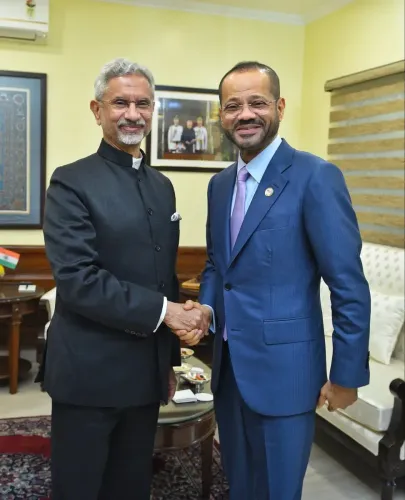
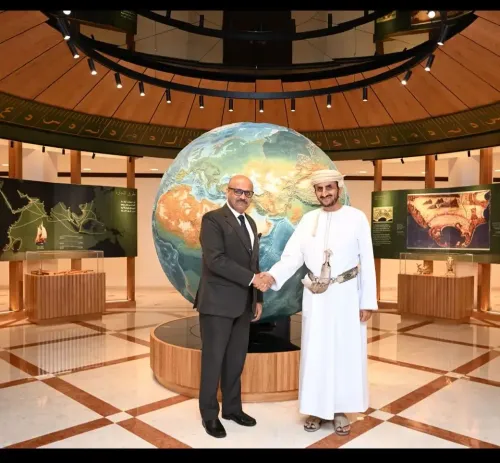
Dr. S. Jaishankar visited Oman in July 2026 as part of bilateral diplomatic engagement, which included a meeting with the Indian diaspora to discuss their contributions to India-Oman relations .
How many Indians live in Oman?
The Indian community in Oman is one of the largest expatriate groups in the Gulf Cooperation Council region, working across sectors such as construction, healthcare and trade, though specific current figures were not stated in the minister's post.
What is India's strategic partnership with Oman?
India and Oman formalised a strategic partnership in 2008 , building on diplomatic ties established in 1955 , covering defence cooperation, energy, maritime security and economic linkages.
What is India's 'Think West' policy?
'Think West' is India 's foreign policy approach that prioritises deepening ties with Gulf and West Asian nations, treating diaspora communities and energy partnerships as central pillars of engagement.
What could follow Jaishankar's Oman visit?
Analysts expect potential announcements on labour mobility frameworks or investment facilitation agreements, and the next India-Oman Foreign Office Consultations will be closely watched for concrete outcomes.