CM Rekha Gupta Reviews Made-in-India Air Purifiers Across Delhi

Synopsis
Delhi Chief Minister Rekha Gupta inspected three indigenously developed air purification systems — the STR 101 Filterless Air Purifier, an EV-mounted Anti-Smog Gun, and the PAWAN III device — deployed across west Delhi on 23 May 2026, framing the drive as a 365-day pollution-control campaign.
Key Takeaways
21 STR 101 Filterless Air Purifiers have been installed along Sat Guru Ram Singh Marg , each treating approximately 3 lakh litres of air per hour .
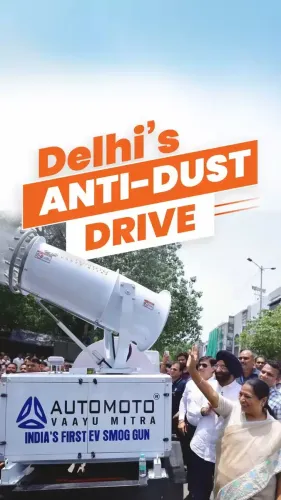
An EV-mounted Anti-Smog Gun — described as a zero-emission moving system — is deployed in Kirti Nagar and Mayapuri to create clean-air corridors.
The PAWAN III device near Kirti Nagar Fire Station targets vehicular pollution at source; field trials cited a 29 per cent reduction in particulate pollution.
All three technologies are described as 'Made in India' , aligning the drive with the national indigenous manufacturing initiative.
CM Gupta framed the campaign as a 365-day effort , not a seasonal winter measure.
Cabinet minister Manjinder Singh Sirsa and MLA Harish Khurana accompanied the Chief Minister during the on-ground review.
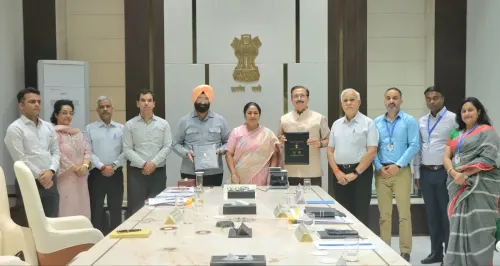
Delhi Chief Minister Rekha Gupta on Saturday, 23 May 2026, conducted an on-ground inspection of three indigenously developed air purification technologies deployed across west Delhi, underscoring the government's stated commitment to year-round pollution control rather than seasonal interventions alone.
Context
Gupta was accompanied by cabinet colleague Manjinder Singh Sirsa and BJP MLA Harish Khurana during the review. The Chief Minister framed the exercise as part of a continuous campaign — '365 din swachh hawa aur behtar janswasthya ke liye' (for clean air and better public health 365 days a year) — explicitly distancing the effort from the perception that Delhi's anti-pollution drive is limited to the winter smog season.
Three distinct 'Made in India' devices were inspected during the visit, each targeting a different source or corridor of urban air pollution.
Policy Backdrop
The deployment sits within a longer arc of technological pilots in the capital. Delhi administrations began trialling anti-smog guns as early as 2019–20, while the Graded Response Action Plan (GRAP), introduced in 2017, established the regulatory scaffolding for staged emergency responses to deteriorating air quality across the Delhi-NCR region. The Commission for Air Quality Management, a statutory body set up in 2021, coordinates these efforts across state boundaries.
The current BJP-led Delhi government has placed emphasis on indigenously manufactured equipment, aligning the pollution-control push with the national Make in India initiative launched in September 2014. All three devices inspected on Saturday are described as domestically produced.
The Three Technologies
The first system, the STR 101 Filterless Air Purifier, comprises 21 devices installed along Sat Guru Ram Singh Marg. According to the post, the advanced self-cleaning system treats approximately 3 lakh litres of air per hour, targeting smoke, dust, PM2.5, PM10, and other harmful pollutants.
The second is an EV-mounted Anti-Smog Gun deployed in the Kirti Nagar and Mayapuri areas. Described in the post as a zero-emission moving anti-smog system, it is designed to reduce road dust and pollution while creating clean-air corridors for improved visibility and breathing comfort.
The third device, PAWAN III, is installed near Kirti Nagar Fire Station and is designed to capture and treat vehicular pollution at source level. The post states that field trials recorded a reduction of approximately 29 per cent in particulate pollution.
Stakeholders and Impact
The deployments are concentrated in west Delhi's Kirti Nagar and Mayapuri belt — a mixed industrial and residential zone where vehicular traffic and industrial activity combine to produce elevated pollution loads. Residents, daily commuters, and workers in the area stand to be the most immediate beneficiaries if the pilots scale.
The year-round framing signals a political as well as administrative shift: the BJP government appears keen to demonstrate that anti-pollution action is not reactive to winter emergencies but is being built into the city's permanent infrastructure.
What's Next
The critical test will come during the 2026–27 winter season, when Delhi's air quality typically deteriorates sharply due to a combination of stubble burning in neighbouring states, falling temperatures, and reduced wind speeds. Performance data from these field deployments will determine whether the cabinet decides to expand the technology to additional corridors or industrial clusters across the capital. Any such expansion decision would also signal how seriously the administration intends to pursue source-level, year-round intervention as a complement to emergency-response frameworks like GRAP.
Point of View
The BJP-led Delhi government is attempting to reframe the city's pollution narrative away from the crisis-management optics that have defined past administrations. Concentrating the pilots in the Kirti Nagar–Mayapuri industrial belt suggests a deliberate targeting of high-visibility, high-footfall corridors where results — or their absence — will be quickly felt by residents. The move also positions the government ahead of the next winter smog cycle, when public and regulatory scrutiny of Delhi's air quality peaks. Whether these pilots translate into city-wide policy will depend on verifiable performance data and the cabinet's willingness to commit capital expenditure at scale.
NationPress
16 Sept 2026
Frequently Asked Questions
What air purification technologies did Delhi CM Rekha Gupta inspect on 23 May 2026?
CM Rekha Gupta inspected three systems: the STR 101 Filterless Air Purifier (21 units on Sat Guru Ram Singh Marg), an EV-mounted Anti-Smog Gun in Kirti Nagar and Mayapuri, and the PAWAN III Pollution Control Device near Kirti Nagar Fire Station.
What is the PAWAN III device and where is it installed in Delhi?
PAWAN III is a pollution control device installed near Kirti Nagar Fire Station that captures and treats vehicular pollution at source level. Field trials cited in the post recorded approximately a 29 per cent reduction in particulate pollution.
What is the STR 101 Filterless Air Purifier and how does it work?
The STR 101 is an advanced self-cleaning air purification system that targets smoke, dust, PM2.5, PM10, and other pollutants. According to the post, 21 units installed on Sat Guru Ram Singh Marg treat approximately 3 lakh litres of air per hour.
What is the EV-mounted Anti-Smog Gun deployed in Delhi?
The EV-mounted Anti-Smog Gun is described in the post as a zero-emission mobile anti-smog system deployed in Kirti Nagar and Mayapuri. It is designed to reduce road dust and pollution while creating clean-air corridors for better visibility and breathing comfort.
Why is the Delhi government focusing on year-round pollution control instead of seasonal measures?
CM Rekha Gupta has stated that Delhi's anti-pollution drive is a 365-day campaign aimed at clean air and better public health, not just a winter response. The deployment of permanent and mobile purification systems reflects an effort to address pollution at source throughout the year.