CM Rekha Gupta Launches Delhi Clean Air Program
Synopsis
Delhi Chief Minister Rekha Gupta on 10 July 2026 launched the orientation workshop for the 'Swachh Hawa, Swasth Delhi' Delhi Clean Air Program — a seven-year, ₹8,300 crore World Bank-backed initiative targeting air pollution through EV expansion, 32,000 charging points, tree planting, and Yamuna rejuvenation.
Key Takeaways
Delhi Chief Minister Rekha Gupta inaugurated the 'Swachh Hawa, Swasth Delhi' orientation workshop on 10 July 2026 .
The Delhi Clean Air Program is a seven-year initiative worth ₹8,300 crore , implemented with World Bank support.
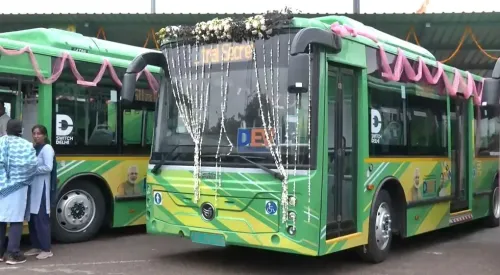
Key measures include a new EV Policy , expansion of electric buses, and 32,000 EV charging points across Delhi.
The government has committed to planting 70 lakh trees and pursuing Yamuna river rejuvenation .
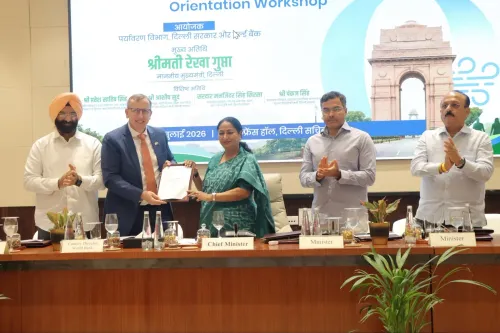
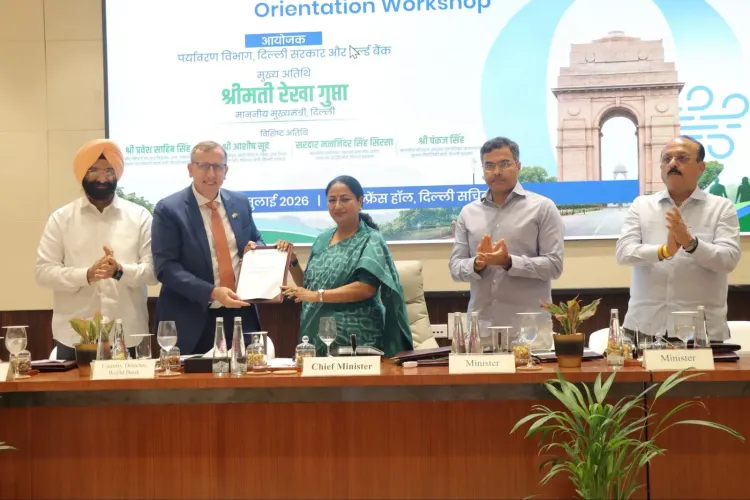
Cabinet ministers Pravesh Sahib Singh , Ashish Sood , Manjinder Singh Sirsa , and World Bank Acting Country Director Paul Procee attended the workshop.
The programme builds on the National Clean Air Programme (2019) , which listed Delhi among 131 non-attainment cities .
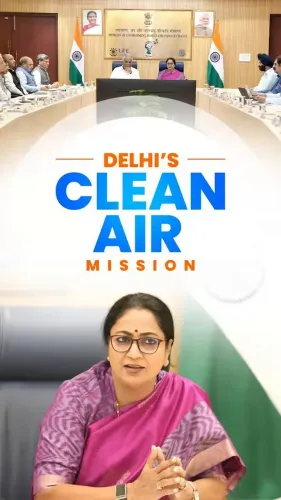
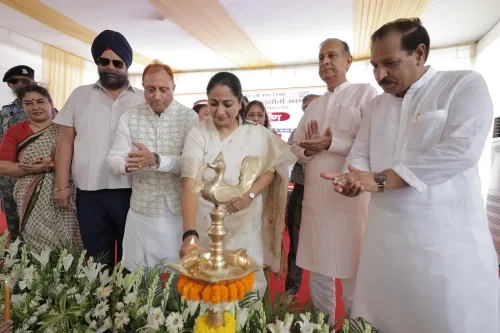
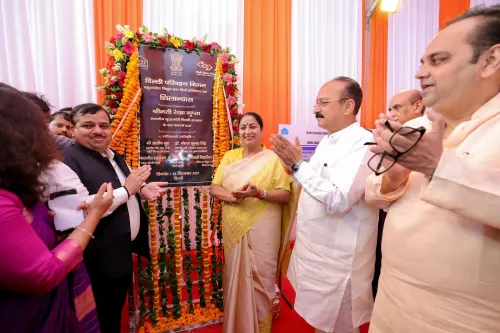
Delhi Chief Minister Rekha Gupta on Friday, 10 July 2026, inaugurated the orientation workshop for the 'Swachh Hawa, Swasth Delhi' (Delhi Clean Air Program), a seven-year initiative valued at ₹8,300 crore being implemented in collaboration with the World Bank to tackle air pollution in the national capital.
Context
Posting on X, CM Gupta described the programme as a significant step undertaken under the leadership of Prime Minister Narendra Modi. She wrote — 'दिल्ली में वायु प्रदूषण नियंत्रण के लिए माननीय प्रधानमंत्री श्री @narendramodi जी के नेतृत्व में World Bank के सहयोग से ₹8,300 करोड़ के सात वर्षीय कार्यक्रम की शुरुआत एक महत्वपूर्ण कदम है' — ('The launch of a seven-year, ₹8,300 crore programme in collaboration with the World Bank for air pollution control in Delhi, under the leadership of Prime Minister Modi, is an important step.')
The workshop was jointly organised by the World Bank and Delhi's Environment Department. Senior cabinet colleagues — Pravesh Sahib Singh, Ashish Sood, and Manjinder Singh Sirsa — along with World Bank Acting Country Director Paul Procee were present at the event.
Policy Backdrop
Delhi has long ranked among the world's most polluted capitals, prompting successive policy interventions at both the state and central levels. The National Clean Air Programme (NCAP), launched in 2019, had already identified Delhi as one of 131 non-attainment cities requiring targeted particulate pollution reduction measures.
The Delhi Clean Air Program builds on this framework by combining multilateral financing with inter-departmental coordination, advanced monitoring technology, and on-ground enforcement. The World Bank's involvement marks an expansion of its urban environmental lending in India — from earlier city-level pilots to larger, programmatic support.
Key Measures Announced
CM Gupta outlined a set of concrete interventions the Delhi government is pursuing alongside the programme. These include a new EV Policy, expansion of electric buses, installation of 32,000 EV charging points, and strict enforcement against dust and open waste burning.
Additionally, the government has committed to planting 70 lakh trees and advancing the Yamuna river rejuvenation project. The Chief Minister stated that better monitoring, modern technology, inter-departmental coordination, and effective implementation would give 'new momentum' to pollution control efforts.
Stakeholders and Impact
The programme's primary beneficiaries are Delhi's approximately 2 crore residents, who face some of the most severe air quality conditions in the country, particularly during winter months. Transport operators, construction agencies, and municipal bodies will be key implementing partners subject to tightened regulatory oversight.
The World Bank's programmatic lending approach — channelled through the Environment Department — is expected to incentivise measurable outcomes in air quality indices rather than just infrastructure outlays.
What's Next
Attention will now turn to the phased disbursement of the ₹8,300 crore corpus over the seven-year programme period, and whether the 32,000 EV charging points and expanded electric bus fleet can be delivered on schedule. Progress on the Yamuna rejuvenation component will also be closely watched, given the river's status as a long-standing environmental flashpoint in Delhi's political discourse.
Point of View
The event frames pollution control as a Centre-state collaborative success rather than a purely local issue. The inclusion of EV infrastructure and Yamuna rejuvenation — both historically contested terrain in Delhi politics — suggests the government is seeking to consolidate a broad environmental mandate. Whether the seven-year timeline and ₹8,300 crore corpus translate into sustained air quality improvement will ultimately define the programme's political legacy.
NationPress
8 Oct 2026
Frequently Asked Questions
What is the Delhi Clean Air Program?
The Delhi Clean Air Program, also called 'Swachh Hawa, Swasth Delhi,' is a seven-year, ₹8,300 crore initiative launched by the Delhi government with World Bank support to reduce air pollution through technology, monitoring, EV expansion, tree planting, and Yamuna rejuvenation.
Who launched the Delhi Clean Air Program orientation workshop?
Delhi Chief Minister Rekha Gupta inaugurated the orientation workshop on 10 July 2026, jointly organised by the World Bank and Delhi's Environment Department.
How many EV charging points will Delhi install under the Clean Air Program?
The Delhi government has announced the installation of 32,000 EV charging points as part of the broader clean air and electric mobility push.
What is the World Bank's role in Delhi's air pollution programme?
The World Bank is a key financial and technical partner in the Delhi Clean Air Program. World Bank Acting Country Director Paul Procee attended the launch workshop, and the institution is providing cooperation for the ₹8,300 crore seven-year initiative.
How many trees will Delhi plant under the Clean Air Program?
The Delhi government has committed to planting 70 lakh trees as part of the programme's green cover and pollution mitigation measures.