Delhi's ₹8,300 crore 'Clean Air, Healthy Delhi' project gets World Bank backing
Synopsis
Delhi is committing ₹8,300 crore over seven years to clean its air — with the World Bank footing 65 per cent of the bill. CM Rekha Gupta's 'Clean Air, Healthy Delhi' project is the capital's most ambitious, structurally integrated pollution push yet, spanning transport, construction waste, industry, and green spaces across every district from 2026 to 2033.
Key Takeaways
Delhi CM Rekha Gupta announced the ₹8,300 crore 'Clean Air, Healthy Delhi' project on 4 July 2025 .
The World Bank will fund 65 per cent of the cost; the Delhi Government bears the remaining 35 per cent .
The seven-year project runs from September 2026 to August 2033 , covering all districts of Delhi.
Key sectors targeted include transport, road dust, C&D waste, solid waste, industry, green spaces, and water pollution .
A Project Management Unit (PMU) and an ICCC-based monitoring system will be established for implementation oversight.
A stakeholder workshop is scheduled for 10 July to finalise roles and the implementation roadmap.
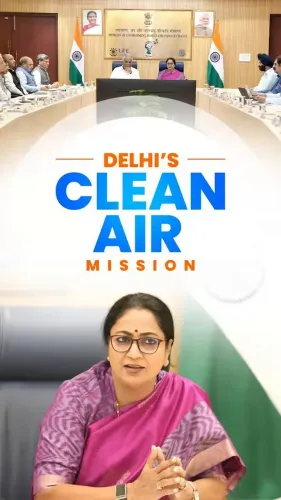
Delhi Chief Minister Rekha Gupta on Friday, 4 July 2025, announced the launch of the ₹8,300 crore, seven-year 'Clean Air, Healthy Delhi' project — a sweeping air pollution mitigation initiative backed by the World Bank and other multilateral institutions. The programme will run from September 2026 to August 2033, covering all districts of the capital.
Project Structure and Funding
The World Bank will fund 65 per cent of the total project cost, with the remaining 35 per cent to be borne by the Delhi Government. The initiative falls under the Environment Department and is designed to advance the objectives of the National Clean Air Programme (NCAP) while contributing to the broader national vision of 'Viksit Bharat 2047'.
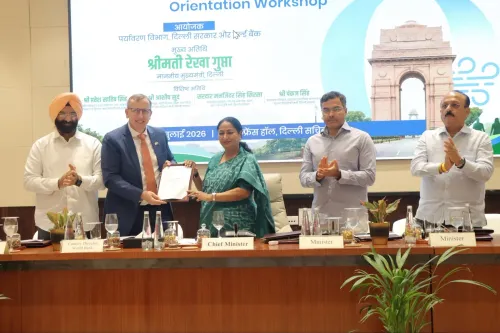
A dedicated workshop is scheduled for 10 July to finalise preparations and strengthen coordination among all stakeholders. The workshop will define departmental roles and map out a roadmap for timely implementation, according to an official statement.
Two Pillars of Action
The project is built around two strategic pillars. The first focuses on strengthening air quality management in Delhi. This includes establishing a dedicated Project Management Unit (PMU), deploying modern air quality monitoring systems, building data analytics capabilities, and setting up an Integrated Command and Control Centre (ICCC)-based monitoring system.
Coordination with Indo-Gangetic Plain states will also be pursued under this pillar, alongside scientific planning, public awareness campaigns, training programmes, and the adoption of new technologies.
The second pillar targets direct emission reduction from major pollution sources. Measures include phasing out older, high-emission vehicles, promoting electric vehicles (EVs), expanding public transport, and developing an advanced Pollution Under Control (PUC) monitoring system for vehicular emissions.
Key Sectors Targeted
The programme will address pollution across transport, road dust, construction and demolition (C&D) waste, solid waste management, industry, green spaces, and water pollution. Chief Minister Gupta described the initiative as 'not merely a pollution control programme but a long-term investment' aimed at providing Delhi residents with cleaner air, improved public health, and a more sustainable urban environment.
Agencies Involved
A wide network of Delhi government bodies will participate in implementation, including the Delhi Pollution Control Committee (DPCC), Transport Department, Public Works Department (PWD), Municipal Corporation of Delhi (MCD), Delhi Jal Board (DJB), Delhi Transport Corporation (DTC), Delhi Traffic Police, Delhi Development Authority (DDA), New Delhi Municipal Council (NDMC), Delhi Cantonment Board (DCB), and several other institutions. The Department of Economic Affairs (DEA) of the Government of India will also serve as a key partner alongside the World Bank.
With Delhi consistently ranking among the world's most polluted capitals, the seven-year timeline signals an intent to move beyond seasonal emergency measures toward structural, long-term intervention — though execution across so many agencies will be the project's defining challenge.
Point of View
Construction bans, and seasonal stubble-burning crises for years — each a reactive fix rather than a structural solution. The 'Clean Air, Healthy Delhi' project's seven-year horizon and World Bank partnership suggest a genuine shift in ambition, but the real risk lies in inter-agency coordination: getting the MCD, DTC, DDA, Delhi Traffic Police, and over a dozen other bodies to move in lockstep has historically been Delhi's governance blind spot. The 65 per cent World Bank funding also brings accountability strings that domestic schemes often lack — disbursements tied to measurable milestones could be the discipline Delhi's pollution fight has always needed, if the government honours those conditions rather than renegotiating them away.
NationPress
2 Oct 2026
Frequently Asked Questions
What is the 'Clean Air, Healthy Delhi' project?
It is a ₹8,300 crore, seven-year air pollution mitigation initiative announced by Delhi Chief Minister Rekha Gupta, running from September 2026 to August 2033 across all districts of Delhi. The project is backed by the World Bank and aligns with the National Clean Air Programme (NCAP) and the 'Viksit Bharat 2047' vision.
How much will the World Bank contribute to the project?
The World Bank will provide 65 per cent of the total ₹8,300 crore project cost, with the Delhi Government funding the remaining 35 per cent. The Department of Economic Affairs (DEA) of the Government of India is also a key partner.
Which pollution sources does the project target?
The project targets seven key sectors: transport, road dust, construction and demolition waste, solid waste management, industry, green spaces, and water pollution. It also includes phasing out older high-emission vehicles and promoting electric vehicles.
When will the project begin and how long will it run?
Implementation is scheduled to begin in September 2026 and run through August 2033 — a span of seven years. A preparatory workshop is set for 10 July to finalise departmental roles and the implementation roadmap.
Which agencies will implement the Clean Air, Healthy Delhi project?
Over a dozen Delhi government bodies are involved, including the Delhi Pollution Control Committee (DPCC), Municipal Corporation of Delhi (MCD), Delhi Transport Corporation (DTC), Delhi Jal Board (DJB), Delhi Development Authority (DDA), Public Works Department (PWD), Delhi Traffic Police, New Delhi Municipal Council (NDMC), and several others.