Is Delhi CM Ready to Tackle Pollution as a Year-Round Challenge?
Synopsis
Delhi's Chief Minister Rekha Gupta emphasizes air pollution as a year-round concern, unveiling new initiatives to combat it. With the launch of monitoring stations and the 'Vayu Rakshak' program, Delhi aims for effective pollution control, ensuring cleaner air for its residents.
Key Takeaways
Air pollution is acknowledged as a year-round challenge by the Delhi government.
The introduction of Continuous Ambient Air Quality Monitoring Stations enhances real-time monitoring.
The 'Vayu Rakshak' initiative aims to strengthen enforcement against pollution.
Public access to air quality data promotes transparency and informed policymaking.
Delhi aims to increase its fleet of clean-fuel buses significantly by 2028.
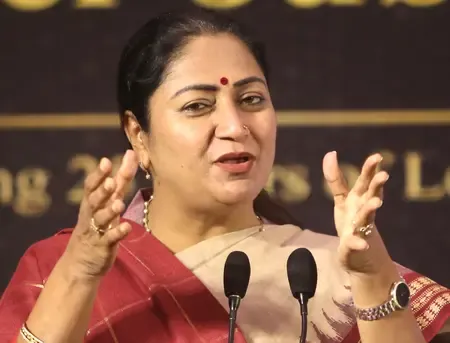
New Delhi, Feb 9 (NationPress) Delhi Chief Minister Rekha Gupta stated on Monday that air pollution is a persistent challenge throughout the year, transcending seasonal variations, and reaffirmed the government's commitment to continuously address this pressing issue.
She stressed that ensuring clean and breathable air for the residents of Delhi is a fundamental duty of the government.
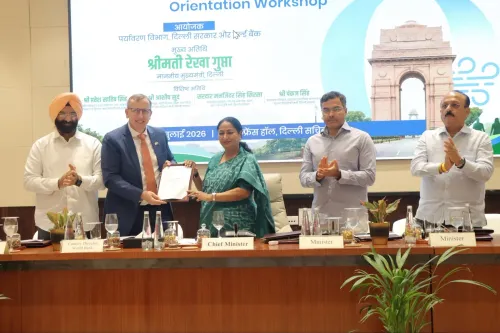
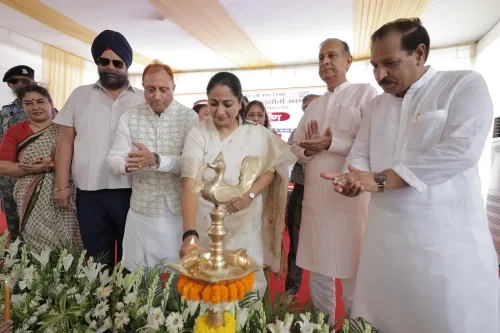
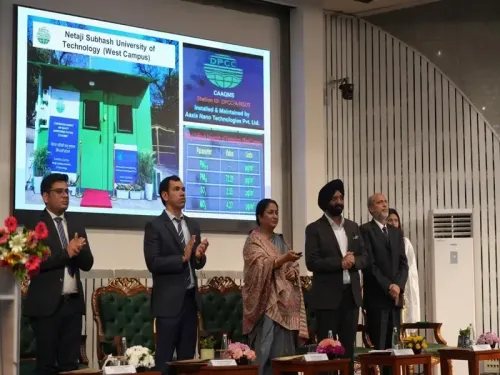
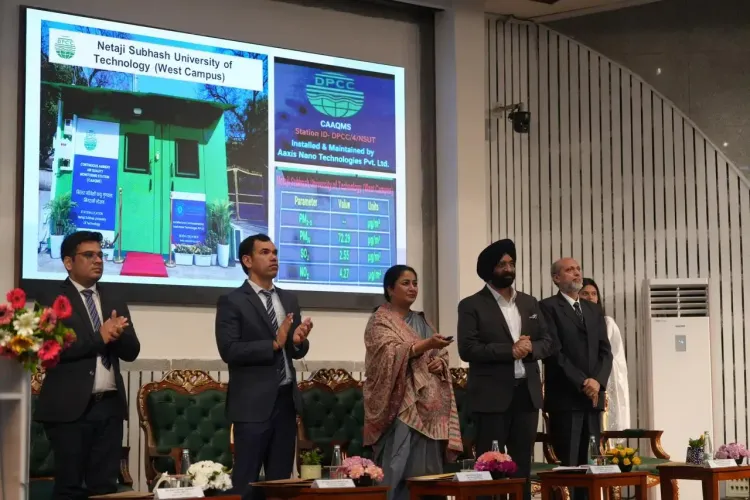
During the inauguration of six new Continuous Ambient Air Quality Monitoring Stations (CAAQMS) and the launch of the 'Vayu Rakshak' initiative, which includes the deployment of 100 dedicated Vayu Rakshaks, Chief Minister Gupta reiterated her dedication to combating pollution in the national capital.
This initiative aims to enhance both real-time air quality monitoring and on-ground enforcement, securing actions against pollution year-round.
The six new monitoring stations were inaugurated virtually at Jawaharlal Nehru University (JNU), Indira Gandhi National Open University (IGNOU), SPMSPC Talkatora Garden, Commonwealth Sports Complex, Delhi Cantonment, and NSUT (West Campus).
With these additions, the total number of CAAQMS in Delhi has risen to 46, establishing it as the largest air quality monitoring network in any city across the nation, the statement noted.
Among these, 30 stations are managed by the Delhi Pollution Control Committee (DPCC), 10 by the India Meteorological Department / IITM, and 6 by the Central Pollution Control Board (CPCB). An additional 14 monitoring stations are planned for future installation.
The Chief Minister underscored that air quality data is completely transparent and publicly accessible.
She mentioned that PM10 and PM2.5 data is refreshed hourly, while other parameters are updated every five minutes. The government is committed to evidence-based policymaking supported by transparent data.
As part of this initiative, 100 Vayu Rakshaks have been assigned to coordinate with the DPCC for effective on-ground pollution control. Furthermore, 600 Vayu Rakshaks, alongside the Delhi Police, are monitoring traffic and emissions violations.
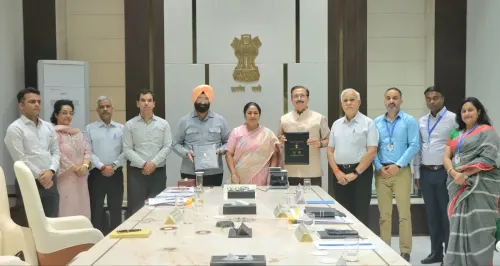
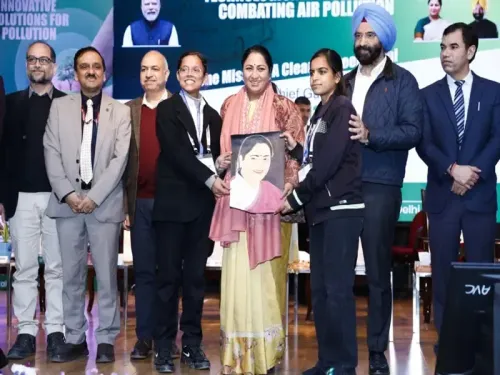
The programme, held at the Delhi Secretariat, saw the presence of Environment Minister Manjinder Singh Sirsa and senior officials from the Environment Department.
Addressing measures in the transport sector, the Chief Minister noted that the Delhi Transport Corporation (DTC) currently operates nearly 4,000 electric buses, the highest in the country, with plans to introduce 14,000 clean-fuel buses by 2028.
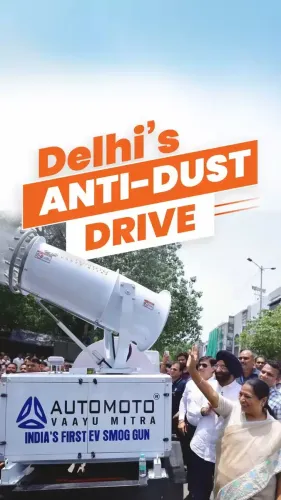
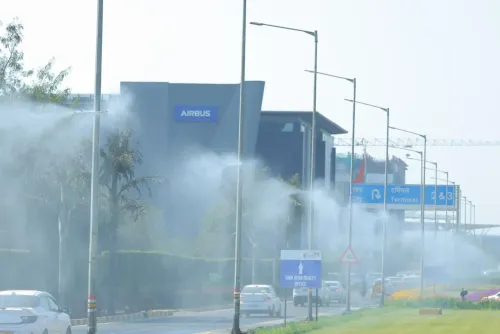
She also highlighted ongoing initiatives like landfill remediation, waste-to-energy projects, mechanical road sweeping, mist spraying, dust control measures, and expansion of green cover.
Sirsa emphasized that monitoring needs to be paired with strict enforcement to yield effective results.
He stated that the deployment of 100 Vayu Rakshaks will ensure pollution control measures are effectively executed at the ground level.
In 2024, it was reported that 233 positions were vacant in the DPCC, of which 157 have been filled within the last 11 months, significantly bolstering enforcement capabilities.
Sirsa further added that pollution control measures are being implemented across various sectors, including vehicles, construction activities, road dust management, and afforestation.
Point of View
It is essential to recognize the ongoing efforts by the Delhi government to address air pollution as a persistent issue. The introduction of monitoring stations and dedicated personnel reflects a proactive approach to environmental challenges. As air quality remains a pressing concern for urban populations, such initiatives could serve as examples for other regions to adopt similar measures.
NationPress
1 Oct 2026
Frequently Asked Questions
What is the 'Vayu Rakshak' initiative?
The 'Vayu Rakshak' initiative involves deploying 100 dedicated personnel to monitor and enforce air quality regulations in Delhi.
How many air quality monitoring stations are in Delhi?
With the recent additions, Delhi now has a total of 46 Continuous Ambient Air Quality Monitoring Stations.
What measures are being taken to improve air quality?
The government is implementing various measures, including landfill remediation, waste-to-energy projects, and expanding green cover, in addition to enhanced monitoring.
How often is air quality data updated?
PM10 and PM2.5 data are updated every hour, while other parameters are refreshed every five minutes.
How many electric buses are operated by DTC?
The Delhi Transport Corporation currently operates nearly 4,000 electric buses, the highest number in the country.