Is the Delhi government devising a year-round strategy to tackle air pollution?

Synopsis
In a groundbreaking move, Delhi Environment Minister Manjinder Singh Sirsa outlines plans for a comprehensive, year-round strategy to tackle air pollution. This initiative emphasizes science-driven solutions and advanced technology, aiming for a cleaner, healthier Delhi. The collaboration with IIT Kanpur could revolutionize pollution control in the city.
Key Takeaways
Year-round strategy for pollution control is being developed.
Collaboration with IIT Kanpur aims to enhance monitoring.
Proactive measures include inspections and fines for vehicular pollution.
Focus on real-time data for informed decision-making.
Multi-agency cooperation is crucial for effective implementation.
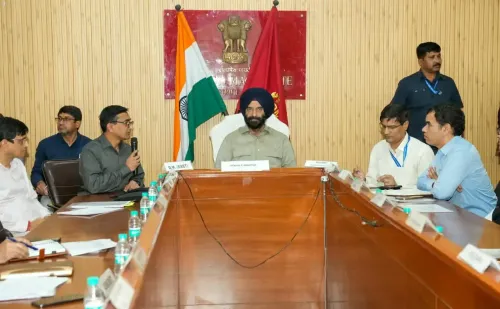
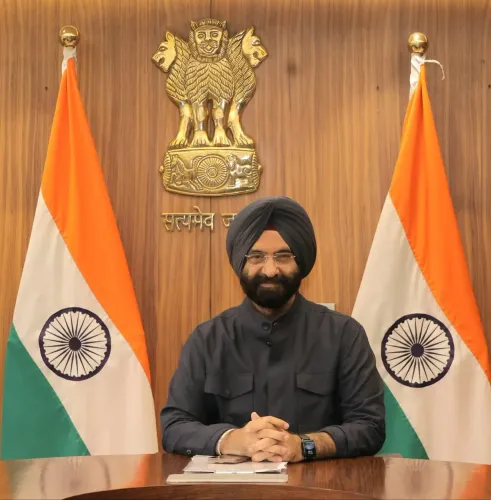
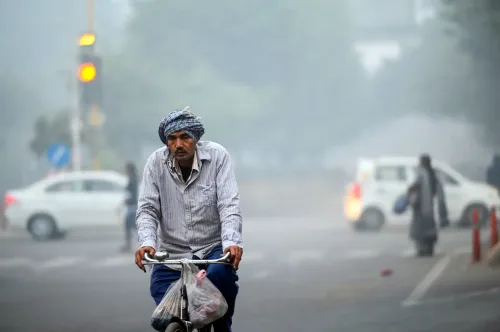
New Delhi, Dec 28 (NationPress) Delhi's Environment Minister Manjinder Singh Sirsa announced on Sunday that the administration is formulating a thorough, year-long strategy aimed at tackling air pollution through scientifically-informed initiatives, cutting-edge technology, and unified governance.
This initiative includes potential collaboration with IIT Kanpur to utilize Artificial Intelligence and advanced air quality monitoring systems for effective pollution control, he stated.
In detailing recent civic actions taken to fight air pollution, Sirsa noted that inspections were conducted at 250 Construction & Demolition (C&D) sites under 500 sq. m, and another 92 sites of 500 sq. m and above.
Regarding measures for controlling road dust, he reported that a total of 6,291 km of roads were swept; roads covering 1,694 km were treated with recycled water; 405 Anti-Smog Guns were deployed, and 15,120 MT of waste was collected.
For vehicular pollution management, Sirsa mentioned that 7,023 challans were issued, 65 trucks destined outside Delhi were rerouted through the Eastern and Western Peripheral Expressways, 41 traffic congestion points were cleared, and 58 public grievances submitted via mobile apps and social media were addressed.
The Environment Department is preparing to discuss a roadmap for collaboration, institutional frameworks, and phased implementation.
“Under the guidance of CM Rekha Gupta, we are ensuring that Delhi’s anti-pollution efforts are based on scientific principles, sustained over time, and strategically planned. Our aim is to adopt a model where decisions are informed by real-time data, identification of sources, and measurable results instead of reactive solutions,” he asserted.
The proposed partnership seeks to enhance Delhi’s capacity to pinpoint pollution sources in detail, evaluate their effects, and facilitate prompt, targeted interventions across various sectors. The focus is on establishing systems capable of continuous monitoring, analysis, forecasting, and guiding actions.
“Our goal is explicit—pollution control cannot be confined to specific seasons. Delhi requires a 365-day action plan that integrates technology, governance, and enforcement, functioning in seamless coordination supported by data-driven decision-making,” the Minister emphasized.
A crucial component of this strategy is dynamic source apportionment, enabling authorities to scientifically determine the contributions of dust, transportation, industry, biomass burning, and regional influences. This evidence will empower agencies to tackle pollution at its source rather than relying on blanket bans and reactive measures, he stated.
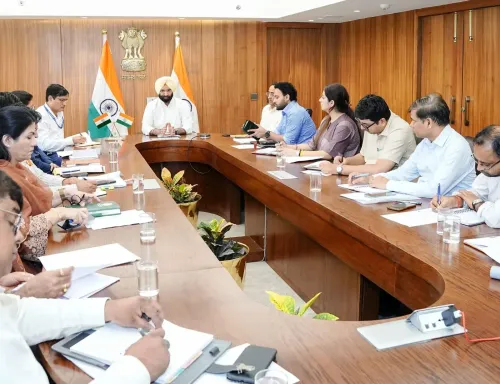
The proposed collaboration also stresses the importance of multi-agency coordination to ensure that municipal bodies, district administrations, enforcement agencies, and technical institutions collaborate on a unified data platform with clearly defined responsibilities and accountability.
“When every agency operates from the same scientific data, actions become quicker, sharper, and more efficient. This is how we intend to transition Delhi from reactive measures to proactive prevention,” Sirsa concluded.
Point of View
The proactive measures announced by the Delhi government reflect a necessary shift towards sustainable environmental practices. The collaboration with IIT Kanpur signifies a commitment to utilizing advanced technology in addressing air pollution, a critical issue affecting urban health. This approach, focused on scientific data and multi-agency cooperation, positions Delhi as a potential leader in pollution control strategies.
NationPress
28 Sept 2026
Frequently Asked Questions
What is the Delhi government's new strategy for air pollution?
The Delhi government is developing a comprehensive, year-round strategy to combat air pollution through scientific interventions and technology.
How will IIT Kanpur contribute to this effort?
IIT Kanpur may collaborate with the Delhi government to utilize Artificial Intelligence for advanced air quality monitoring and pollution mitigation.
What recent actions have been taken to control air pollution?
Recent actions include inspections of Construction & Demolition sites, dust control measures, and addressing vehicular pollution through fines and rerouting trucks.
Why is year-round pollution control important?
Year-round pollution control is vital to ensure consistent air quality improvement rather than temporary measures that only address seasonal spikes.
What role will multi-agency coordination play?
Multi-agency coordination will facilitate shared data and defined roles, enhancing the effectiveness and speed of pollution control efforts.