Chouhan: Cabinet clears Rs 9,585 cr NCR old truck, bus replacement plan
Synopsis
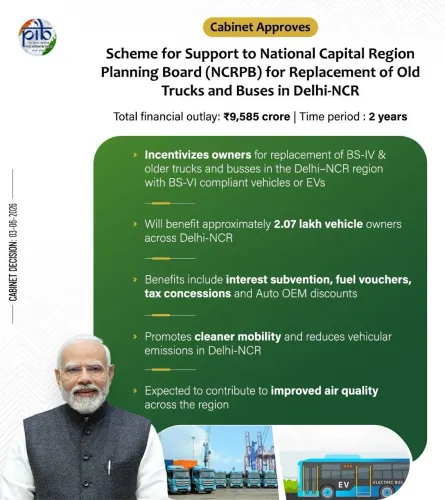
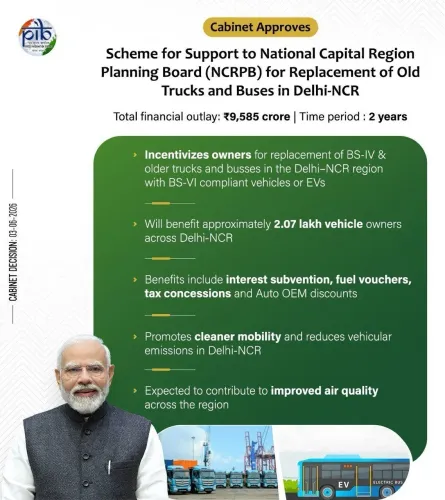
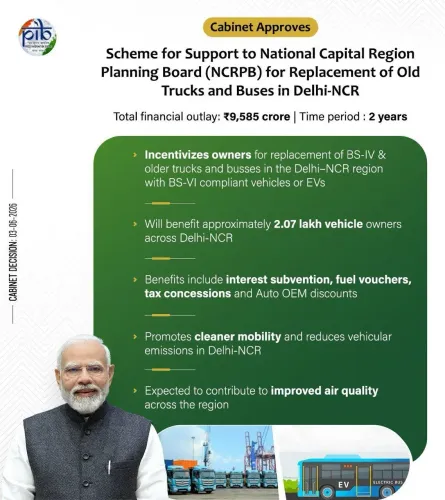
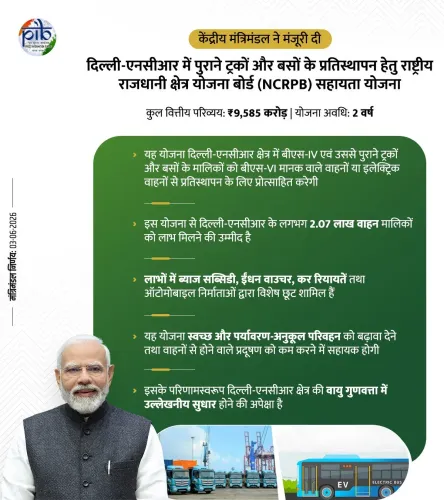
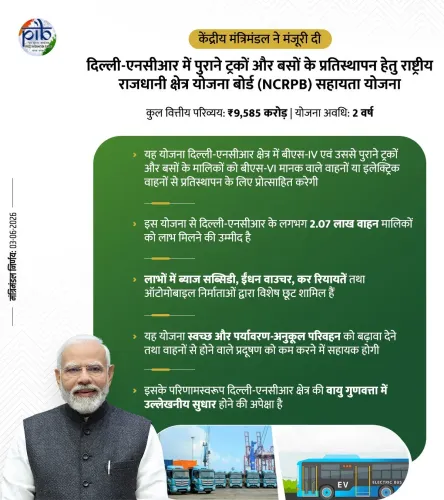
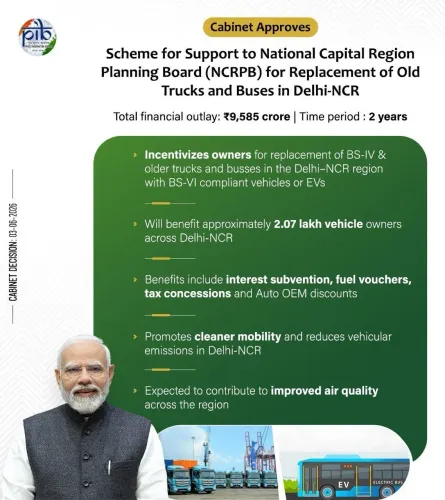
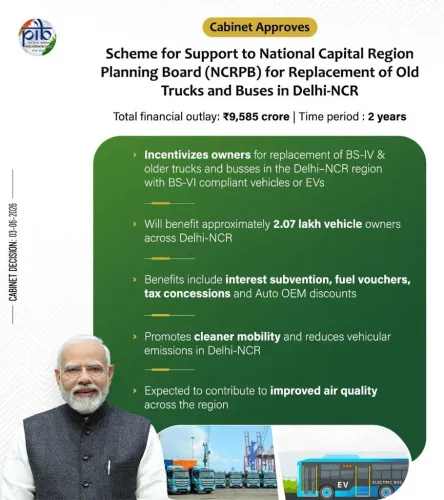
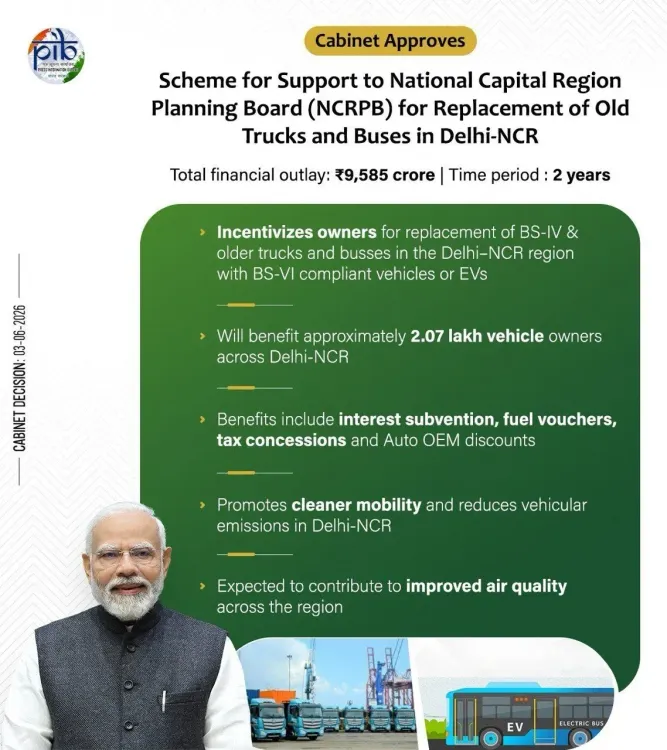
Union Agriculture Minister Shivraj Singh Chouhan said the Union Cabinet, led by PM Narendra Modi, has approved a Rs 9,585 crore, two-year NCRPB scheme to replace BS-IV and older trucks and buses in Delhi-NCR with BS-VI or electric vehicles, benefiting around 2.07 lakh vehicle owners and aiming to curb vehicular pollution.
Key Takeaways
Union Cabinet approved a Rs 9,585 crore scheme for replacing old trucks and buses in Delhi-NCR.
Scheme to run over two years through the National Capital Region Planning Board (NCRPB).
Targets BS-IV and older trucks and buses, incentivising switch to BS-VI or electric vehicles.
Around 2.07 lakh vehicle owners expected to benefit, according to the minister.
Aims to cut vehicular emissions and improve Delhi-NCR air quality.
Announcement made by Union Agriculture Minister Shivraj Singh Chouhan on X.
Union Agriculture Minister Shivraj Singh Chouhan announced on Wednesday that the Union Cabinet, chaired by Prime Minister Narendra Modi, has approved a major scheme to replace ageing trucks and buses across the Delhi-NCR region with cleaner alternatives. The two-year programme, routed through the National Capital Region Planning Board (NCRPB), carries an outlay of Rs 9,585 crore and targets roughly 2.07 lakh vehicle owners, Chouhan said in a post on X.
Context
In his post, Chouhan said the decision was taken with the aim of 'reducing air pollution and promoting clean transport in the Delhi-NCR region'. He described the initiative as a step that will play an important role in 'promoting clean and sustainable transport, reducing vehicular pollution and improving air quality in Delhi-NCR'.
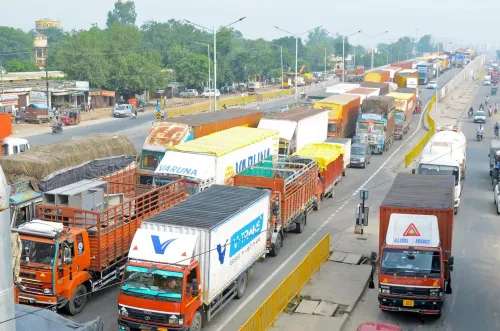
Under the approved framework, owners of BS-IV and older trucks and buses will receive incentives to shift to BS-VI compliant vehicles or electric vehicles. The scheme is being positioned as a fleet-modernisation push concentrated on the commercial vehicle segment, which contributes a significant share of on-road particulate and nitrogen-oxide emissions in the capital region.
Policy backdrop
The announcement extends a sequence of central interventions on vehicular emissions. India leapfrogged from BS-IV to BS-VI fuel and vehicle standards from 1 April 2020, skipping an intermediate stage to accelerate the cut in tailpipe pollutants. The Vehicle Scrappage Policy, unveiled in the Union Budget 2021-22, set up a broader framework of fitness tests and incentives to retire older vehicles in favour of newer, compliant ones.
Air-quality governance in the capital region has also been institutionally tightened. The Commission for Air Quality Management for the NCR and adjoining areas, set up by ordinance in October 2020 and later through legislation, coordinates measures across Delhi, Haryana, Uttar Pradesh, Rajasthan and Punjab. The NCRPB, a statutory body under the National Capital Region Planning Board Act, 1985, has long served as the regional planning arm for the capital and its satellite districts.
Stakeholders and impact
The principal beneficiaries are operators of commercial fleets — truck owners and bus operators running BS-IV or older vehicles in and around Delhi. The expected pool of about 2.07 lakh vehicle owners, as cited by the minister, indicates a sizeable replacement universe that includes inter-state freight carriers, contract carriages and stage-carriage operators servicing the NCR.
For residents of Delhi-NCR, the scheme aims at a measurable reduction in vehicular emissions, particularly during the winter months when the region routinely records 'severe' air-quality readings. Diesel-powered heavy commercial vehicles are among the larger contributors to PM2.5 and NOx loads, and a phased switch to BS-VI or electric drivetrains is expected to lower that footprint over time.
For the auto industry, the scheme could support fresh demand for BS-VI compliant commercial vehicles and electric buses and trucks — a segment that original equipment manufacturers, state transport undertakings and private fleet operators have been gradually expanding under existing electrification programmes.
What's next
Detailed operational guidelines, including the eligibility criteria, the structure of incentives and the disbursement mechanism, are expected to be notified by the NCRPB in the coming months. State transport departments in Delhi, Haryana, Uttar Pradesh and Rajasthan will likely be involved in identifying eligible owners and linking the benefit to the existing vehicle scrappage and registration ecosystem.
The pace of uptake will determine how quickly the targeted 2.07 lakh replacements translate into cleaner air on NCR roads. If the rollout tracks the timeline indicated by the minister, the scheme will run alongside ongoing winter-season emergency measures and the long-running effort to shift public transport fleets in the capital region towards electric mobility.
Point of View
Scrappage incentives and regional planning bodies to attack NCR's chronic air-quality crisis. By routing funds through the NCRPB rather than a single state government, the Centre signals that it sees commercial-fleet pollution as a cross-border problem demanding a regional fix. The political optics — a high-value, visibly 'green' Cabinet decision — also align with the BJP's wider claim of stewardship over both infrastructure modernisation and clean-air outcomes. Execution risk, however, will lie in the fineprint of subsidy design and the willingness of small fleet owners to retire still-functional BS-IV assets.
NationPress
16 Sept 2026
Frequently Asked Questions
What did the Union Cabinet approve for Delhi-NCR vehicles?
The Union Cabinet approved a Rs 9,585 crore scheme to replace BS-IV and older trucks and buses in the Delhi-NCR region with BS-VI compliant or electric vehicles. The two-year programme will be implemented through the National Capital Region Planning Board (NCRPB).
Who will benefit from the new NCR vehicle replacement scheme?
Around 2.07 lakh vehicle owners — primarily operators of older trucks and buses in the Delhi-NCR region — are expected to benefit. The incentives are aimed at owners of BS-IV and older commercial vehicles switching to BS-VI or electric alternatives.
How much is the outlay of the NCRPB vehicle replacement scheme?
The outlay is Rs 9,585 crore, spread over two years, according to Union Agriculture Minister Shivraj Singh Chouhan's post on X announcing the Cabinet decision.
Why is the government replacing BS-IV trucks and buses in Delhi-NCR?
The objective is to reduce vehicular pollution and improve air quality in the Delhi-NCR region. Commercial vehicles running on older BS-IV or pre-BS-IV engines are significant contributors to particulate and nitrogen-oxide emissions, especially during winter months.
What is the NCRPB and what role will it play in this scheme?
The National Capital Region Planning Board (NCRPB) is a statutory body set up under the NCRPB Act, 1985 to coordinate planning across the National Capital Region. It will serve as the implementing channel for the Rs 9,585 crore vehicle replacement scheme, with detailed guidelines expected in the coming months.