Goyal flags Cabinet nod for NCR fleet revamp, MP and Bihar highways
Synopsis
Union Commerce and Industry Minister Piyush Goyal listed three fresh Union Cabinet approvals: NCRPB-routed support to replace old trucks and buses in Delhi-NCR, a Rs 4,415.60 crore upgrade of NH-347B in Madhya Pradesh under hybrid annuity, and a Rs 3,936.05 crore four-laning of the Khagaria-Purnia stretch on NH-31 and NH-231 in Bihar on BOT toll mode.
Key Takeaways
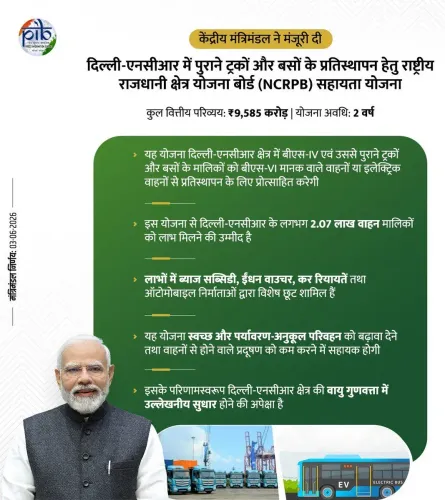
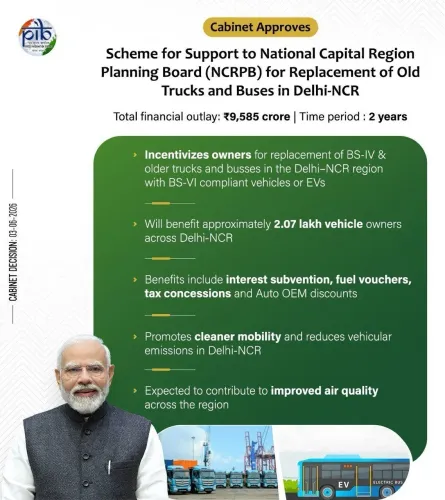
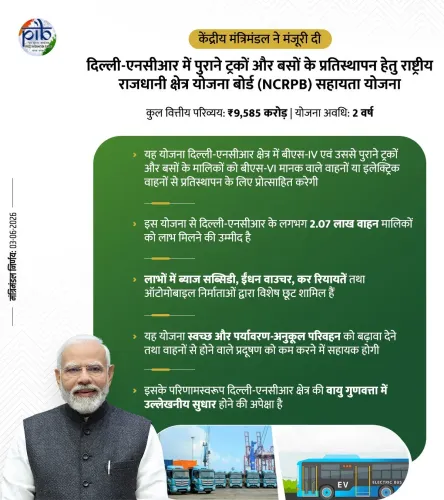
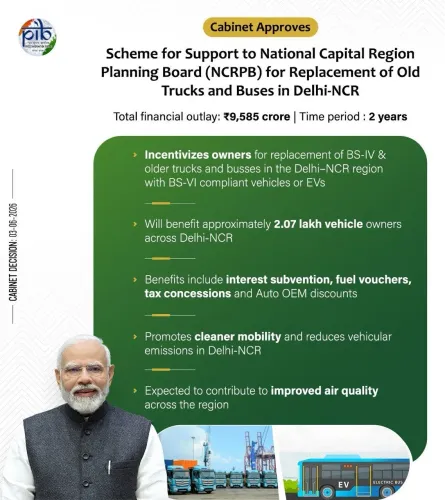
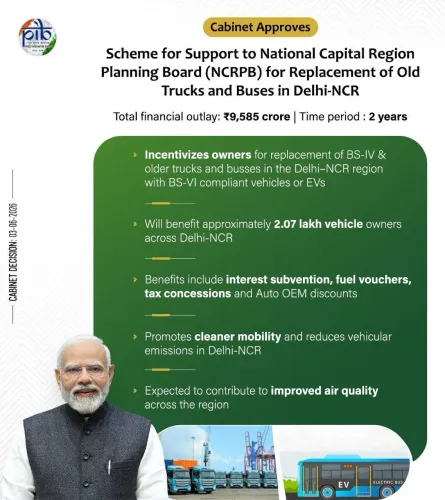
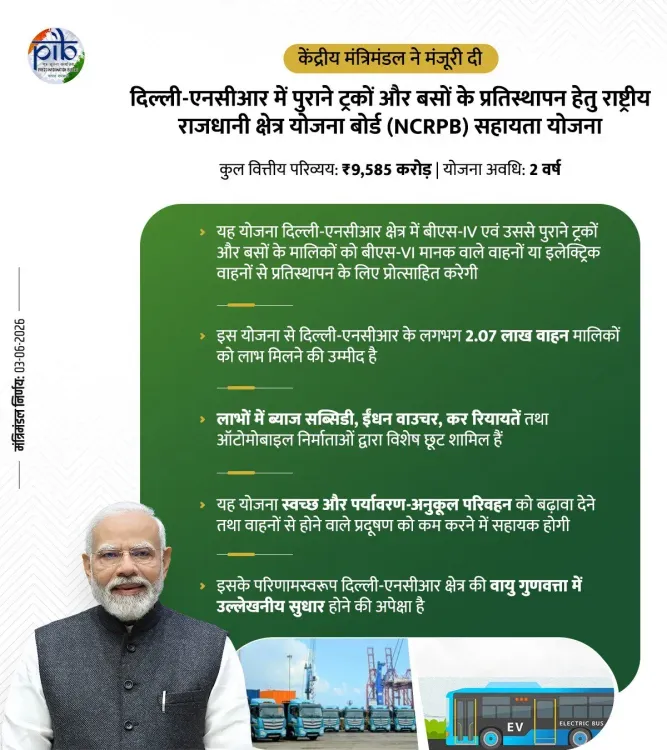
Cabinet cleared NCRPB-routed assistance to replace old trucks and buses in Delhi-NCR to cut vehicular pollution.
NH-347B in Madhya Pradesh approved for upgrade at Rs 4,415.60 crore covering 125.01 km and 108.643 km sections.
Madhya Pradesh stretch to be executed under hybrid annuity mode, mixing intermediate-to-two-lane and two-to-four-lane works.
Bihar's Khagaria-Purnia stretch of NH-31 and NH-231, totalling 143.529 km, sanctioned at Rs 3,936.05 crore on BOT toll basis.
Decisions sit within the policy umbrella of Bharatmala, PM Gati Shakti and the National Clean Air Programme.
Union Commerce and Industry Minister Piyush Goyal on Wednesday highlighted a fresh tranche of Union Cabinet decisions taken under the leadership of Prime Minister Narendra Modi, spanning a fleet-replacement support scheme for the Delhi-NCR region and two large national highway upgrade packages in Madhya Pradesh and Bihar. In a post on X, the minister listed the approvals as numbered items four, five and six in a wider set of Cabinet outcomes, with links to official press releases.
The minister wrote in Hindi that the Cabinet had cleared a scheme to provide assistance to the National Capital Region Planning Board (NCRPB) for the 'replacement of old trucks and buses in the Delhi-NCR region'. He added that the initiative would 'make an important contribution to reducing air pollution in Delhi-NCR' and aimed at promoting a 'clean, modern and environment-friendly transport system' while improving the region's air quality.
Context
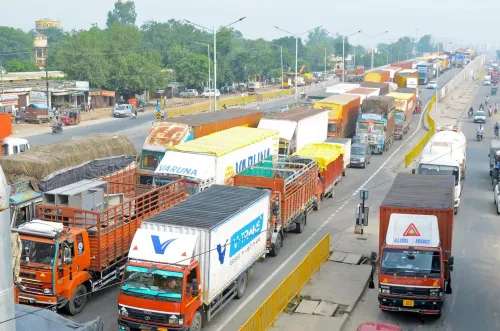
The fleet-replacement support is pitched as a direct intervention against vehicular emissions, one of the most consistently flagged contributors to the NCR's winter smog. By routing assistance through the NCRPB, the Centre is leaning on an existing inter-state planning body that already coordinates urban development and pollution-mitigation programmes across the capital region.
The two highway approvals, by contrast, fall squarely in the road-expansion bucket. In Madhya Pradesh, the Cabinet sanctioned upgrades on NH-347B at a cost of Rs 4,415.60 crore: the Hivarkhedi-Roshni-Ashapur-Rudhi section of 125.01 km is to be widened from intermediate lane to two lanes with paved shoulders, and the Deshgaon-Julwania section of 108.643 km is to be expanded from two lanes to four lanes, both under the hybrid annuity mode.
In Bihar, the Centre cleared the upgrade of the Khagaria-Purnia stretch of NH-31 and NH-231, spanning 143.529 km, at a cost of Rs 3,936.05 crore on a Build-Operate-Transfer (BOT) toll basis.
Policy backdrop
The two execution models named in the post — hybrid annuity and BOT (toll) — are the workhorses of the Centre's highway programme since the rollout of Bharatmala Pariyojana in 2015, which sought to accelerate national highway construction through a mix of financing structures. Hybrid annuity shares construction risk between the government and the private concessionaire, while BOT (toll) places traffic-revenue risk on the developer.
The NCR fleet-replacement scheme, meanwhile, sits within the policy arc opened by the National Clean Air Programme, notified in 2019, which carries city-specific action plans for the capital region with a strong focus on vehicular pollution. Both highway and air-quality strands operate under the broader umbrella of PM Gati Shakti and the National Infrastructure Pipeline.
Stakeholders and impact
For the NCR, the immediate beneficiaries are commercial truck and bus operators running ageing diesel fleets, who have faced tightening end-of-life vehicle norms and seasonal entry restrictions. Residents of the capital region stand to gain if the scheme accelerates the retirement of high-emission vehicles ahead of subsequent winters.
In Madhya Pradesh, the combined 233 km of upgrades on NH-347B is expected to improve connectivity in the state's western belt and ease freight movement. The Khagaria-Purnia corridor in Bihar is a key east-west link in the northern part of the state, and four-laning is likely to shorten travel times for both passenger and goods traffic.
What's next
Attention will now shift to tendering timelines by the National Highways Authority of India and the pace of land acquisition for the sanctioned MP and Bihar stretches. For the NCR scheme, the test will be how quickly the NCRPB operationalises disbursement criteria and how many old trucks and buses are actually taken off the road before the next pollution season.
Taken together, the three approvals continue a pattern in which the Centre couples highway capacity expansion in tier-two states with targeted urban air-quality interventions in the capital region — a combination that will be measured, ultimately, by ribbon-cuttings on the ground and by winter air-quality readings in Delhi.
Point of View
Alongside a targeted air-quality measure for the capital region. The continued reliance on hybrid annuity and BOT toll modes signals that the government is still calibrating risk-sharing with private developers rather than reverting to fully publicly funded EPC contracts. Routing fleet-replacement support through the NCRPB is a quieter but politically useful move, since it lets the Centre claim action on Delhi's pollution without directly owning enforcement against vehicle owners. Execution speed, not announcement volume, will decide whether these approvals translate into measurable change.
NationPress
16 Sept 2026
Frequently Asked Questions
What did the Union Cabinet approve for Delhi-NCR pollution?
The Cabinet approved a scheme to provide assistance to the National Capital Region Planning Board (NCRPB) for replacing old trucks and buses in the Delhi-NCR region, aimed at reducing vehicular air pollution and promoting cleaner transport.
What is the cost of the NH-347B highway project in Madhya Pradesh?
The NH-347B upgrade in Madhya Pradesh has been sanctioned at Rs 4,415.60 crore, covering the 125.01 km Hivarkhedi-Roshni-Ashapur-Rudhi section and the 108.643 km Deshgaon-Julwania section under hybrid annuity mode.
What is the Khagaria-Purnia highway project in Bihar?
It is a 143.529 km upgrade of the Khagaria-Purnia stretch on NH-31 and NH-231 in Bihar, approved at Rs 3,936.05 crore on Build-Operate-Transfer (BOT) toll mode.
What is hybrid annuity mode in highway projects?
Hybrid annuity mode is a public-private execution model in which the government funds part of the project cost upfront and pays the balance to the developer in annuities, sharing construction and revenue risk.
Which body will implement the NCR truck and bus replacement scheme?
The scheme will be implemented with central assistance routed through the National Capital Region Planning Board (NCRPB), which already coordinates planning and pollution-mitigation efforts across Delhi-NCR.