Khattar: Cabinet clears Rs 10,000 cr ATF aid, Odisha coastal highway
Synopsis
Union Power Minister Manohar Lal Khattar announced that the Union Cabinet under PM Narendra Modi cleared Rs 10,000 crore ATF support for OMCs, an NCRPB-led old vehicle replacement scheme for Delhi-NCR, the NH-347B widening in Madhya Pradesh, and a Rs 8,300.79 crore, 163-km coastal highway from Rameshwar to Paradip in Odisha.
Key Takeaways
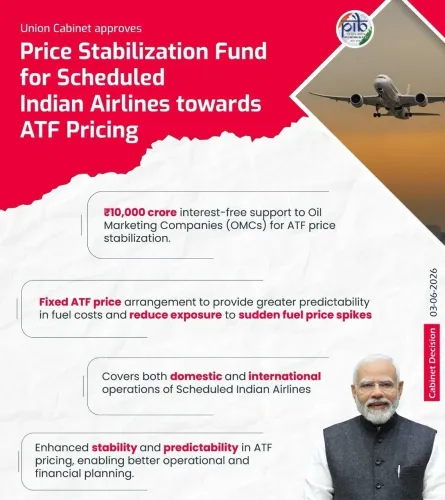
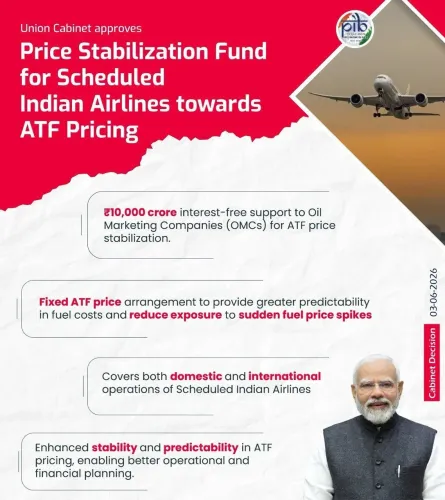
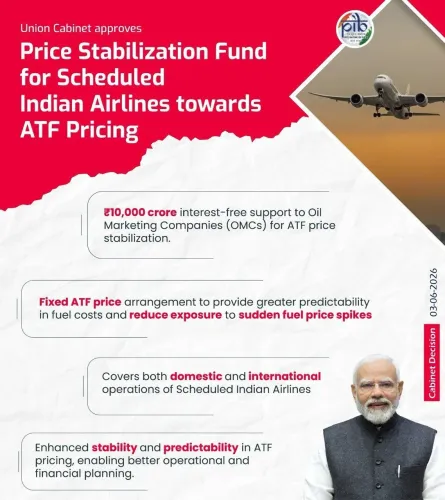
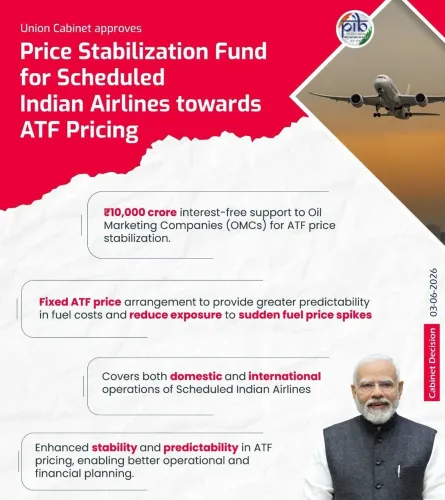
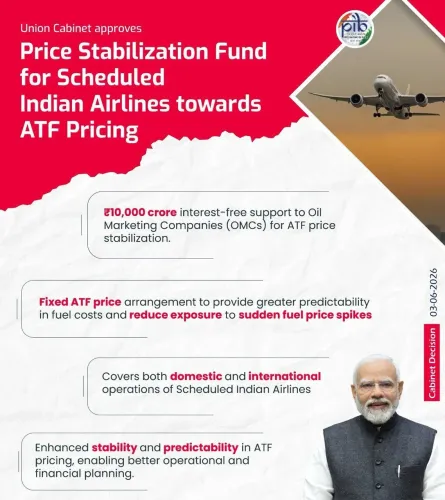
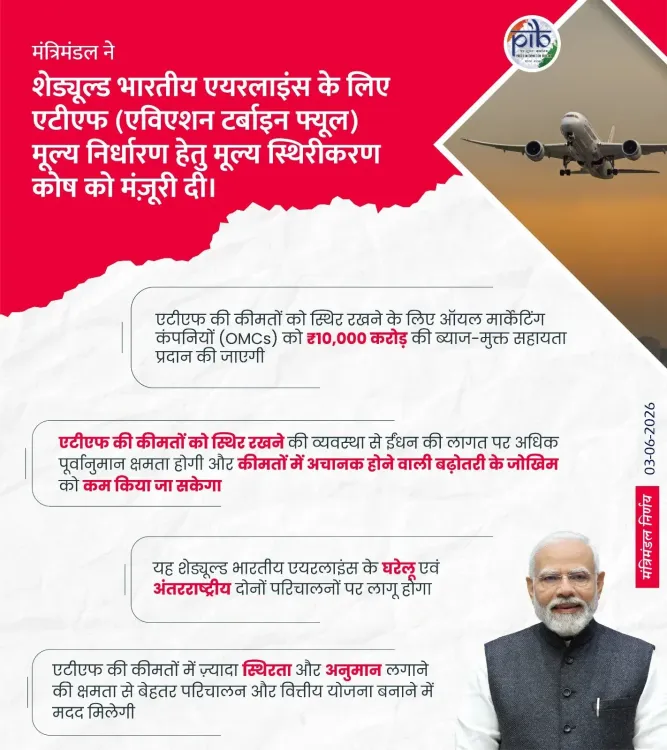
Cabinet approved up to Rs 10,000 crore one-time budgetary support to OMCs for ATF price stability.
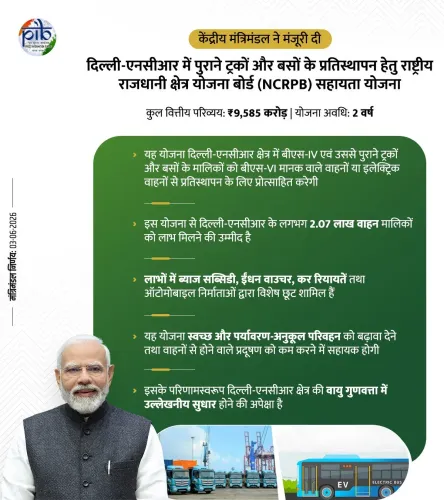
Old trucks and buses in Delhi-NCR to be replaced under a scheme routed through the NCRPB .
NH-347B Hivarkhedi-Roshni-Ashapur-Rudhi and Deshgaon-Julwania sections in Madhya Pradesh cleared for upgrade and widening.
New 163.180 km coastal highway from Rameshwar to Paradip in Odisha approved at Rs 8,300.79 crore .
Project covers Khurda, Puri, Kendrapara and Jagatsinghpur districts.
Announcements made by Union Power Minister Manohar Lal Khattar on X.
Union Power Minister Manohar Lal Khattar on Wednesday said the Union Cabinet, chaired by Prime Minister Narendra Modi, approved a bundle of decisions spanning aviation fuel support, Delhi-NCR vehicle replacement, and two major highway projects in Madhya Pradesh and Odisha. The announcements, shared via his official X handle, signal a renewed push on transport infrastructure alongside targeted relief for the aviation sector and urban pollution control.
Context
In his post, Khattar wrote that under the chairmanship of 'respected Prime Minister Narendra Modi ji', the Cabinet 'granted its approval to important decisions'. The headline measure is a one-time budgetary support of up to Rs 10,000 crore to Oil Marketing Companies (OMCs) to provide price stability in Air Turbine Fuel (ATF) for Indian airlines operating domestic and international flights.
The Cabinet also cleared a scheme routed through the National Capital Region Planning Board (NCRPB) for the replacement of old trucks and buses in the Delhi-NCR region. The minister framed the move as part of efforts to reduce air pollution and promote cleaner transport in the capital region.
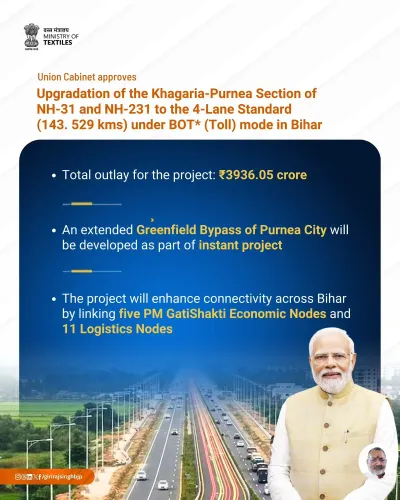
Two highway approvals round out the package. In Madhya Pradesh, the upgrade and widening of the Hivarkhedi-Roshni-Ashapur-Rudhi and Deshgaon-Julwania sections of NH-347B has been sanctioned. In Odisha, a new coastal highway from Rameshwar to Paradip, stretching 163.180 km at a cost of Rs 8,300.79 crore, will pass through Khurda, Puri, Kendrapara and Jagatsinghpur districts.
Policy backdrop
The ATF assistance lands against a backdrop of recurring volatility in global crude markets that has repeatedly squeezed Indian carriers. The Centre has previously moved to cushion the aviation sector, including through excise duty adjustments, given that ATF can account for roughly 40 per cent of an airline's operating cost.
The NCR vehicle replacement push fits into a layered framework that already includes the Graded Response Action Plan and the Commission for Air Quality Management, both established to address persistent winter smog and year-round particulate pollution across the capital region. Replacing ageing diesel fleets is widely seen as central to lowering on-road emissions.
The highway approvals extend the Centre's long-running expansion of national corridors under Bharatmala Pariyojana, launched in 2015. The Odisha coastal stretch also dovetails with the Sagarmala programme, which seeks to link port hinterlands such as Paradip with stronger road networks for freight movement.
Stakeholders and impact
For Indian carriers, the OMC support is intended to insulate ticket pricing and operating margins from sudden ATF spikes. The OMCs — IOC, BPCL and HPCL — typically reset ATF prices on the first of every month based on benchmark crude.
For Delhi-NCR commuters and residents, the trucks-and-buses scheme could accelerate the phase-out of older commercial vehicles that contribute disproportionately to particulate emissions. Transporters in the region will be watching for the eligibility terms and incentive structure under the NCRPB-routed scheme.
In Madhya Pradesh, the NH-347B widening is expected to ease freight movement across the Nimar belt and improve connectivity for traders and commuters. In Odisha, the four coastal districts on the alignment stand to gain from 'better and seamless connectivity', as Khattar put it, with potential spillovers for fisheries, tourism and port-linked logistics around Paradip.
What's next
Attention now shifts to tendering timelines for the Rs 8,300.79 crore Odisha coastal highway and the rollout mechanics of the NCR scrappage-and-replacement scheme, including subsidy levels and operator participation. The aviation industry will watch how the Rs 10,000 crore assistance is disbursed to OMCs and whether it translates into steadier ATF pricing through the upcoming travel season.
Taken together, the Cabinet decisions reinforce the government's twin emphasis on building physical infrastructure while managing the cost and environmental externalities of transport — a balance that will shape both fare-sensitive aviation demand and the quality of life in India's most polluted urban region.
Point of View
An air-quality optics win (NCR vehicle replacement), and two ribbon-cutting-ready highway approvals. The Rs 10,000 crore ATF support is notable because it routes relief through OMCs rather than direct tax cuts, preserving fiscal headroom while signalling support for a sector still recovering from fuel-cost shocks. The Odisha coastal highway, at over Rs 8,300 crore, fits the Sagarmala-Bharatmala convergence template the Centre has been pushing in eastern states. Politically, Khattar's amplification underscores how Cabinet decisions are increasingly choreographed across ministerial X handles.
NationPress
21 Oct 2026
Frequently Asked Questions
What did the Union Cabinet approve for airlines?
The Cabinet approved a one-time budgetary support of up to Rs 10,000 crore to Oil Marketing Companies to provide stability in ATF prices for Indian airlines operating domestic and international flights.
What is the cost and length of the new Odisha coastal highway?
The new coastal highway from Rameshwar to Paradip will be 163.180 km long and cost Rs 8,300.79 crore, covering Khurda, Puri, Kendrapara and Jagatsinghpur districts.
What is the Delhi-NCR vehicle replacement scheme about?
The Cabinet cleared a scheme routed through the National Capital Region Planning Board (NCRPB) to replace old trucks and buses in Delhi-NCR, aimed at reducing air pollution and promoting cleaner transport.
Which highway in Madhya Pradesh has been approved for widening?
NH-347B has been cleared for upgrade and widening, specifically the Hivarkhedi-Roshni-Ashapur-Rudhi and Deshgaon-Julwania sections in Madhya Pradesh.
Who announced these Cabinet decisions?
Union Power Minister Manohar Lal Khattar announced the Cabinet decisions on X, noting they were cleared under the chairmanship of Prime Minister Narendra Modi.