Giriraj Singh hails Cabinet nod for highways, ATF aid, scrappage push
Synopsis
Union Textiles Minister Giriraj Singh has spotlighted a bundle of Cabinet decisions covering a new coastal highway in Odisha, the Khagaria-Purnia four-lane in Bihar, NH-347B upgrade in MP, NH-63 and NH-563 widening in Telangana, ATF assistance for aviation and an old-vehicle replacement plan for Delhi-NCR, framing them as a connectivity and clean-transport push.
Key Takeaways
Giriraj Singh listed a new coastal highway in Odisha aimed at trade and tourism.
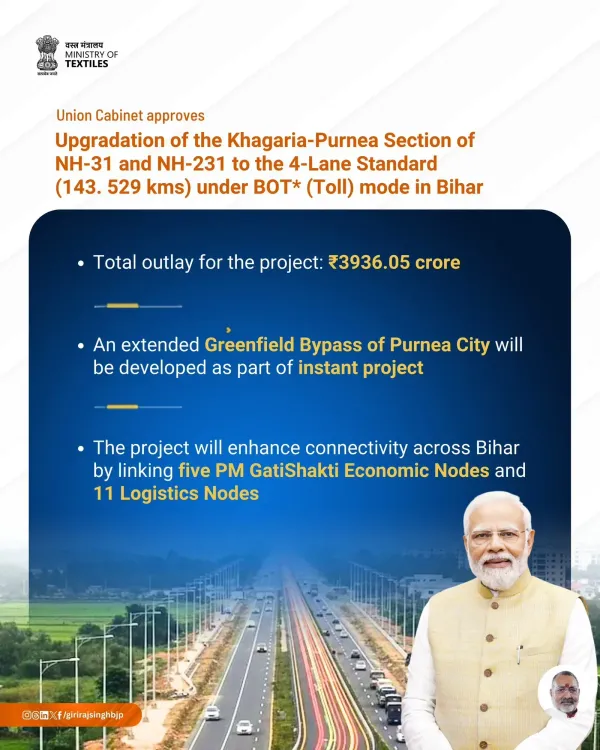
The Khagaria–Purnia four-lane targets Seemanchal and Kosi region development in Bihar .
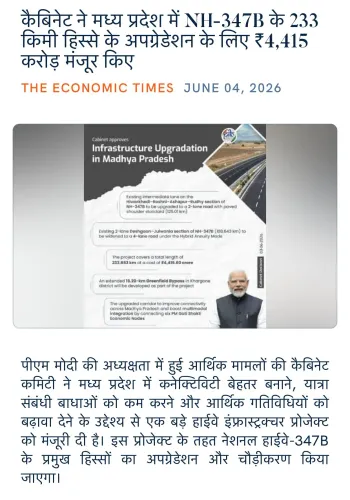
NH-347B in Madhya Pradesh and NH-63 / NH-563 in Telangana are slated for upgrades.
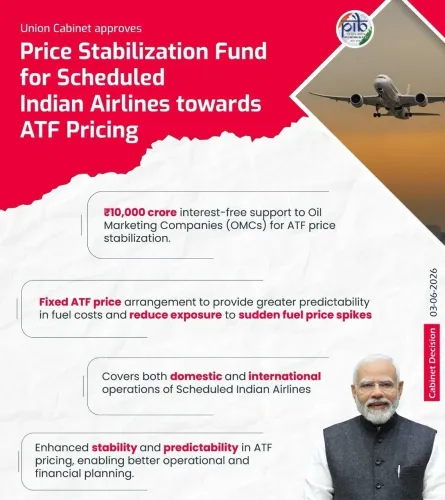
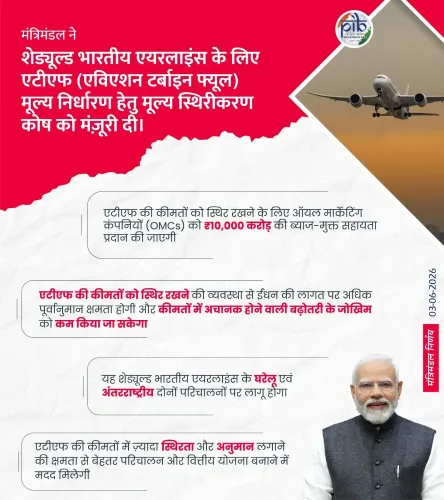
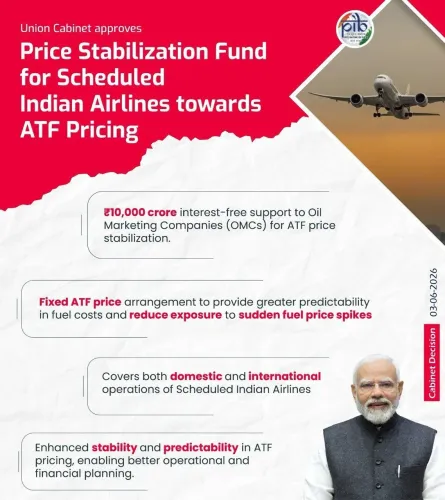
ATF assistance is intended to bolster aviation connectivity and operational stability.
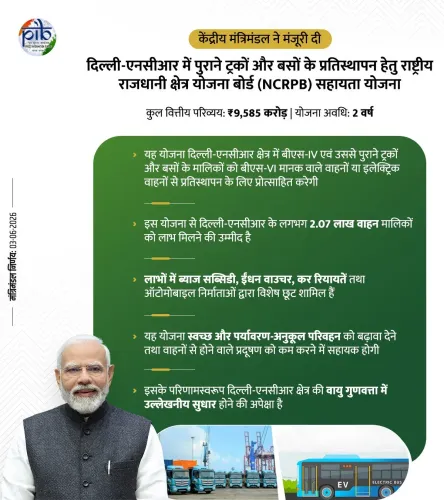
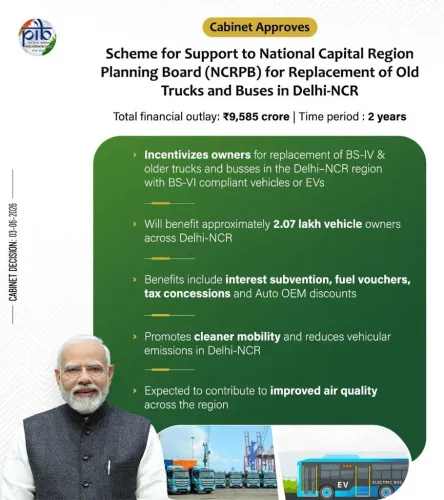
Delhi-NCR will see a replacement scheme for old vehicles to push cleaner transport.
The post invokes #ViksitBharat2047 , tying decisions to the long-term development arc.
Union Textiles Minister Giriraj Singh on Wednesday spotlighted a clutch of Union Cabinet decisions spanning highway expansion across Odisha, Bihar, Madhya Pradesh and Telangana, fresh aviation turbine fuel (ATF) support for the airline sector, and a vehicle replacement scheme for Delhi-NCR. In a post on X accompanied by four graphics, the senior BJP leader and Lok Sabha MP from Begusarai framed the approvals as a connectivity and clean-transport package aimed at regional balance and urban air quality.
The minister listed the headline items as a new coastal highway in Odisha to lift 'connectivity, trade and tourism'; the Khagaria–Purnia four-lane project in Bihar to accelerate development in the Seemanchal and Kosi belts; an upgrade of NH-347B in Madhya Pradesh; ATF assistance for the aviation sector to improve 'air connectivity and operational stability'; widening of NH-63 and NH-563 in Telangana; and a replacement plan for old vehicles in Delhi-NCR to push 'cleaner air and green transport'. He closed with the hashtags #NewIndia, #CabinetDecisions, #AtmanirbharBharat, #NationalInterest and #ViksitBharat2047.
Context
Giriraj Singh's post is a consolidated political readout of multiple Cabinet approvals rather than a single project announcement. By stacking road, air and urban-mobility decisions in one message, he is signalling the government's continuing emphasis on physical infrastructure as a unifying theme of its second-term agenda.
The geographic spread — coastal east, the Hindi heartland, the Deccan and the national capital region — underscores an attempt at regional balance. Bihar's Seemanchal and Kosi belts in particular have long been flagged as connectivity-deficient zones where four-laning is expected to compress travel times to Purnia and onward to the northeast corridor.
Policy backdrop
The highway components sit within the lineage of Bharatmala Pariyojana, the flagship national highways programme rolled out in 2015 with a stated focus on eastern and coastal connectivity. Upgrades such as NH-347B in Madhya Pradesh and the NH-63/NH-563 stretches in Telangana typically fall under the remit of the National Highways Authority of India.
The ATF support measure dovetails with the UDAN regional connectivity scheme launched in 2017, which uses viability gap funding to make under-served routes commercially workable. The Delhi-NCR old-vehicle replacement push aligns with the national Vehicle Scrappage Policy announced in 2021, which targeted high-pollution urban clusters for phased retirement of end-of-life vehicles.
Taken together, the items echo the broader template set by the National Infrastructure Pipeline approved in 2019, where multi-state transport corridors were prioritised as growth multipliers.
Stakeholders and impact
For residents of coastal Odisha, a new shoreline highway holds out the prospect of better access to ports, fisheries markets and tourism circuits. In Bihar, the Khagaria–Purnia upgrade is expected to benefit farmers, traders and migrant workers who rely on the corridor connecting north Bihar to the eastern grid.
Airline operators stand to gain from ATF-linked relief, which has been a persistent industry ask given fuel's outsized share of operating costs. In Delhi-NCR, vehicle owners face both a compliance push and potential incentives as the scrappage architecture is operationalised further, with implications for the second-hand auto market and emissions trajectory.
Political stakeholders are also in view. Bihar is a politically sensitive state for the ruling alliance, and headline projects in Seemanchal have a clear electoral resonance alongside their developmental rationale.
What's next
Implementation timelines will turn on tendering and land acquisition for each highway stretch, particularly in the Khagaria–Purnia alignment where right-of-way issues have historically slowed work. Aviation watchers will look for the fine print on how ATF assistance is structured — whether through tax adjustments, direct support, or route-linked mechanisms.
For Delhi-NCR, the test will be in uptake: how quickly old vehicles move off the roads and whether replacement incentives translate into measurable air-quality gains. Giriraj Singh's post positions these decisions as part of the Viksit Bharat 2047 arc, setting up infrastructure delivery as a continuing yardstick for the government's performance in the months ahead.
Point of View
Bihar's underserved north, central India, the Deccan, and the capital airshed — mirrors a familiar BJP playbook of pairing regional connectivity wins with a national sustainability narrative. The aviation and scrappage items are notable for stitching sectoral relief into the same announcement bundle as roads, suggesting infrastructure is being communicated as a single integrated story. Delivery, not approval, will determine whether the rhetoric of Viksit Bharat 2047 holds up against tendering and land-acquisition realities.
NationPress
20 Sept 2026
Frequently Asked Questions
What Cabinet decisions did Giriraj Singh highlight?
He highlighted a new coastal highway in Odisha, the Khagaria–Purnia four-lane in Bihar, an NH-347B upgrade in Madhya Pradesh, ATF support for aviation, NH-63 and NH-563 expansion in Telangana, and an old-vehicle replacement plan for Delhi-NCR.
What is the Khagaria-Purnia four-lane project?
It is a highway widening project in Bihar intended to improve connectivity across the Seemanchal and Kosi regions, linking Khagaria to Purnia with a four-lane corridor.
How does ATF support help the aviation sector?
Aviation turbine fuel is a major cost driver for airlines, so any central assistance on ATF is aimed at easing operating costs, supporting route viability and improving regional air connectivity.
What is the Delhi-NCR old vehicle replacement scheme?
It is a programme to phase out end-of-life vehicles in the National Capital Region, aligned with the national Vehicle Scrappage Policy framework announced in 2021 to reduce urban emissions.
Which highways in Telangana are being upgraded?
NH-63 and NH-563 are being expanded under the decisions flagged by Giriraj Singh, with the stated goal of faster movement and new economic opportunities in the state.