Giriraj Singh champions technical textiles as India's industrial frontier
Synopsis
Union Textiles Minister Giriraj Singh spotlighted technical textiles — engineered materials used in farming, healthcare, construction and defence — as the next frontier for India's industrial growth, underpinned by the ₹1,480-crore National Technical Textiles Mission launched in 2020.
Key Takeaways
Union Textiles Minister Giriraj Singh publicly championed technical textiles on 27 October 2026 as a new innovation dimension for Indian industry.
He cited applications in agriculture, health, construction and defence as driving India's technological and industrial momentum.
The National Technical Textiles Mission (NTTM) , approved in 2020 with a ₹1,480 crore outlay, is the central policy vehicle behind this push.
India aims to shift from being an importer of specialty technical fabrics to a global leader, reducing dependence on imports from Germany, Japan, South Korea and China.
The primary challenge lies in enabling the MSME-dominated textile sector to invest in the R&D and machinery upgrades technical textiles require.
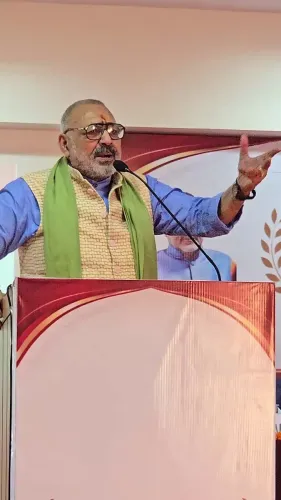
India's textile story is no longer just about cotton bales and loom sheds — it is increasingly being written in high-performance fibres woven into farm nets, surgical sutures, bridge reinforcements, and bulletproof vests. On Tuesday, 27 October 2026, Union Textiles Minister Giriraj Singh took to X to make that case in vivid terms, framing technical textiles as a transformative force reshaping the country's industrial trajectory.
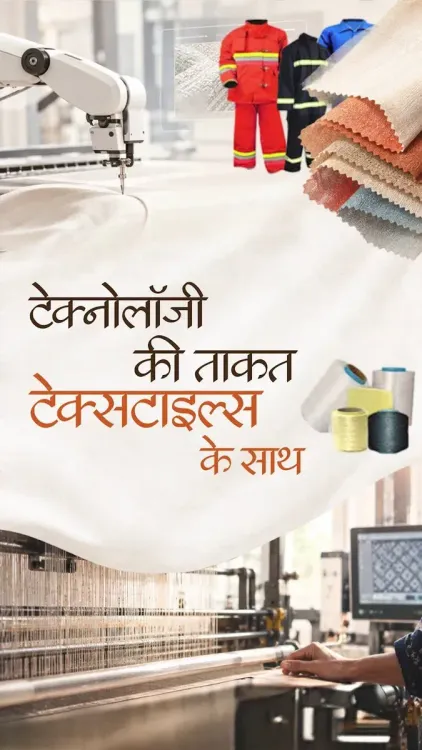
Posting in Hindi and English, the Minister wrote: 'Technical Textiles, टेक्सटाइल्स की दुनिया में नवाचार का नया आयाम हैं' — 'Technical textiles are a new dimension of innovation in the world of textiles' — and added that their growing use across agriculture, health, construction and defence is lending fresh momentum to India's technological capability and industrial development.What technical textiles actually are — and why they matter
Unlike conventional woven fabrics meant for clothing and home furnishing, technical textiles are engineered materials designed to perform a function rather than look good. Think shade nets that regulate soil temperature, wound-care dressings that accelerate healing, geotextile membranes that stabilise road embankments, or fire-resistant suits worn by security personnel. The sectors the Minister named — agriculture, health, construction, defence — are precisely the domains where these materials deliver the highest productivity gain per rupee invested.
India has historically been a dominant global player in conventional textiles but a minor presence in the high-value technical segment. Changing that calculus sits at the heart of the National Technical Textiles Mission (NTTM), approved by the government in 2020 with an outlay of ₹1,480 crore over four years. The mission targets research and development, market creation, export promotion, and skill development specifically within this segment, with the explicit ambition of positioning India as a global leader in technical textiles rather than a downstream consumer of imported specialty materials.
Moving up the value chain — the mission behind the message
The strategic logic is straightforward but the execution is not. India's textile sector is dominated by MSMEs — small and medium manufacturers with limited capital for the kind of R&D and machinery upgrades that technical textiles demand. The NTTM is designed to bridge that gap, channelling funds into institutional research, testing infrastructure, and market linkages that individual units cannot build alone.
The broader ambition is to raise the share of technical textiles in India's total textile output and exports — reducing the import bill for high-specification materials that currently flow in from Germany, Japan, South Korea and China for use in everything from infrastructure projects to medical device manufacturing. Every metre of domestically produced agro-textile, meditech fabric, or protective gear that replaces an import is simultaneously a manufacturing win and a current-account gain.
The sectors the Minister singled out
Each of the four domains Giriraj Singh named carries its own scale argument. In agriculture, protective nets, mulch films, and shade cloths can lift yields and cut post-harvest loss — a direct gain for the 140 million farm households that form the backbone of the rural economy. In healthcare, technical textiles underpin everything from single-use surgical drapes to advanced wound management, a segment the government has been trying to indigenise as part of the broader 'Make in India' medical push. In construction, geo-textiles and architectural membranes are increasingly specified in large infrastructure contracts. And in defence and security, from high-altitude thermal gear to ballistic protection, indigenisation has become a stated priority.
Taken together, these are not niche applications — they represent the intersection of India's biggest policy priorities: agricultural resilience, healthcare self-sufficiency, infrastructure build-out, and defence localisation.
A single sector going from import-dependent to export-competitive would be notable. All four shifting simultaneously would be genuinely consequential — and that, in essence, is the bet the Minister is publicly doubling down on.
Point of View
Health, construction and defence in the same breath, the Minister is aligning the NTTM's mandate with India's largest flagship programmes, making the case for sustained funding and inter-ministerial cooperation. The move fits a broader BJP economic narrative of 'Make in India' moving up the value chain from assembly to advanced manufacturing. Whether institutional R&D spending and MSME credit access can actually keep pace with the ambition is the critical variable this message leaves unaddressed.
NationPress
27 Oct 2026
Frequently Asked Questions
What are technical textiles?
Technical textiles are engineered fabric materials designed primarily for functional performance rather than aesthetics — examples include shade nets for crops, surgical drapes, geo-textile membranes for road construction, and fire-resistant protective clothing.
What is the National Technical Textiles Mission?
The National Technical Textiles Mission (NTTM) is a government programme approved in 2020 with a ₹1,480 crore outlay over four years to boost research, domestic production, and exports of technical textiles in India.
Why is Giriraj Singh talking about technical textiles?
As Union Textiles Minister, Giriraj Singh oversees the NTTM and broader sector policy; his post on 27 October 2026 highlights the government's push to develop technical textiles across agriculture, health, construction and defence as a high-value industrial priority.
How do technical textiles benefit Indian farmers?
Agro-textiles such as protective nets, mulch films and shade cloths can increase crop yields, reduce water use, and cut post-harvest losses — directly benefiting India's large farm population.
Is India importing technical textiles?
Yes, India currently imports significant quantities of high-specification technical textile materials from countries like Germany, Japan, South Korea and China; the NTTM aims to build domestic capacity and reduce this import dependence.