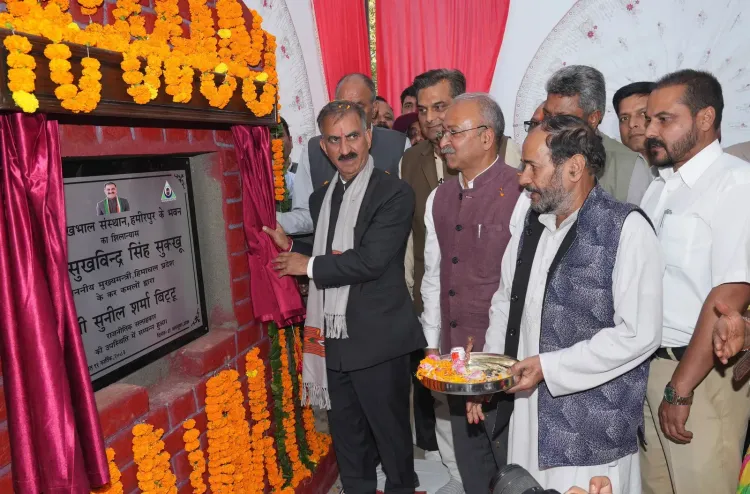
CM Sukhu lays foundation stone of Child Care Institution in Hamirpur
Synopsis
Himachal Pradesh CM Sukhvinder Singh Sukhu laid the foundation stone of a Child Care Institution in Hamirpur on October 27, 2026, promising residential, educational, healthcare, and rehabilitation services to children in need of care and protection under the Juvenile Justice Act framework.
Key Takeaways
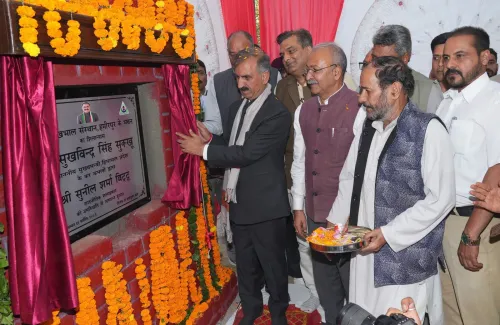
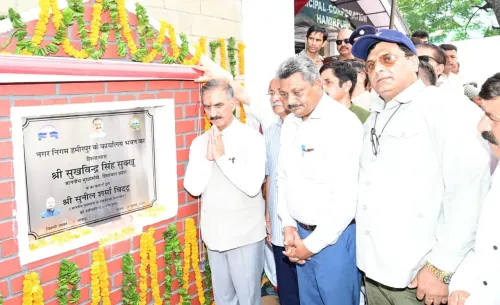
CM Sukhvinder Singh Sukhu laid the foundation stone of the Child Care Institution (CCI), Hamirpur on 27 October 2026 .
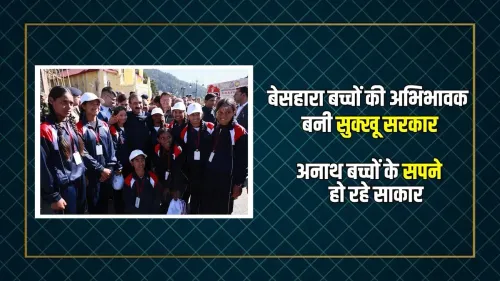
The CCI will offer residential facilities, education, healthcare, and rehabilitation support to children requiring care and protection.
The facility operates under the Juvenile Justice (Care and Protection of Children) Act, 2015 , which mandates states to run such institutions.
Mission Vatsalya , the central child-protection scheme launched in 2021 , provides financial support for district-level CCIs like this one.
The project aims to ensure children in Hamirpur district can be cared for locally rather than transferred to distant facilities.
Every child in need of care deserves a roof, a classroom, and a future — and on Tuesday, October 27, 2026, Himachal Pradesh Chief Minister Sukhvinder Singh Sukhu took a concrete step toward that promise by laying the foundation stone of the Child Care Institution (CCI) in Hamirpur.
Announcing the event on X, CM Sukhu said the institution would provide 'आवासीय सुविधा, शिक्षा, स्वास्थ्य सेवाएँ और पुनर्वास संबंधी सहायता' — residential facilities, education, healthcare, and rehabilitation support — to children requiring care and protection. 'Our endeavour is that every child gets equal opportunities to grow in a safe environment and improve their life,' he wrote.
What the Hamirpur CCI will do for vulnerable children
The facility is being built within the framework of the Juvenile Justice (Care and Protection of Children) Act, 2015, which mandates state governments to establish and maintain CCIs for children who cannot be placed in family care. Once operational, the Hamirpur CCI will serve as a residential home providing round-the-clock shelter, schooling, medical care, and structured pathways back to mainstream life for its young residents.
The timing also aligns with Mission Vatsalya, the central government's umbrella child-protection scheme launched in 2021, which funds district-level infrastructure and services of precisely this kind. States that build and certify CCIs under the scheme unlock central support for staffing, nutrition, and learning programmes — giving the Hamirpur project a clear pathway to full operational funding once construction is complete.
Himachal Pradesh's district-by-district child welfare push
The Hamirpur foundation stone is part of a broader pattern visible across India: state administrations expanding CCI networks at the district level to close gaps left by the older, overcrowded shelter homes of a previous era. Himachal Pradesh, with its dispersed hill geography, has historically had fewer institutional options for children in crisis than the national average — making district-level facilities especially significant.
For the Sukhu government, the move reinforces a social-welfare narrative it has been building since taking office in December 2022: that the state's most vulnerable residents — children without family support among them — are a policy priority, not an afterthought.
The next milestone to watch is the construction timeline: how quickly the building rises will determine how soon children in Hamirpur district stop being transferred to distant facilities and can instead be cared for close to home.
Point of View
2015 created a legal obligation for states to build these institutions; nearly a decade later, many districts still lack them, making each new CCI a measure of how seriously a state takes that obligation. For the Sukhu administration, the announcement reinforces a social-protection brand it has been cultivating since 2022, positioning Congress-governed Himachal as a state that invests in its most marginalised citizens. Whether the building is completed on schedule and actually reaches operational capacity will be the real test — foundation stones are political moments; functioning institutions are governance outcomes.
NationPress
27 Oct 2026
Frequently Asked Questions
What is the Child Care Institution in Hamirpur, Himachal Pradesh?
The Child Care Institution (CCI) in Hamirpur is a proposed residential facility being built under the Juvenile Justice (Care and Protection of Children) Act, 2015. It will provide shelter, education, healthcare, and rehabilitation services to children who need care and protection.
Who laid the foundation stone of the Hamirpur CCI?
Himachal Pradesh Chief Minister Sukhvinder Singh Sukhu laid the foundation stone of the Child Care Institution in Hamirpur on October 27, 2026.
What is Mission Vatsalya and how does it relate to CCIs?
Mission Vatsalya is a central government scheme launched in 2021 that supports state-level child protection services, including the construction and operation of Child Care Institutions. States that build certified CCIs can access central funding for staffing, nutrition, and education programmes.
Which law governs Child Care Institutions in India?
The Juvenile Justice (Care and Protection of Children) Act, 2015 is the primary national law that mandates state governments to establish and maintain Child Care Institutions for vulnerable children.
Why does Himachal Pradesh need a CCI in Hamirpur specifically?
Himachal Pradesh's dispersed hill geography means vulnerable children in districts like Hamirpur have historically had to be transferred to distant facilities. A local CCI allows children to receive care, education, and rehabilitation closer to their home district.