Gadkari: Cabinet clears Rs 10,000 cr ATF support for airlines
Synopsis
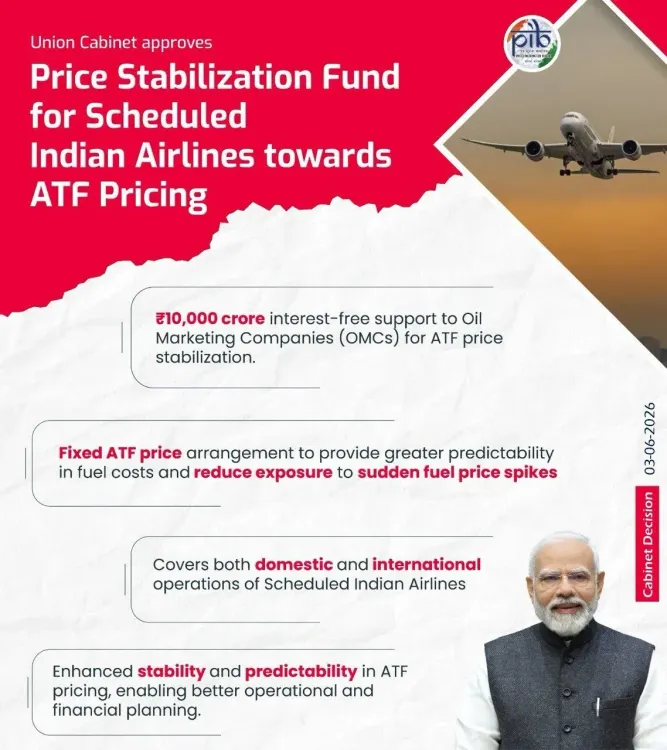
Union Minister Nitin Gadkari announced that the Modi-chaired Union Cabinet has cleared a one-time budgetary support of up to Rs 10,000 crore for Oil Marketing Companies as interest-free advances to stabilise ATF prices for Scheduled Indian Airlines, cushioning the sector from West Asia-linked fuel volatility and protecting connectivity, jobs, tourism and cargo flows.
Key Takeaways
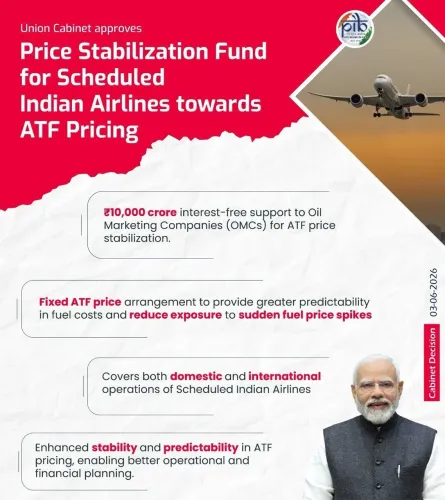
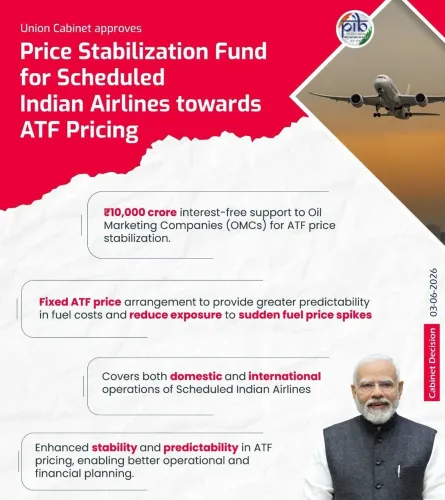
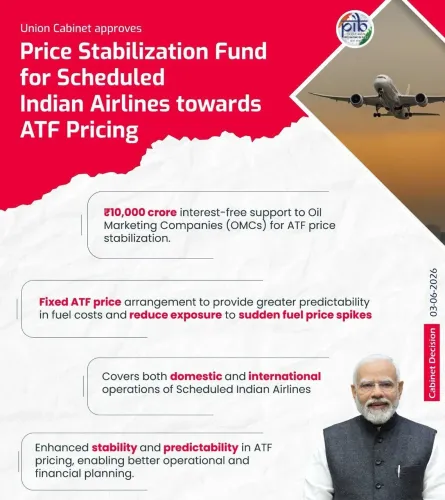
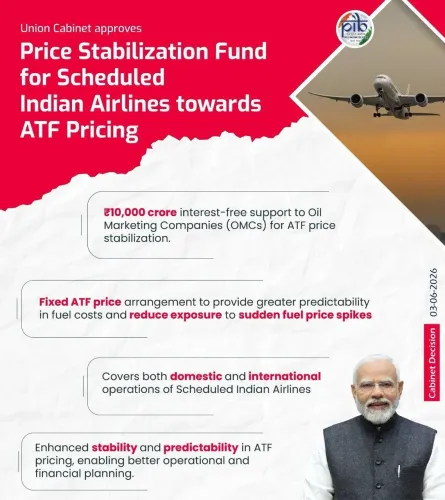
Union Cabinet has approved up to Rs 10,000 crore in one-time budgetary support for OMCs to stabilise ATF prices.
Funds will flow as interest-free advances via the Ministry of Petroleum and Natural Gas's Demands for Grants.
The package targets Scheduled Indian Airlines and is linked to fuel volatility from the West Asia crisis.
Government cites protection of aviation jobs, tourism, cargo movement and UDAN airport infrastructure utilisation.
Announcement was made by Union Minister Nitin Gadkari on 3 June 2026 under #CabinetDecisions.
Union Road Transport and Highways Minister Nitin Gadkari on Wednesday, 3 June 2026, announced that the Union Cabinet, chaired by Prime Minister Narendra Modi, has approved a one-time budgetary support of up to Rs 10,000 crore for Oil Marketing Companies (OMCs) to stabilise Aviation Turbine Fuel (ATF) prices for Scheduled Indian Airlines. The senior BJP leader said the assistance will be routed as interest-free advances through the Demands for Grants of the Ministry of Petroleum and Natural Gas, and is intended to cushion the sector from fuel-price volatility linked to the West Asia crisis.
Context
In his post, Gadkari said the measure 'will help ensure stable airline operations, sustain employment across aviation and allied sectors, and maintain seamless domestic and international connectivity.' He added that it is 'expected to support passenger and cargo movement, boost tourism and trade, and enable optimal utilisation of airport infrastructure, including those developed under the UDAN scheme.'
The post, tagged #CabinetDecisions, frames the package as a connectivity and employment-protection move rather than a long-term subsidy. The Cabinet's intervention comes amid sustained pressure on global crude markets, which feed directly into ATF — a cost line that typically accounts for a major share of Indian carriers' operating expenses.
Policy backdrop
The Centre has periodically extended interest-free or concessional advances to state-owned OMCs — Indian Oil Corporation, Bharat Petroleum and Hindustan Petroleum — during episodes of imported crude shocks, to shield domestic consumers and strategic sectors from full pass-through. The current step extends that template specifically to aviation fuel.
The package also dovetails with the UDAN (Ude Desh ka Aam Naagrik) regional connectivity programme, launched in 2016 with Viability Gap Funding to subsidise tier-2 and tier-3 routes and develop smaller airports. By keeping ATF prices stable, the government is signalling continuity in its push to broaden India's air network rather than allow fuel costs to choke thinner regional routes.
Stakeholders and impact
Scheduled Indian carriers stand to be the most direct beneficiaries, since stable ATF input costs improve fare predictability and reduce the risk of unplanned capacity cuts. Gadkari's post also explicitly flags employment 'across aviation and allied sectors' — including ground handling, maintenance, cargo logistics and airport operations — as a key consideration.
Tourism and trade operators, who depend on consistent passenger and cargo movement, are positioned as second-order beneficiaries. The Cabinet's framing suggests the support is calibrated to preserve momentum at UDAN-served airports, where route economics are thinner and more sensitive to fuel spikes.
For OMCs, the interest-free advance mechanism limits the carry cost of absorbing volatile international ATF prices without forcing them onto their balance sheets as losses. The Ministry of Petroleum and Natural Gas will operate as the disbursing channel through its Demands for Grants.
What's next
Attention will now turn to the operational notification detailing how the up to Rs 10,000 crore will be released to OMCs, and whether disbursal is staggered across tranches in the 2026-27 fiscal cycle. Any mid-year review of ATF pricing and a possible accompanying communication from the petroleum ministry will indicate how tightly the support is tied to crude benchmarks.
Passenger traffic data, cargo throughput at metro and regional airports, and the performance of UDAN routes over the next two quarters will be the clearest test of whether the fiscal cushion translates into sustained connectivity. For the government, the move reinforces a pattern of quick, time-bound Cabinet interventions to absorb external shocks without locking in permanent subsidies — a posture that will shape how investors and airlines read India's response to future oil-price episodes.
Point of View
Time-bound fiscal cushions to insulate strategic sectors from imported crude shocks without committing to open-ended subsidies. By routing the relief through OMCs as interest-free advances rather than direct airline bailouts, the Centre preserves market pricing while quietly absorbing the volatility risk. The explicit linkage to UDAN signals that connectivity expansion remains a political priority even in a high-fuel-cost cycle. The real test will be whether disbursal is calibrated tightly enough to avoid distorting OMC balance sheets once crude stabilises.
NationPress
19 Sept 2026
Frequently Asked Questions
What did the Union Cabinet approve for Indian airlines?
The Union Cabinet approved a one-time budgetary support of up to Rs 10,000 crore for Oil Marketing Companies to stabilise Aviation Turbine Fuel prices for Scheduled Indian Airlines. The support will be given as interest-free advances.
Why has the government extended ATF price support now?
The support is aimed at mitigating the impact of fuel price volatility arising from the West Asia crisis. Stable ATF prices are intended to protect airline operations, jobs and connectivity.
How will the Rs 10,000 crore be routed to OMCs?
The funds will be provided as interest-free advances through the Demands for Grants of the Ministry of Petroleum and Natural Gas. This avoids treating the assistance as a permanent subsidy.
How is the ATF support linked to the UDAN scheme?
By keeping ATF prices stable, the government expects optimal utilisation of airport infrastructure, including airports developed under UDAN. This supports regional connectivity where route economics are more fuel-sensitive.
Who announced the Cabinet decision on ATF support?
Union Road Transport and Highways Minister Nitin Gadkari announced the decision in a post on X on 3 June 2026. He said the Cabinet was chaired by Prime Minister Narendra Modi.