Chouhan: Cabinet clears Rs 10,000 cr ATF support for OMCs
Synopsis
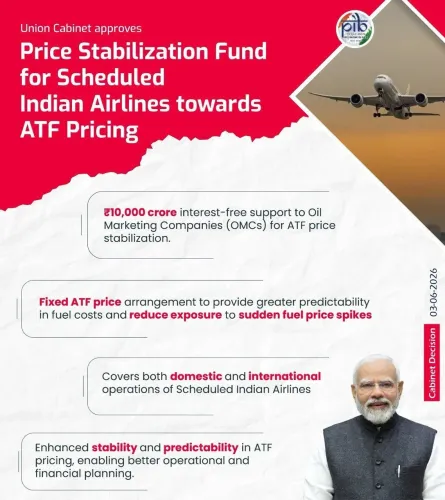
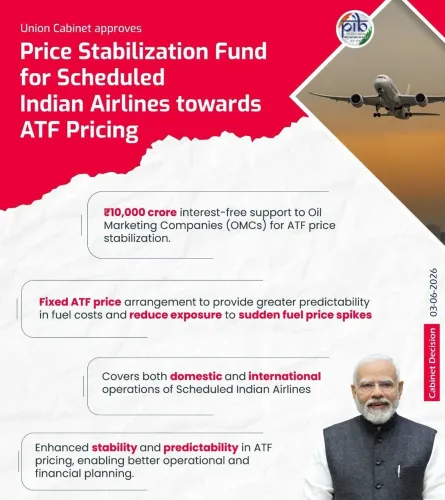
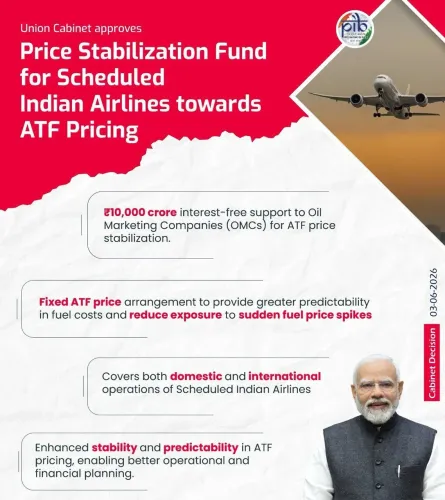
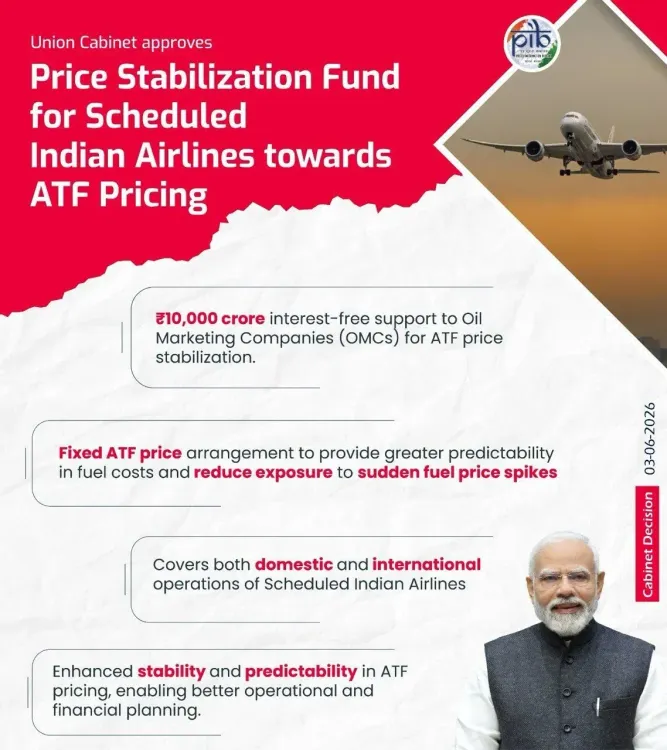
Union Agriculture Minister Shivraj Singh Chouhan said the Union Cabinet, led by PM Narendra Modi, has approved up to Rs 10,000 crore in one-time budgetary support to Oil Marketing Companies to stabilise Air Turbine Fuel prices for Indian carriers, aiming to cushion airlines from global fuel volatility and ease pressure on airfares.
Key Takeaways
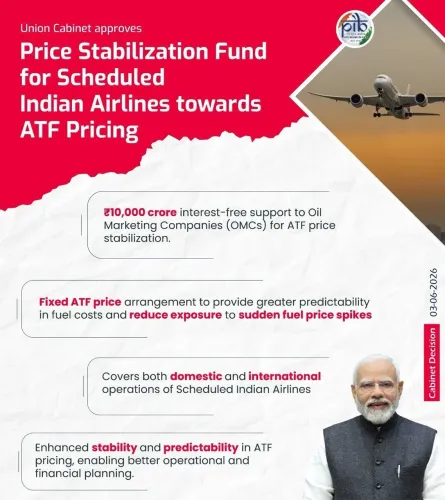
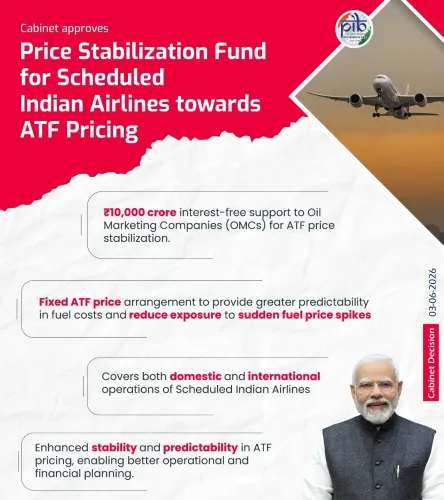
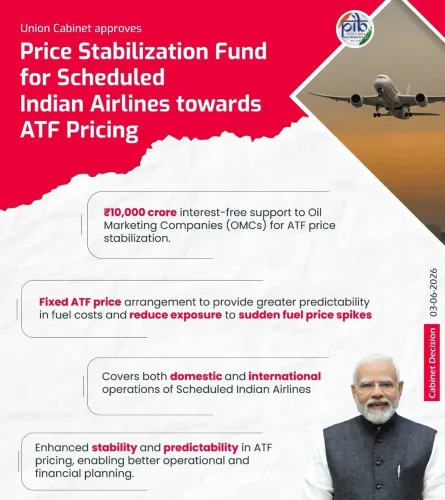
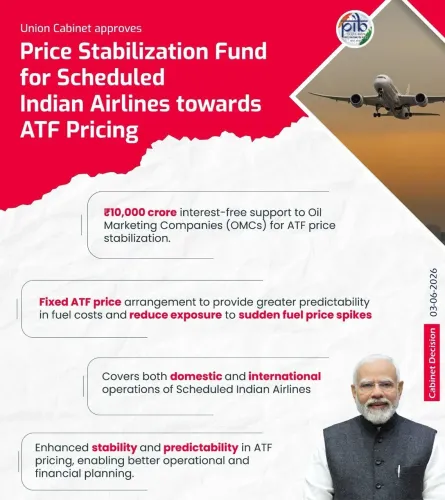
Union Cabinet has approved up to Rs 10,000 crore in one-time budgetary support to OMCs to stabilise ATF prices.
The measure covers Indian airlines operating both domestic and international flights.
Announcement was made by Union Agriculture Minister Shivraj Singh Chouhan on 3 June 2026 via X.
The stated objective is to cushion carriers from global fuel price volatility and ease fare pressure on passengers.
Support will be routed through state-owned OMCs such as IOCL, BPCL and HPCL rather than directly to airlines.
Government links the move to stronger air connectivity, tourism and trade.
Union Agriculture Minister Shivraj Singh Chouhan announced on Wednesday that the Union Cabinet, chaired by Prime Minister Narendra Modi, has approved a one-time budgetary support of up to Rs 10,000 crore for Oil Marketing Companies (OMCs) to stabilise Air Turbine Fuel (ATF) prices charged to Indian airlines operating domestic and international flights. The decision, disclosed via a post on X on 3 June 2026, is aimed at cushioning the aviation sector from global fuel price volatility and easing fare pressure on passengers.
Context
In his post, Chouhan said the move would help shield carriers from vaishvik indhan mulya asthirta (global fuel price volatility), ensure continuity of air services and reduce the burden of rising fares on travellers. He framed the assistance as a step that will 'strengthen air connectivity across the country, boost tourism and trade, and provide new strength to the aviation sector'.
The announcement carried the hashtag #CabinetDecisions and credited the decision to the leadership of Prime Minister Narendra Modi. The Rs 10,000 crore outlay is described as a one-time, targeted intervention routed through the OMCs rather than a direct subsidy to airlines.
Policy backdrop
ATF typically accounts for the single largest operating cost for Indian carriers, and its price is benchmarked to international crude and refined product markets. Sharp swings in Brent and jet fuel cracks in recent years have repeatedly squeezed airline margins and translated into higher ticket prices on both metro trunk routes and regional sectors.
The decision sits within a broader pattern in which Indian governments have intervened with fiscal support or duty adjustments when global crude prices spike, to shield transport sectors from volatility without imposing permanent price controls. Civil aviation has been positioned by the Centre as a growth engine, anchored by the UDAN regional connectivity scheme launched in 2016 to expand affordable air services to smaller cities.
State-owned OMCs — principally Indian Oil Corporation, Bharat Petroleum and Hindustan Petroleum — are the dominant suppliers of jet fuel at Indian airports. Channelling the support through them, rather than to airlines directly, allows the Centre to moderate the ATF price line without altering the underlying tax structure on aviation fuel, much of which sits with state governments through VAT.
Stakeholders and impact
For Indian carriers, a stabilised ATF price line could ease cost pressures during a phase of aggressive fleet expansion and international route additions. Lower volatility in fuel costs also makes it easier for airlines to price tickets predictably across booking windows.
For passengers, the immediate question is whether the OMC-level cushion is passed through to lower or steadier airfares, particularly on price-sensitive leisure and regional routes. The tourism and hospitality industries, which depend heavily on domestic air traffic, stand to gain if connectivity is preserved through periods of high crude prices.
The aviation ecosystem — including airports, ground handling firms and maintenance, repair and overhaul (MRO) operators — is closely linked to traffic volumes, and any measure that supports flight continuity has knock-on effects across the value chain. Smaller and newer airlines, which have thinner balance sheets, are typically more exposed to ATF shocks and could benefit disproportionately from a stable fuel price band.
What's next
Attention will now turn to the operational guidelines governing the disbursement of the Rs 10,000 crore support to OMCs, including the trigger conditions, the duration of the cushion and the mechanism for ensuring that benefits flow through to airline ATF bills. Industry watchers will track airfare movements and quarterly airline financials in the months after disbursement.
Chouhan's framing — linking the cabinet decision to connectivity, tourism and trade — signals that the Centre intends to position the intervention as part of its wider aviation growth narrative, alongside airport expansion and regional connectivity. Any follow-up measures, including possible structural steps on ATF taxation, are likely to be watched for in the next Union Budget.
Point of View
Which has long been driven by state VAT and global crude swings. By routing relief through OMCs, the Centre avoids the politically sensitive route of direct airline subsidies while still aiming to influence the price line that carriers and ultimately passengers pay. It fits a familiar pattern of one-time cushions deployed when global energy markets threaten domestic transport continuity. The real test will be pass-through: whether stable ATF bills translate into steadier airfares and healthier airline books, or simply absorb a one-off shock without reshaping the cost base.
NationPress
17 Oct 2026
Frequently Asked Questions
What did the Union Cabinet approve for Indian airlines?
The Union Cabinet has approved up to Rs 10,000 crore in one-time budgetary support to Oil Marketing Companies to stabilise Air Turbine Fuel (ATF) prices for Indian airlines operating domestic and international flights, as announced by Union Agriculture Minister Shivraj Singh Chouhan.
Who will receive the Rs 10,000 crore support?
The support will go to Oil Marketing Companies (OMCs), the state-owned entities that supply ATF at Indian airports, rather than directly to airlines. The aim is to enable them to offer a more stable ATF price to carriers.
Why is ATF price stabilisation important for air travellers?
ATF is the largest single cost for airlines, so volatile fuel prices typically translate into higher and unpredictable airfares. A stable ATF price line is intended to ease this pressure and help keep ticket prices steadier for passengers.
How does this decision link to the government's aviation push?
It complements existing measures such as the UDAN regional connectivity scheme launched in 2016, which targets affordable air services to smaller cities. The Centre has positioned civil aviation as a driver of tourism, trade and connectivity.
Is this a permanent subsidy on jet fuel?
No. The post describes it as a one-time budgetary support of up to Rs 10,000 crore, not a permanent price control or recurring subsidy on ATF.