Chirag Paswan hails Cabinet's Rs 10,000 cr ATF price fund
Synopsis
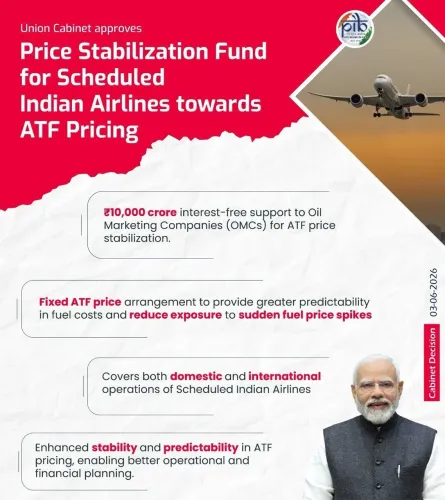
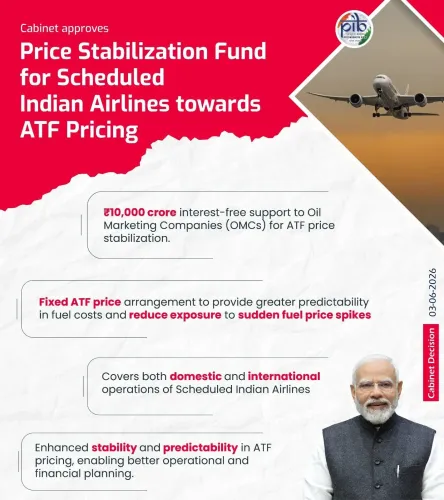
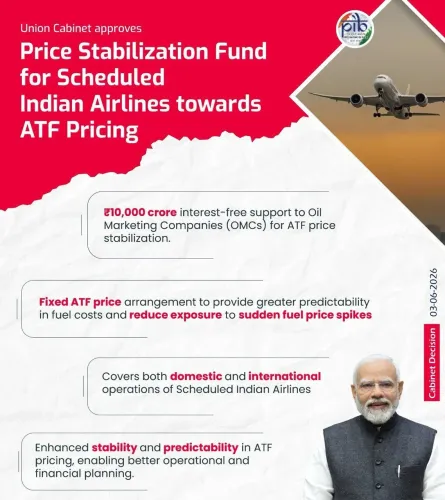
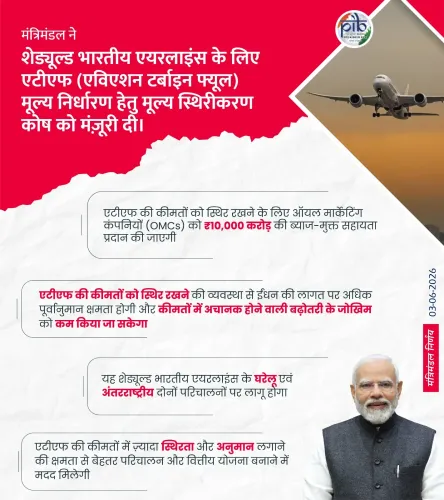
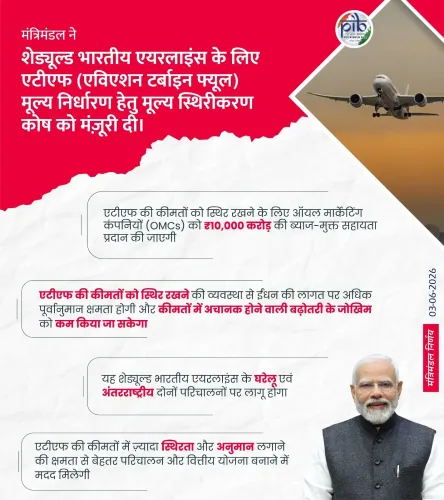
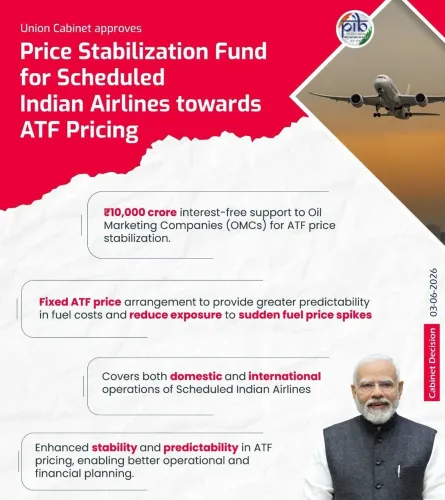
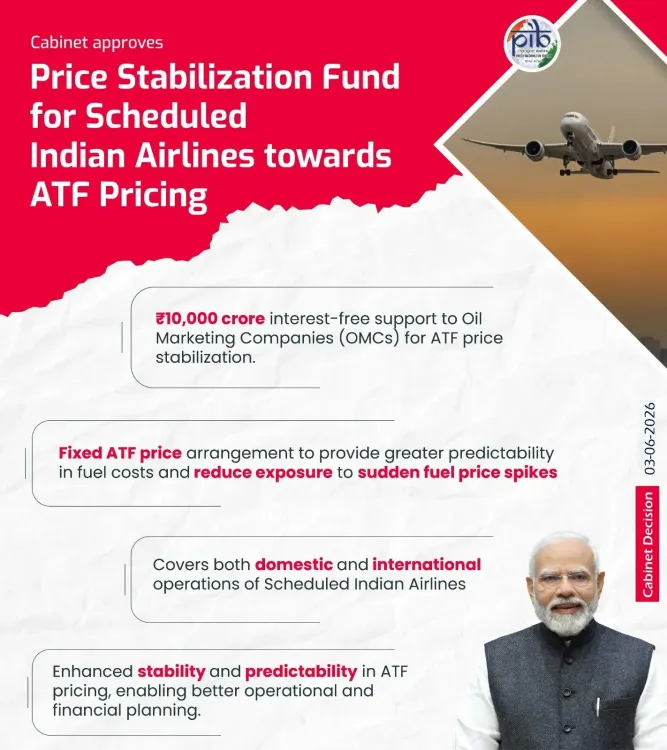
Union Food Processing Minister Chirag Paswan has welcomed the Union Cabinet's approval of a Rs 10,000 crore Price Stabilisation Fund for the aviation sector, saying the move will balance ATF prices, bring relief to air travellers and strengthen India's air connectivity amid global challenges.
Key Takeaways
Union Minister Chirag Paswan endorsed a Rs 10,000 crore Price Stabilisation Fund for aviation cleared by the Union Cabinet.
The fund is aimed at balancing Aviation Turbine Fuel (ATF) prices amid global volatility.
Minister credited PM Narendra Modi's leadership and called it a 'visionary decision'.
Expected beneficiaries include air passengers, airlines and the regional connectivity ecosystem.
Operational guidelines and state-level ATF tax responses will determine real fare impact.
Union Food Processing Minister Chirag Paswan on Wednesday, 3 June 2026, welcomed the Union Cabinet's approval of a Rs 10,000 crore 'Price Stabilisation Fund' for the aviation sector, calling it a forward-looking step to steady Aviation Turbine Fuel (ATF) prices amid global volatility. In a post on X, the Lok Janshakti Party (Ram Vilas) chief credited Prime Minister Narendra Modi's leadership for the decision, saying it would benefit air passengers and reinforce India's air connectivity.
Writing in Hindi, the minister said the cabinet had cleared the fund 'विमानन क्षेत्र को स्थिरता प्रदान करने हेतु' (to provide stability to the aviation sector). He described the move as a 'visionary decision taken amid global challenges' that would 'ensure balance in ATF prices, bring relief to air travellers and further strengthen the country's air connectivity'.
Context
ATF typically accounts for a significant share of an airline's operating cost in India, and domestic carriers have long flagged the impact of crude oil swings and high state-level VAT on jet fuel as a drag on fares and profitability. A dedicated stabilisation mechanism, as flagged in the post, would mark a notable shift in how the Centre cushions the sector against price shocks.
Mr Paswan, who heads the Ministry of Food Processing Industries, frequently amplifies cabinet decisions across portfolios as a senior NDA ally and national president of the Lok Janshakti Party (Ram Vilas). His post frames the decision as part of the Modi government's broader effort to keep essential services affordable.
Policy backdrop
The aviation sector has been a focus area for the Centre since the National Civil Aviation Policy of 2016, which set the template for sector growth, ease of doing business for airlines, and regional connectivity. The flagship UDAN scheme, launched the same year, sought to make flying affordable for smaller towns through viability gap funding.
Successive governments have leaned on fiscal levers — central excise tweaks and persuasion of states to rationalise VAT on ATF — to soften crude-driven price spikes. A price stabilisation fund, as referenced by the minister, would sit alongside these tools and the ongoing push to expand airport infrastructure post-pandemic.
Stakeholders and impact
The most immediate beneficiaries, in the minister's framing, are air passengers, who have faced fare volatility linked to fuel costs. Airlines — both full-service and low-cost carriers — stand to gain from a more predictable input-cost environment, which could in turn support route expansion under regional connectivity programmes.
State governments, which levy VAT on ATF and have varied widely in their rates, are likely to be watched closely for their response. Airport operators and aviation services firms in hubs such as Delhi, Mumbai, Bengaluru and Hyderabad also have a direct stake in any mechanism that smooths fuel-cost cycles.
What's next
Attention will now turn to the operational guidelines of the Rs 10,000 crore fund — including how it will be capitalised, the triggers for intervention, and the agency tasked with administering it. State-level decisions on ATF taxation will be a parallel variable shaping how much of the relief actually reaches ticket prices.
For Mr Paswan, the endorsement underscores his role as a vocal NDA messenger on cabinet decisions beyond his own ministry. If the fund delivers on the promise of steadier fares, it could feed into the government's wider narrative on infrastructure-led consumer relief ahead of upcoming electoral cycles.
Point of View
If structured carefully, would mark a shift from ad-hoc excise tweaks to a rules-based cushion for a sector still recovering from pandemic-era stress. The real test lies in whether states fall in line on VAT and whether the fund's triggers translate into visible fare relief. For Chirag Paswan personally, such interventions allow him to stay relevant in the national economic conversation beyond food processing.
NationPress
21 Oct 2026
Frequently Asked Questions
What is the Rs 10,000 crore Price Stabilisation Fund for aviation?
It is a fund cleared by the Union Cabinet, as referenced by Union Minister Chirag Paswan, aimed at stabilising Aviation Turbine Fuel (ATF) prices and supporting the aviation sector amid global volatility.
Who announced the aviation Price Stabilisation Fund decision?
Union Food Processing Minister Chirag Paswan publicised the cabinet decision on X, crediting Prime Minister Narendra Modi's leadership for the approval.
How will the ATF Price Stabilisation Fund help air passengers?
By smoothing swings in ATF prices, the fund is expected to reduce fuel-driven fare volatility, potentially translating into more stable ticket prices for flyers.
What is ATF and why does it matter for airfares?
ATF, or Aviation Turbine Fuel, is the jet fuel used by airlines and forms a large share of their operating costs in India, making it a key driver of ticket prices.
Is Chirag Paswan the aviation minister?
No, Chirag Paswan is the Union Minister of Food Processing Industries and national president of the Lok Janshakti Party (Ram Vilas); he posted in his capacity as a senior NDA leader.