CM Dhami hails Centre's Rs 10,000 crore ATF stabilisation fund
Synopsis
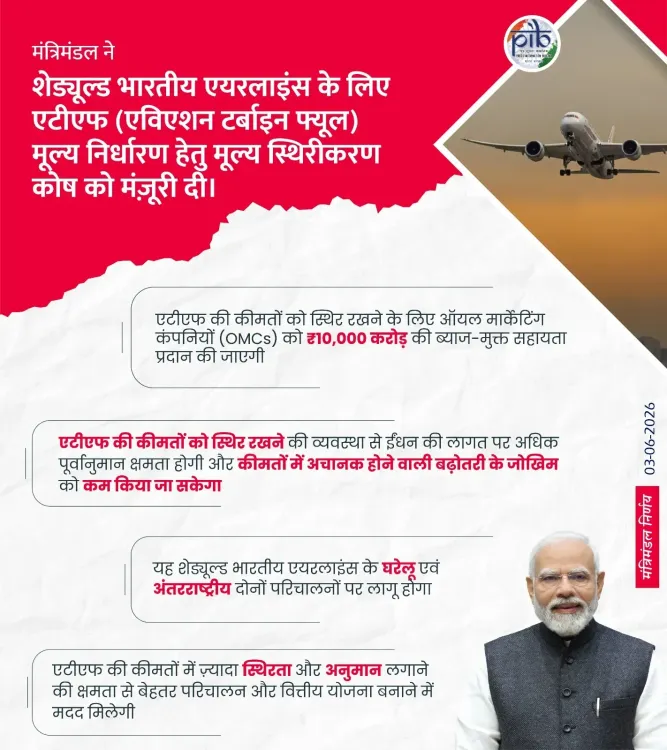
Uttarakhand Chief Minister Pushkar Singh Dhami has welcomed the Union Cabinet's clearance of a Rs 10,000 crore ATF Price Stabilisation Fund, saying it will steady airlines and shield passengers from sudden jet fuel spikes amid West Asia tensions and global energy market volatility.
Key Takeaways
Uttarakhand CM Pushkar Singh Dhami welcomed a Rs 10,000 crore ATF Price Stabilisation Fund cleared by the Union Cabinet.
Dhami credited PM Narendra Modi and linked the decision to rising West Asia tensions and global fuel volatility.
The fund aims to give airlines operational stability and cushion passengers from sudden ATF price spikes.
ATF accounts for roughly 40 per cent of Indian airlines' operating costs, a long-standing industry concern.
The move follows the 2016 civil aviation policy push and 2022 excise duty cuts on petroleum products.
Rollout rules, disbursement triggers and possible state VAT rationalisation on ATF are the next markers to watch.
Uttarakhand Chief Minister Pushkar Singh Dhami on Wednesday welcomed the Union Cabinet's approval of a Rs 10,000 crore Aviation Turbine Fuel (ATF) Price Stabilisation Fund, calling it a timely intervention to insulate India's aviation sector from global fuel-price volatility. In a post on X, the BJP leader linked the decision to rising tensions in West Asia and credited Prime Minister Narendra Modi's leadership for the move.
'The approval of the ATF Price Stabilisation Fund by the central government under the visionary leadership of Prime Minister Shri Narendra Modi is an important and welcome decision,' Dhami wrote, translating from his Hindi post. He added that amid instability in the global fuel market caused by escalating West Asia tensions, the Centre had once again shown foresight (दूरदर्शिता का परिचय दिया है).
Context
The Chief Minister said the Rs 10,000 crore corpus will 'strengthen the aviation sector, provide operational stability to airlines, and also give passengers relief from the impact of sudden spikes in fuel prices.' He tagged the announcement under #CabinetDecisions, signalling that the fund was cleared as part of a recent Union Cabinet meeting.
ATF typically accounts for around 40 per cent of an Indian carrier's operating cost, and Indian airlines have long flagged jet fuel pricing as a structural pressure point. A dedicated stabilisation fund marks a shift from ad hoc tax tweaks to a more rules-based cushion against import-driven shocks.
Policy backdrop
The intervention sits within a broader policy arc that began with the National Civil Aviation Policy 2016, which set out targets for affordable air travel, fleet expansion and a more competitive domestic aviation market while flagging ATF costs as a binding constraint. In 2022, the Centre had cut excise duties on petroleum products and urged states to rationalise VAT on jet fuel after the Ukraine conflict triggered a global oil shock.
Successive governments have leaned on targeted funds or tax adjustments to shield import-dependent downstream industries when geopolitical flare-ups roil energy markets. Similar buffers have been used in the oil and gas sector to protect refiners and consumers from sudden cost pass-throughs.
Stakeholders and impact
The most immediate beneficiaries are Indian carriers, which have repeatedly cited fuel-price swings as a drag on profitability and capacity planning. A stabilisation mechanism could help airlines smooth fares across volatile cycles, with potential knock-on relief for passengers on both metro and regional routes.
For states like Uttarakhand, which depend on aviation connectivity for tourism and pilgrim traffic to destinations such as Kedarnath, Badrinath and Dehradun, steadier ATF pricing has direct economic implications. Dhami's endorsement also keeps pressure on state governments to revisit their own VAT rates on jet fuel, an issue that has divided states for years.
What's next
The rollout mechanism, eligibility criteria and disbursement timeline of the Rs 10,000 crore fund will be the next markers to watch, along with whether the Centre couples it with a fresh push for state-level VAT rationalisation on ATF. Airline operators are likely to seek early clarity on how the fund will be triggered and what price thresholds will activate support.
If the instrument works as intended, it could become a template for shielding other import-exposed sectors from West Asia-linked energy turbulence, even as India accelerates its longer-term pivot to sustainable aviation fuels.
Point of View
He aligns Uttarakhand, a tourism and pilgrimage-dependent state, with the Centre's narrative of pre-emptive economic management. The bigger test will be whether BJP-ruled states, including Uttarakhand, follow up by rationalising their own VAT on ATF, an issue that has long stalled at the state level. If they do, the fund could mark a genuine shift from reactive tax tweaks to a structured price-shock buffer.
NationPress
17 Oct 2026
Frequently Asked Questions
What is the ATF Price Stabilisation Fund?
It is a Rs 10,000 crore fund approved by the Union Cabinet to cushion airlines and passengers against sudden swings in Aviation Turbine Fuel prices. The fund is intended to provide operational stability to carriers when global jet fuel costs spike.
Why did CM Pushkar Singh Dhami welcome the ATF fund?
Dhami said the fund will strengthen the aviation sector, give airlines operational stability and shield passengers from sudden fuel-price hikes. He credited PM Narendra Modi's leadership and cited West Asia tensions as the backdrop.
How does ATF pricing affect airline ticket costs in India?
ATF typically forms around 40 per cent of an Indian airline's operating cost, so sharp fuel-price swings directly influence fares. A stabilisation fund could help carriers smooth pricing across volatile cycles.
How is the ATF fund linked to West Asia tensions?
Rising tensions in West Asia have historically caused volatility in global crude and jet fuel markets, hitting import-dependent India hard. Dhami said the Centre's fund is a pre-emptive cushion against such external shocks.
Will states reduce VAT on ATF after this decision?
That remains to be seen. State-level VAT on ATF has long been a contested issue, and the Centre has previously urged states to rationalise rates; follow-up moves by states including Uttarakhand will be a key marker.