Pradhan: Cabinet clears Rs 10,000 cr ATF support for airlines
Synopsis
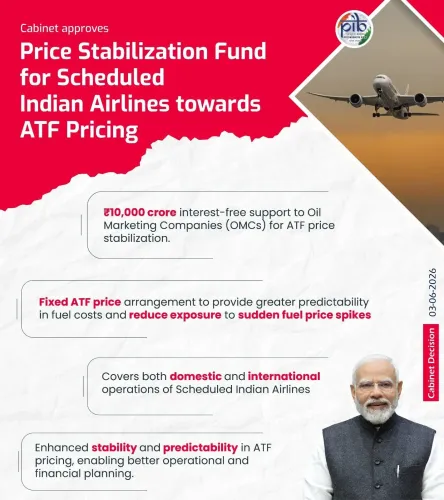
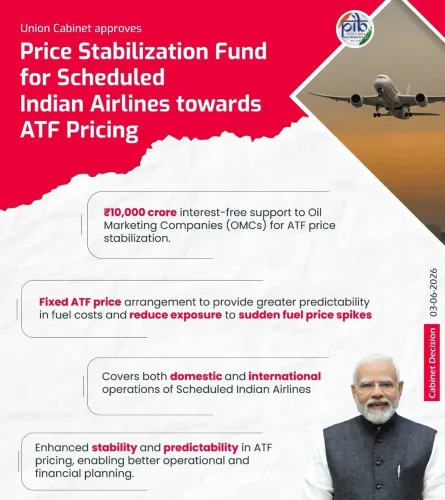
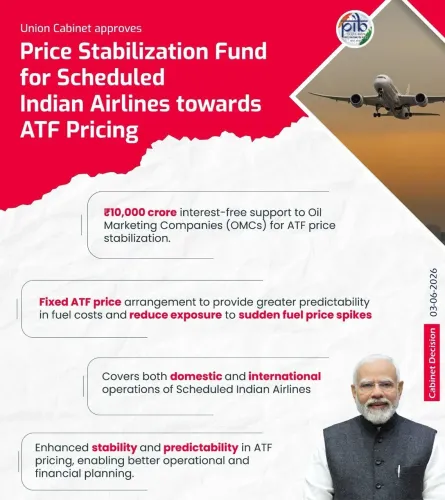
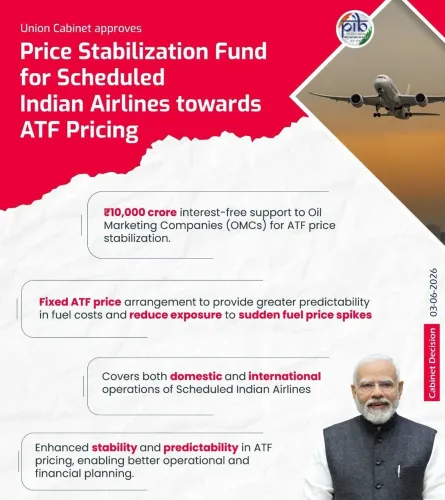
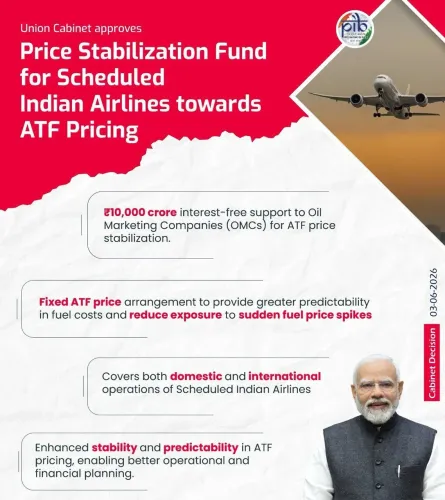
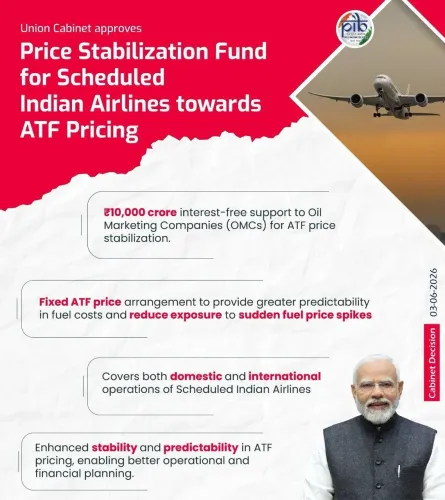
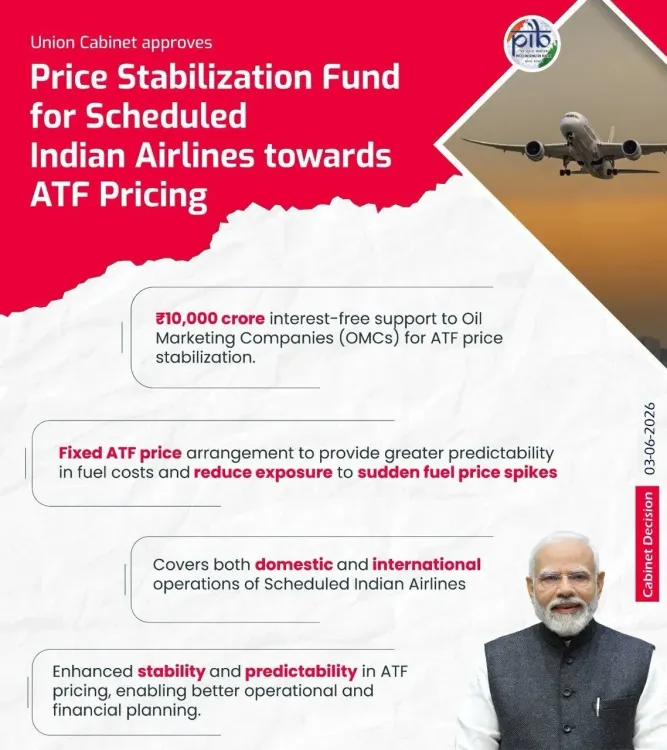
Union Education Minister Dharmendra Pradhan announced that the Modi Cabinet has approved up to Rs 10,000 crore in budgetary support to Oil Marketing Companies to stabilise Aviation Turbine Fuel prices for Indian airlines, citing global fuel volatility, passenger fare stability and the need to safeguard domestic and international air connectivity.
Key Takeaways
Union Cabinet approves up to Rs 10,000 crore to stabilise ATF prices for Indian airlines.
Support routed through Oil Marketing Companies via a structured 'true-up' framework.
Aim is to shield carriers from global crude shocks and reduce fare volatility.
Move builds on the 2022 ATF excise duty cut and complements the UDAN scheme launched in 2016.
Operational guidelines and first quarterly settlements will be key implementation milestones.
Announcement made by Union Education Minister Dharmendra Pradhan on X.
Union Education Minister Dharmendra Pradhan on Wednesday, 3 June 2026, announced that the Union Cabinet, chaired by Prime Minister Narendra Modi, has approved budgetary support of up to Rs 10,000 crore for Oil Marketing Companies to stabilise Aviation Turbine Fuel (ATF) prices for Indian airlines. The intervention, posted via his X handle, is positioned as a buffer against global fuel volatility and a measure to protect domestic and international air connectivity.
Context
In his post, Pradhan said the mechanism will 'ensure predictable fuel costs, protect airlines from extreme price shocks and safeguard domestic and international air connectivity while enabling fair recovery through a structured true-up framework.' He added that the reform will 'strengthen aviation stability, support regional connectivity, and reduce fare volatility for passengers.'
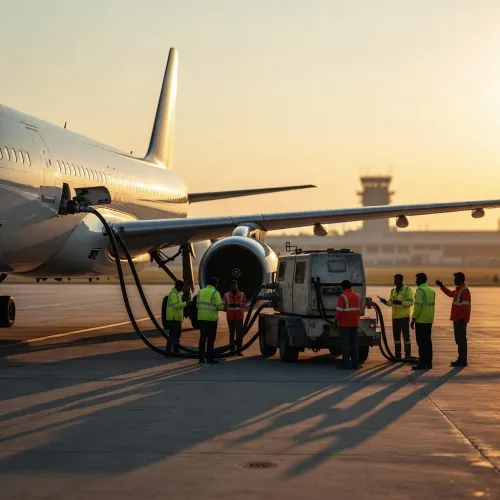
ATF typically accounts for roughly 40 per cent of an Indian carrier's operating cost, making the segment unusually exposed to swings in international crude prices. The announced support will route through public sector Oil Marketing Companies, principally Indian Oil Corporation, Bharat Petroleum and Hindustan Petroleum, which supply jet fuel at major Indian airports.
Policy backdrop
The decision extends a pattern of fiscal cushioning for India's aviation ecosystem. In 2022, the Centre had trimmed excise duty on ATF to soften the impact of a sharp run-up in global crude following geopolitical disruptions. The new framework moves from one-off tax tweaks to a more structured 'true-up' arrangement under which OMCs can recover differentials in a predictable manner.
The measure also dovetails with the UDAN regional connectivity scheme, launched in 2016, which capped fares on under-served routes and seeded new airports across smaller cities. Stable ATF pricing is widely seen as a prerequisite for sustaining UDAN routes, where thin margins leave operators particularly vulnerable to fuel shocks.
Pradhan, who previously served as Union Petroleum Minister before taking charge of the Education portfolio, has frequently weighed in on energy-pricing issues. His amplification of the Cabinet decision underscores the government's intent to frame the move as both an industry reform and a consumer-protection measure.
Stakeholders and impact
For Indian carriers — including full-service and low-cost operators — a predictable ATF regime could ease balance-sheet stress that has periodically pushed weaker airlines into distress. Industry bodies have long argued that the steep tax incidence on jet fuel and its volatility undermine the competitiveness of Indian airlines against foreign rivals on international routes.
Air passengers stand to benefit indirectly. Fuel surcharges and base fares typically rise sharply when crude spikes; a smoother price curve, if it translates to ticketing, could moderate seasonal fare swings. The Oil Marketing Companies, meanwhile, gain a clearer recovery channel for any pricing gap they bear on behalf of carriers.
Regional airports and smaller carriers operating UDAN routes are likely to be the most sensitive beneficiaries, given that even modest ATF movements can decide the viability of low-density sectors.
What's next
Attention now shifts to the operational fine print. The Ministry of Petroleum and Natural Gas, in coordination with the Ministry of Civil Aviation, is expected to issue guidelines governing the Rs 10,000 crore envelope, including eligibility, the cadence of the true-up settlements with OMCs, and disclosure norms.
The first quarterly settlements under the mechanism will be an early test of whether the framework actually smooths pump-level ATF prices or merely backstops OMC receivables. Parliamentary scrutiny of the allocation is also likely once the next session convenes, with utilisation data expected to surface through formal questions and committee reviews.
If the framework holds, it could become a template for shielding other fuel-intensive transport segments from imported price shocks — a recurring theme as India balances its energy import dependence with ambitions of becoming a global aviation hub.
Point of View
The government ties the intervention to its broader UDAN-era narrative of democratised flying. The real test will be transparency in the true-up settlements and whether savings actually flow to ticket prices rather than being absorbed in carrier or OMC balance sheets.
NationPress
20 Sept 2026
Frequently Asked Questions
What did the Union Cabinet approve for Indian airlines?
The Union Cabinet approved budgetary support of up to Rs 10,000 crore for Oil Marketing Companies to stabilise Aviation Turbine Fuel prices for Indian airlines amid global fuel volatility.
Who announced the ATF price support decision?
Union Education Minister Dharmendra Pradhan announced the decision through a post on X, attributing the move to the Cabinet led by Prime Minister Narendra Modi.
How will the Rs 10,000 crore ATF mechanism work?
The support will flow through Oil Marketing Companies under a structured 'true-up' framework that allows fair recovery while keeping ATF prices for airlines more predictable.
Will the ATF support reduce air ticket prices?
The government says the reform will reduce fare volatility for passengers by protecting airlines from extreme fuel price shocks, though actual ticket-price impact will depend on how carriers pass on the benefit.
How does this relate to the UDAN scheme?
Stable ATF prices support the UDAN regional connectivity scheme launched in 2016 by improving the viability of low-density routes that are highly sensitive to fuel cost swings.