India eyes world's top silk producer rank by 2028-29, output at 42,000 MT: Giriraj Singh
Synopsis
India has nearly doubled its silk output since 2014 and now has a government-backed deadline — 2028-29 — to become the world's largest producer, outpacing China as its rival's output declines. With a ₹10-12 lakh farmer income target and AI-driven quality checks entering the sector, this is a rare convergence of agricultural ambition and industrial-scale planning.
Key Takeaways
India's silk production has grown from 26,000 metric tonnes in 2014 to 42,000 metric tonnes as of 2026 .
The Centre targets making India the world's largest silk producer by 2028-29 .
A longer-term target of 60,000 metric tonnes by 2030-31 has been set by the government.
The government aims to raise silk farmers' annual income to ₹10-12 lakh through higher yields and more cocoon-rearing cycles.
Karnataka currently leads all Indian states in silk production.
The Central Silk Board signed MoUs with multiple organisations and appointed 28 new scientists at its 77th Foundation Day event in Bengaluru .
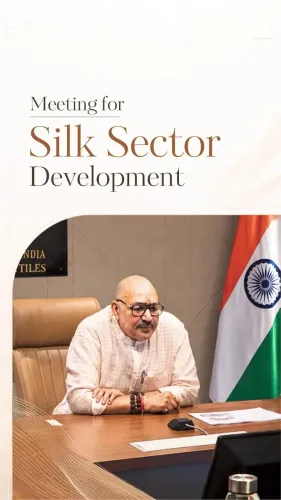
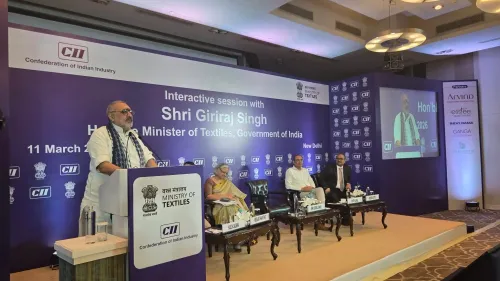
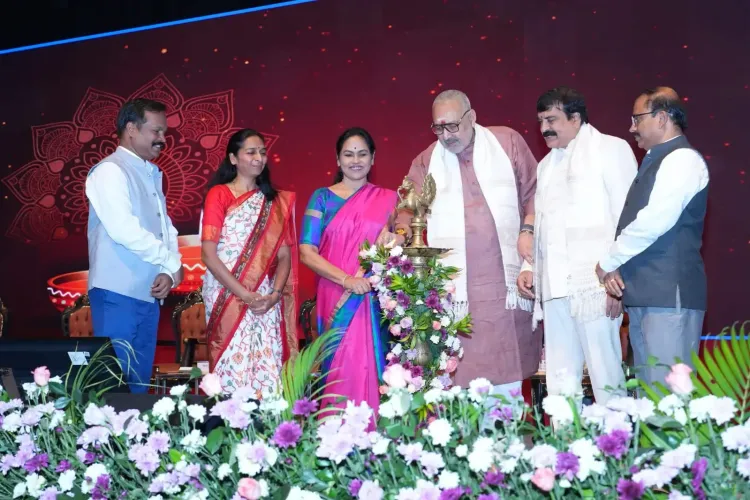
Union Minister of Textiles Giriraj Singh on Sunday, 20 September announced that India's silk production has surged from 26,000 metric tonnes in 2014 to 42,000 metric tonnes today, with the government targeting the country's position as the world's largest silk producer by 2028-29. The minister made the remarks while inaugurating the 77th Foundation Day programme of the Central Silk Board in Bengaluru, alongside an exhibition of silk products and technologies.
Production Targets and Farmer Income Goals
The Centre has set an ambitious target to scale up silk production to 60,000 metric tonnes by 2030-31. Singh outlined that this will be achieved by boosting mulberry leaf yield and increasing cocoon-rearing cycles. He added that the government aims to raise farmers' annual income to ₹10-12 lakh through these measures.
Singh stressed that innovations by scientists, hybrid silkworm varieties, and modern machinery must be made directly accessible to farmers at the grassroots level — a key bottleneck in past sericulture expansion efforts.
Global Opportunity as China's Output Declines
The minister noted that international demand for Indian silk is rising, particularly as China — the world's current leading silk producer — sees a decline in its own output. Singh identified strengthening the value chain from sericulture to weaving, expanding India's textile market to $300 billion, and ensuring minimum economic security for weavers and workers as central priorities for the sector.
This comes amid a broader push by the Centre to position India as a global textile powerhouse, with silk serving as a high-value export segment with growing international appeal.
Karnataka's Role and MSME Push
Union Minister of State for Micro, Small and Medium Enterprises Shobha Karandlaje highlighted that Karnataka leads the country in silk production. She said the government is focusing on infrastructure, industrial growth, and high-density production methods to bring domestic silk up to global export standards, reduce imports, and accelerate domestic output.
Karandlaje added that entrepreneurs are increasingly registering under the MSME framework, supported by government subsidies and quality improvement schemes — a trend officials say is helping formalise the largely unorganised sericulture sector.
Technology Integration and Key Announcements
Padmini Singla, Joint Secretary (Silk) at the Ministry of Textiles, said high-yielding silkworm hybrids and advanced machinery are being introduced alongside artificial intelligence (AI), GIS, and machine learning technologies to inspect quality and boost production capacity.
The Foundation Day event also saw the Central Silk Board sign Memoranda of Understanding (MoUs) with several organisations, distribute appointment letters to 28 scientists, confer awards on outstanding employees and stakeholders, and release new publications and periodicals.
What's Next
With a clear 2028-29 milestone set for topping global silk rankings and a longer-term 2030-31 production target of 60,000 metric tonnes, the pace of technology rollout and farmer-level outreach will be closely watched. Whether India can overtake China — whose decline in output remains uneven — will depend on how swiftly modern techniques reach sericulture clusters beyond Karnataka.
Point of View
Yet the jump from 42,000 to 60,000 metric tonnes by 2030-31 requires an almost 43% further increase in under five years. The China factor is real but cannot be taken for granted; Beijing's sericulture decline has been gradual and partly cyclical. The more telling test will be whether AI and GIS tools reach smallholder farmers in Ramanagara and Mysuru, not just research stations in Bengaluru. Farmer income targets of ₹10-12 lakh annually are politically compelling but need transparent monitoring mechanisms to avoid becoming another unverified headline.
NationPress
20 Sept 2026
Frequently Asked Questions
What is India's silk production target by 2028-29?
India aims to become the world's largest silk producer by 2028-29, according to Union Minister of Textiles Giriraj Singh. Current production stands at 42,000 metric tonnes, up from 26,000 metric tonnes in 2014.
How much silk does India plan to produce by 2030-31?
The Centre has set a target of 60,000 metric tonnes of silk production by 2030-31. This will be achieved by increasing mulberry leaf yields and expanding cocoon-rearing cycles, officials said.
Which state leads India in silk production?
Karnataka leads all Indian states in silk production, according to Union Minister of State Shobha Karandlaje. The state is also at the centre of the government's push for modern, high-density sericulture methods.
Why is India's silk sector gaining a global advantage now?
International demand for Indian silk is reportedly rising as China's silk production declines, creating an opportunity for India to capture greater market share. The government is working to strengthen the full value chain from sericulture to weaving to capitalise on this shift.
What new technologies are being introduced to India's silk sector?
The Ministry of Textiles is introducing high-yielding silkworm hybrids, modern machinery, and technologies including artificial intelligence, GIS, and machine learning to improve quality inspection and boost production capacity, according to Joint Secretary Padmini Singla.