Tata Trusts dispute: Shareholder rights cannot be nullified, warns Singhvi
Synopsis
One of India’s most consequential corporate disputes took a sharper legal edge on Sunday as Abhishek Manu Singhvi warned that nullifying Tata Trusts’ shareholder rights could set a precedent that upends governance norms for hundreds of thousands of Indian companies — a claim that, if upheld in court, would redefine the boundaries of charitable trust control over listed conglomerates.
Key Takeaways
Abhishek Manu Singhvi on 20 September 2026 warned that nullifying shareholder rights would be ‘doomsday’ for corporate governance across hundreds of thousands of Indian companies .
Singhvi is representing Tata Trusts in its legal standoff with Tata Sons .
A charity commissioner order has reportedly prevented one of the trusts from convening to decide its course of action.
Singhvi described the Tata Trusts–Tata Sons relationship as one built over more than 100 years and said treating them as wholly separate entities was ‘legally or otherwise unthinkable.’ He expressed personal sadness over the dispute, citing his close association with the late Ratan Tata .
Senior advocate Abhishek Manu Singhvi, appearing for Tata Trusts in its intensifying legal standoff with Tata Sons, on Sunday, 20 September 2026, warned that nullifying the fundamental rights of shareholders would have sweeping consequences for corporate governance across hundreds of thousands of Indian companies. Speaking in New Delhi, Singhvi framed the dispute as a matter of foundational legal principle, not just a corporate family feud.
The Core Legal Argument
Singhvi said his focus, as counsel for one side in the dispute, would remain squarely on the underlying legal questions. He argued that the rights of owners who are shareholders could not be diluted or extinguished without undermining principles that govern corporate India at large.
“To dilute or nullify the rights of owners who are shareholders would spell doomsday for hundreds and thousands of Indian companies for corporate governance,” Singhvi said.
The veteran advocate stressed that such an outcome would not be a contained, private-sector matter — it would set a precedent with far-reaching implications for shareholder democracy across the country.
Charity Commissioner Order Under Scrutiny
Singhvi also raised concerns over what he described as a sudden order from the charity commissioner that has reportedly prevented one of the trusts from convening to determine its own course of action. He characterised efforts to “stymie decision-making and to freeze action” within the trust as an attack on democratic governance within a charitable organisation.
The move, he suggested, goes beyond ordinary regulatory oversight and effectively paralyses the internal processes of a body that has operated under its own structures for over a century.
A Relationship Built Over 100 Years
Singhvi underscored the depth of the institutional relationship between Tata Trusts and Tata Sons, describing it as one forged and sustained over more than 100 years of established practice. He said treating the two entities as though they were entirely separate and unconnected would be, in his words, “legally or otherwise unthinkable.”
The argument is significant: Tata Trusts holds a majority stake in Tata Sons and has historically been inseparable from the conglomerate’s identity, philanthropy, and strategic direction. Any legal or regulatory move that severs that relationship could reshape the ownership architecture of one of India’s oldest and largest business groups.
A Personal Note of Sadness
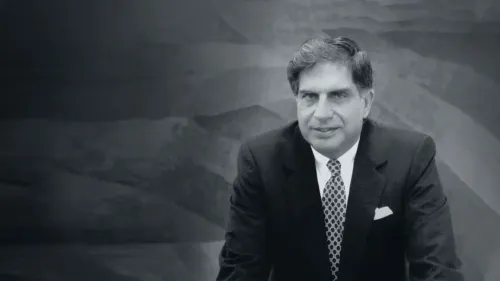
In a rare personal aside, Singhvi said he was saddened to find himself in this position, recalling his close professional association with the late Ratan Tata, the former chairman of the Tata group. He said he had observed the Tata legacy — across both the trusts and the companies — from close quarters, and held genuine respect for individuals on both sides of the dispute.
“Having worked closely with Ratan Tata, having seen the legacy of the Tata group at close quarters, both trust and companies, knowing not only all the principal actors on each side closely, but also having excellent equations with them, having genuine abiding respect for each side’s people, my first reaction is one of sadness,” Singhvi said.
What Happens Next
The dispute between Tata Trusts and Tata Sons is still developing, with legal proceedings and regulatory interventions now running in parallel. The charity commissioner’s order preventing a trust from convening is expected to be challenged. Corporate governance observers will be watching closely: the outcome could reshape how majority shareholders within charitable trust structures exercise control over operating companies in India.
Point of View
Designed to signal that a ruling adverse to Tata Trusts would reverberate far beyond the Tata group. What mainstream coverage underplays is the charity commissioner angle: regulatory intervention that freezes a trust’s internal deliberations is a blunt instrument, and its use here raises questions about whether regulatory machinery is being deployed to tip a private dispute. The ghost of Ratan Tata — invoked by Singhvi with evident emotion — also hangs over these proceedings, reminding all parties that this fight is playing out in the shadow of a legacy that neither side can afford to be seen as tarnishing.
NationPress
20 Sept 2026
Frequently Asked Questions
What is the Tata Trusts and Tata Sons dispute about?
The dispute is an escalating legal conflict between Tata Trusts, the majority shareholder of Tata Sons, and Tata Sons itself, centring on shareholder rights and corporate governance. Senior advocate Abhishek Manu Singhvi, representing Tata Trusts, has argued that any move to nullify shareholder rights would undermine governance principles across Indian companies.
What did Abhishek Manu Singhvi say about shareholder rights?
Singhvi warned that diluting or nullifying the rights of owners who are shareholders would be ‘doomsday for hundreds and thousands of Indian companies for corporate governance.’ He argued the issue is not confined to the Tata group but has broad implications for how shareholder democracy functions in India.
What is the charity commissioner order in the Tata Trusts case?
Singhvi raised concerns over a reported order from the charity commissioner that has prevented one of the Tata Trusts from convening to decide its own course of action. He described the order as an attempt to stymie internal decision-making within a charitable organisation.
Why does the Tata Trusts–Tata Sons relationship matter?
Tata Trusts holds a majority stake in Tata Sons and the two entities have been institutionally interlinked for more than 100 years. Singhvi argued that treating them as entirely separate entities would be, in his words, ‘legally or otherwise unthinkable,’ given their shared history and governance structures.
What is the connection between Singhvi and Ratan Tata?
Singhvi said he worked closely with the late Ratan Tata, former chairman of the Tata group, and had observed the group’s legacy across both its trusts and companies from close quarters. He described his reaction to the dispute as one of ‘sadness,’ given his respect for individuals on both sides.