Nadda: Cabinet clears Rs 10,000 cr ATF support for airlines
Synopsis
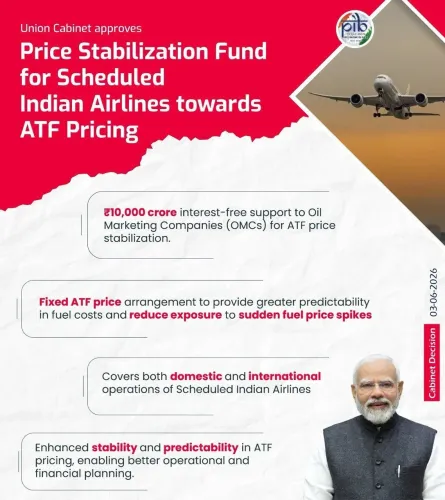
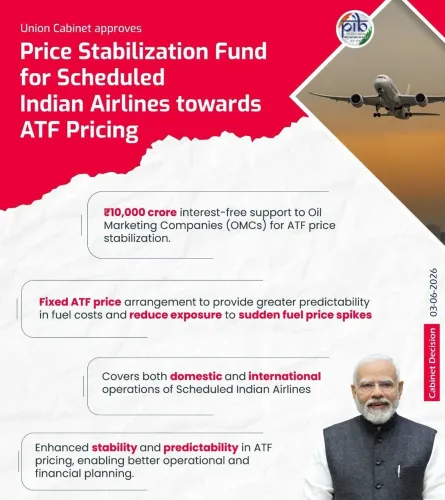
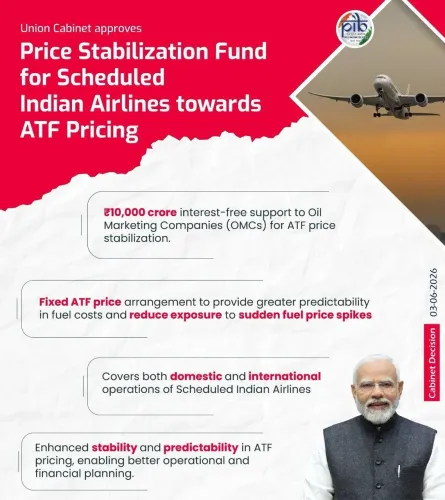
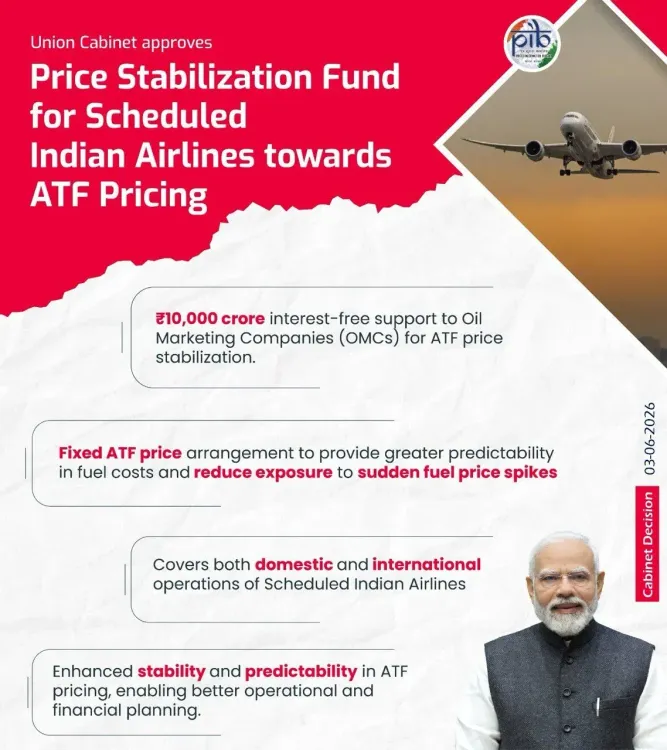
Union Health Minister J. P. Nadda has announced a Union Cabinet decision approving up to Rs 10,000 crore as a one-time interest-free advance to Oil Marketing Companies to stabilise Aviation Turbine Fuel prices for Scheduled Indian Airlines, citing volatility from the West Asia crisis and the need to protect connectivity, fares and UDAN-linked airports.
Key Takeaways
Union Cabinet approves up to Rs 10,000 crore for ATF price stabilisation.
Funds to flow as an interest-free advance to Oil Marketing Companies.
Beneficiaries: Scheduled Indian Airlines operating domestic and international routes.
Trigger cited: volatile global ATF prices due to the West Asia crisis .
Measure linked to protecting the UDAN Scheme and regional airport utilisation.
Announced by Union Health Minister J.
Nadda on 3 June 2026 .
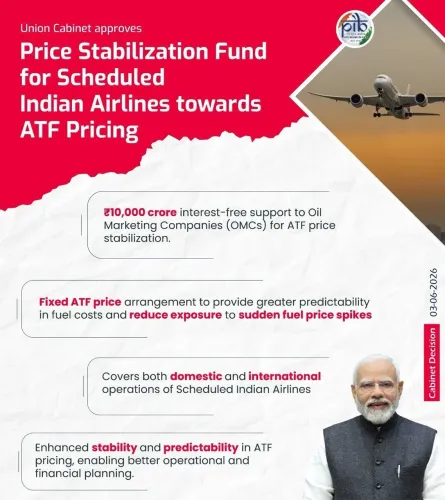
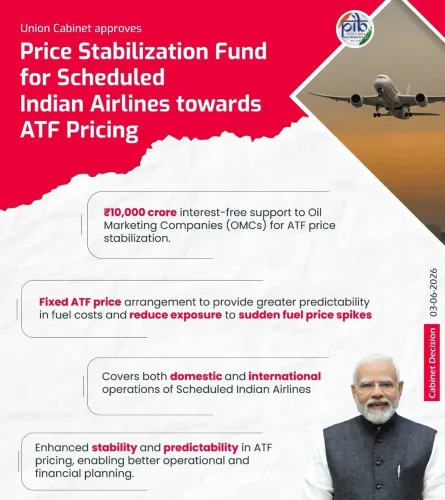
Union Health Minister J. P. Nadda announced that the Union Cabinet, chaired by Prime Minister Narendra Modi, has approved a one-time budgetary support of up to Rs 10,000 crore for Oil Marketing Companies (OMCs) to extend Aviation Turbine Fuel (ATF) price stabilisation support to Scheduled Indian Airlines. The decision, shared on X on 3 June 2026, is aimed at cushioning the aviation sector from volatility in global jet fuel prices linked to the ongoing West Asia crisis.
In his post, Nadda said the assistance 'will be extended as an interest-free advance to OMCs to mitigate the impact of volatile global ATF prices arising from the ongoing West Asia crisis.' He added that the measure is expected to 'enhance financial stability for airlines and OMCs, reduce airfare volatility for passengers, and ensure uninterrupted domestic and international air connectivity.'
Context
ATF typically accounts for a substantial share of an airline's operating cost, and sharp swings in global crude benchmarks have historically squeezed carrier margins and pushed fares higher. By routing the support through OMCs — principally IOCL, BPCL and HPCL — as an interest-free advance, the Centre is intervening at the supply end rather than directly subsidising airlines.
The post frames the move as a response to elevated and uncertain fuel prices stemming from the West Asia crisis, a region that remains central to India's crude imports. The structure of the package — a one-time, refundable advance rather than an outright grant — is intended to limit the long-term fiscal footprint.
Policy backdrop
Indian governments have periodically deployed targeted fiscal tools when geopolitical shocks disrupt energy markets, using mechanisms such as interest-free advances, excise adjustments and price stabilisation funds to shield strategic transport inputs. The latest decision continues that pattern for the aviation value chain.
Nadda specifically linked the measure to the UDAN Scheme, the regional connectivity programme launched in 2016 to revive underserved airports and make flying affordable on smaller routes. He said the support will help 'promote optimal utilization of airport infrastructure, including airports developed under the UDAN Scheme,' suggesting the government wants to protect the viability of thin regional routes that are most sensitive to fuel-price shocks.
Stakeholders and impact
For Scheduled Indian Airlines, both full-service and low-cost, the cushion could ease pressure to pass fuel costs through to passengers during the peak summer travel window. For OMCs, the interest-free advance partially offsets the working-capital strain of supplying ATF at prices that may lag global movements.
Passengers stand to benefit if the intervention dampens fare spikes on domestic and international sectors. The minister also flagged broader spillovers, saying the move will 'strengthen regional connectivity, support employment across the aviation ecosystem, boost tourism and trade.'
The aviation ecosystem — ground handling, maintenance, repair and overhaul firms, airport operators and tourism-dependent state economies — is closely tied to capacity decisions by carriers, which in turn hinge on fuel economics.
What's next
Attention will now turn to the detailed guidelines from the Ministry of Petroleum and Natural Gas on disbursement timelines, the trigger price band, and any conditions attached to the advance, including the schedule for OMCs to return the funds. Airlines and analysts will track whether the support translates into visible moderation in ATF retail prices at major metro airports and into steadier fares on UDAN routes.
If the West Asia situation escalates further, the Centre may face pressure to extend, expand or repurpose the package — making the design of this first tranche an important template for future interventions in the aviation-fuel chain.
Point of View
Balance-sheet-friendly instruments — interest-free advances rather than outright subsidies — to absorb external energy shocks without committing to a permanent fiscal line. By routing relief through OMCs, the Centre keeps optics away from a direct airline bailout while still smoothing fares, a politically sensitive metric in an aspirational flying market. The explicit link to UDAN signals that regional connectivity has become a non-negotiable political asset, not just a transport objective. The real test will be whether the advance is genuinely temporary or quietly rolled over if West Asia tensions persist.
NationPress
21 Oct 2026
Frequently Asked Questions
What did the Union Cabinet approve for airlines?
The Union Cabinet approved a one-time budgetary support of up to Rs 10,000 crore for Oil Marketing Companies to provide Aviation Turbine Fuel price stabilisation support to Scheduled Indian Airlines.
Is the Rs 10,000 crore a subsidy or a loan?
It is structured as an interest-free advance to OMCs, not an outright subsidy, meaning the funds are expected to be returned to the government.
Why has the government stepped in now?
The intervention is aimed at mitigating the impact of volatile global ATF prices arising from the ongoing West Asia crisis on airlines and OMCs.
How will passengers benefit from the ATF support?
By stabilising ATF prices at the supply end, the measure is expected to reduce airfare volatility and help ensure uninterrupted domestic and international air connectivity.
How is the UDAN Scheme connected to this decision?
The government has said the support will promote optimal utilisation of airport infrastructure, including airports developed under the UDAN regional connectivity scheme launched in 2016.