India refineries at full capacity; Cabinet clears ₹10,000 crore ATF stabilisation fund
Synopsis
As the West Asia crisis rattles global energy markets, India's government has moved on two fronts: confirming refineries are running at full tilt with ample crude stocks, and clearing a ₹10,000 crore interest-free ATF stabilisation fund to shield airlines — and ultimately passengers — from runaway fuel costs. The mechanism is structured to be self-correcting, not a permanent subsidy, signalling fiscal caution even under geopolitical pressure.
Key Takeaways
The Centre confirmed all Indian refineries are operating at high capacity with adequate crude inventories as of 4 June .
Sufficient stocks of petrol , diesel , and LPG are being maintained for uninterrupted supply across sectors.
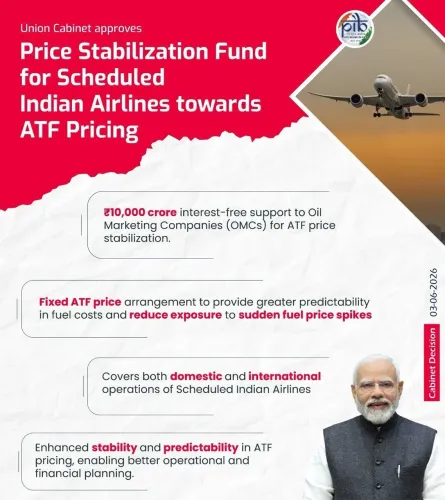
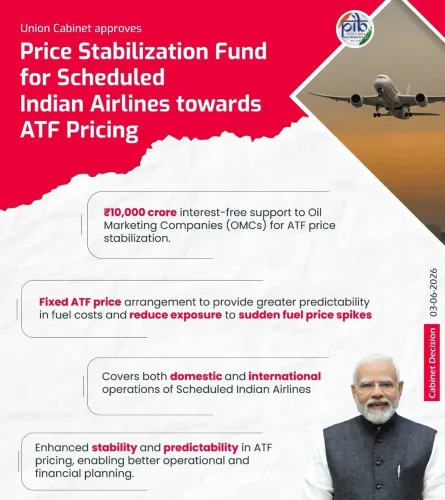
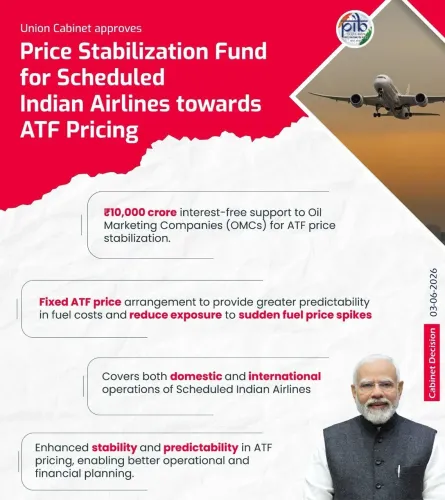
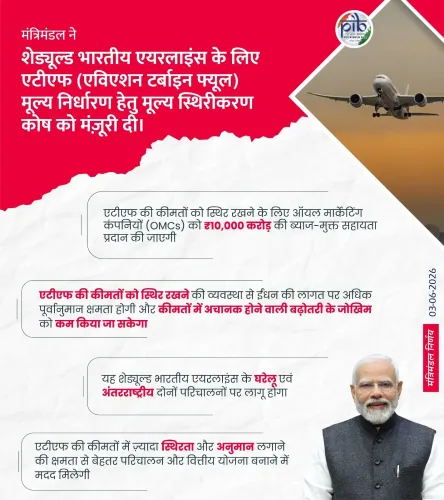
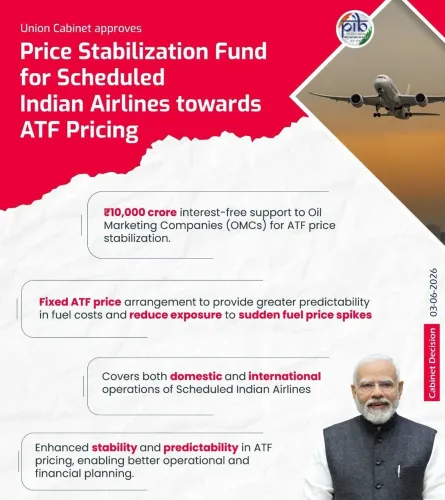
The Union Cabinet approved a ₹10,000 crore one-time budgetary support mechanism for ATF price stabilisation for scheduled Indian airlines.
The fund provides an interest-free advance to oil marketing companies to supply ATF at stable, predetermined prices.
The arrangement is not a subsidy — excess collections during price moderation are returned to the Consolidated Fund of India via a true-up process.
The measure is expected to moderate airfare spikes and protect connectivity to remote and regional cities , including under the UDAN scheme .
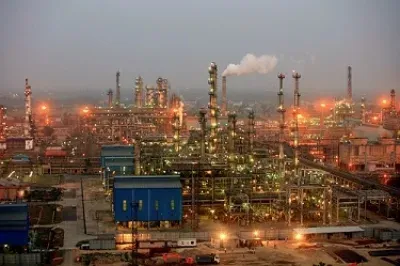
The Centre on Thursday, 4 June assured that all refineries across the country are operating at high capacity with adequate crude inventories, and that sufficient stocks of petrol, diesel, and LPG are being maintained to ensure uninterrupted supply across sectors amid the evolving West Asia crisis. The assurance came as global fuel markets continued to experience extraordinary volatility triggered by the ongoing geopolitical conflict.
Cabinet Clears ₹10,000 Crore ATF Stabilisation Mechanism
In a significant parallel move, the Civil Aviation Ministry announced that the Union Cabinet has approved a one-time budgetary support mechanism of up to ₹10,000 crore to provide Aviation Turbine Fuel (ATF) price stabilisation support to scheduled Indian airlines. The mechanism has been introduced specifically in response to the extraordinary volatility in global fuel prices stemming from the West Asia crisis.
Officials described the arrangement as a temporary and self-correcting structure under which the government will extend an interest-free advance to oil marketing companies (OMCs), enabling them to supply ATF to airlines at predetermined, stable prices for both domestic and international operations.
How the Mechanism Works
When international ATF prices exceed a pre-set benchmark level, the corpus will compensate OMCs for the difference. Conversely, any moderation in prices will trigger a recovery of funds, which will be returned to the Consolidated Fund of India through a transparent true-up process. The government has emphasised that this arrangement is not a subsidy but a stabilisation mechanism designed to smooth extreme price fluctuations in global fuel markets.
Impact on Airlines and Passengers
Since ATF constitutes a major component of airline operating costs, the measure is expected to provide pricing predictability and help carriers manage operations more efficiently during this period of geopolitical uncertainty. Officials said the decision is intended to moderate sudden airfare spikes caused by fuel price volatility, directly benefiting passengers — including families, students, business travellers, and tourists.
The measure is also expected to preserve air connectivity across the country, including to remote, regional, and smaller cities, supporting economic activity and inclusive development. The government noted that airport infrastructure developed under the UDAN scheme would be better utilised as a result.
Wider Economic Implications
Beyond aviation, officials projected wider economic benefits from the stabilisation fund, citing positive spillovers for employment across aviation, tourism, logistics, and allied sectors, while strengthening both domestic and international connectivity. This comes amid broader concerns that a prolonged West Asia conflict could keep global crude prices elevated, adding pressure to India's import bill and domestic inflation. The Centre's dual response — supply assurances on refined products alongside a targeted aviation fuel buffer — signals a coordinated attempt to insulate the domestic economy from external energy shocks.
Point of View
000 crore ATF stabilisation mechanism is structurally clever — an interest-free advance rather than an outright subsidy keeps it off the fiscal deficit ledger while still providing airlines a pricing floor. But the real test is the true-up mechanism: if West Asia tensions persist and ATF prices stay elevated for months, the corpus could be drawn down faster than anticipated, forcing a top-up that would attract harder scrutiny. India's aviation sector, still recovering its balance sheet post-pandemic, needs predictability more than any other single input — but the government's insistence that this is 'temporary' leaves carriers with limited forward visibility. The refinery supply assurance, meanwhile, is standard crisis communication, but its credibility will depend on how long crude transit routes through the region remain viable.
NationPress
21 Oct 2026
Frequently Asked Questions
Are petrol, diesel, and LPG supplies affected by the West Asia crisis in India?
No. The Centre confirmed on 4 June that all refineries are operating at high capacity with adequate crude inventories, and that sufficient stocks of petrol, diesel, and LPG are being maintained for uninterrupted supply. The government's assurance was issued specifically to address concerns arising from the ongoing West Asia conflict.
What is the ₹10,000 crore ATF stabilisation fund approved by the Union Cabinet?
It is a one-time budgetary support mechanism of up to ₹10,000 crore approved by the Union Cabinet to stabilise Aviation Turbine Fuel prices for scheduled Indian airlines. Under the arrangement, the government provides an interest-free advance to oil marketing companies, enabling them to supply ATF at stable, predetermined prices during periods of extreme global fuel price volatility.
Is the ATF stabilisation mechanism a subsidy?
The government has clarified that it is not a subsidy. It is a self-correcting stabilisation mechanism — when ATF prices exceed the benchmark, the corpus compensates oil marketing companies, but when prices moderate, the recovered funds are returned to the Consolidated Fund of India through a transparent true-up process.
How will the ATF fund benefit airline passengers?
By enabling airlines to procure ATF at stable prices, the mechanism is expected to moderate sudden airfare spikes caused by fuel price volatility. Officials said this will directly benefit passengers including families, students, business travellers, and tourists, while also preserving air connectivity to remote and regional cities.
Which airline routes and schemes are expected to benefit?
Both domestic and international operations of scheduled Indian airlines are covered. The measure is also expected to support connectivity under the UDAN scheme, ensuring that smaller and regional airports continue to be served even during periods of elevated fuel costs.