PM Modi hails Cabinet nod for one-time ATF price support to airlines

Synopsis
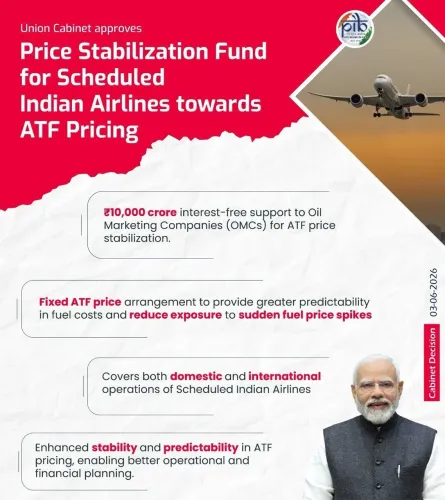
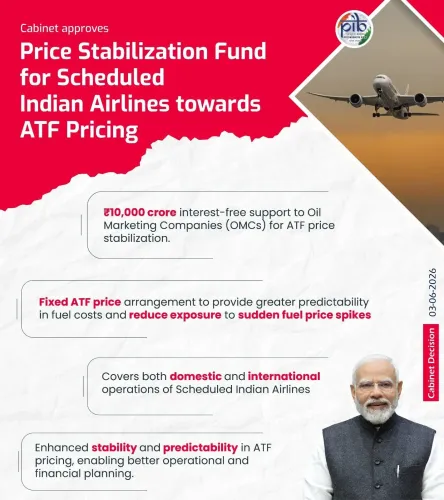
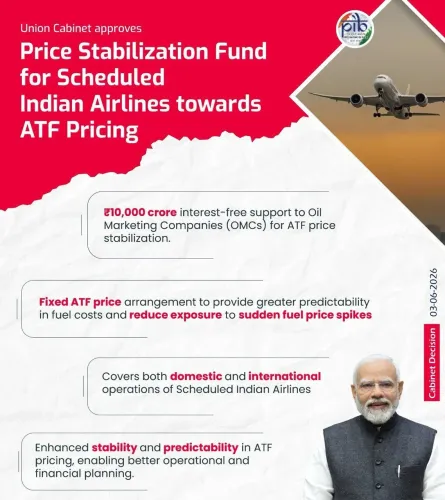
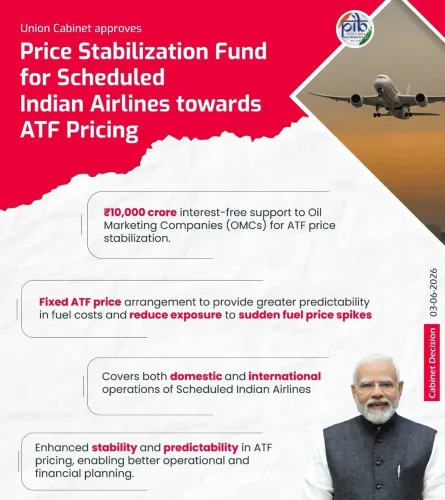
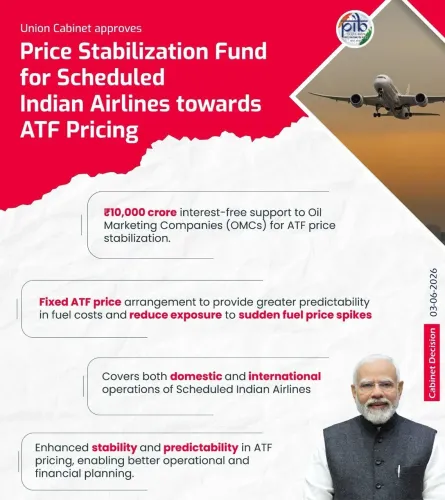
Prime Minister Narendra Modi welcomed the Union Cabinet's approval of a one-time support mechanism to stabilise ATF prices for Indian airlines, calling it a step to protect passengers from fare shocks, support carriers and deepen air connectivity to Tier-II and smaller cities across the country.
Key Takeaways
Union Cabinet has cleared a one-time support mechanism to stabilise ATF prices for Indian airlines.
PM Modi said the move will help maintain affordable fares and ease the burden on passengers.
ATF accounts for an estimated 30-40 percent of an Indian carrier's operating cost.
The decision is pitched to strengthen connectivity to Tier-II and smaller cities.
The Regional Connectivity Scheme (UDAN), launched in 2016, remains the backbone of regional flying.
Operational details will be laid out in the government's formal notification.
Prime Minister Narendra Modi on Wednesday welcomed the Union Cabinet's approval of a one-time support mechanism aimed at stabilising Aviation Turbine Fuel (ATF) prices for Indian carriers, framing the move as a measure to protect passengers from fare volatility and shore up the domestic aviation industry. In a post on X, the Prime Minister said the decision would help sustain affordable air connectivity and ease pressure on airline operations, with particular benefit to smaller cities.
'Cabinet approval for a one-time support mechanism to ensure greater stability in ATF prices for Indian airlines will help maintain affordable air connectivity, support airline operations and reduce the burden on passengers. It will also strengthen connectivity to Tier-II and (Tier-III cities),' the Prime Minister wrote, signalling that the policy is pitched as both a consumer-relief and industry-support tool.
Context
ATF typically accounts for 30-40 percent of an Indian airline's operating cost, making fuel price swings one of the single biggest determinants of ticket prices and carrier profitability. Global crude volatility over recent years has repeatedly squeezed margins at Indian carriers and triggered fare spikes during peak travel windows.
The Prime Minister's message positions the Cabinet decision as a targeted intervention to absorb part of that shock, though the operative details, including the quantum of support, its funding source and pass-through conditions for passengers, will be set out in the formal government notification.
Policy backdrop
The announcement sits within a longer arc of central efforts to lower the cost base of Indian aviation and democratise air travel beyond metro hubs. The Regional Connectivity Scheme, branded UDAN (Ude Desh ka Aam Naagrik), was cleared by the Cabinet in 2016 and uses viability gap funding and fee concessions to make flights to underserved airports commercially feasible.
Alongside UDAN, the government has pursued airport expansion and a wider modernisation programme, while states have at various points cut value added tax on ATF to lighten the load on carriers. The latest Cabinet move extends that pattern of cost-side support, this time directly addressing fuel price stability rather than route economics.
Stakeholders and impact
The most immediate beneficiaries are Indian airlines, which have been navigating high fuel costs alongside rising lease rentals and competitive fare pressure. A more predictable ATF bill could help carriers plan capacity additions and protect thinner regional routes that are most sensitive to input costs.
For passengers, the Prime Minister's framing flags fare relief as a central objective, particularly for travellers flying to and from Tier-II and smaller cities, where demand is more price-elastic. Regional airports that have been onboarded under UDAN stand to gain if reduced cost pressure encourages airlines to retain or expand thin-route operations.
The Ministry of Civil Aviation, which steers policy and regulation in the sector, will be the nodal authority for translating the Cabinet decision into operational guidelines and coordinating with carriers on implementation.
What's next
Attention now turns to the official gazette notification, which is expected to spell out the duration of the one-time mechanism, the funding route and the conditions under which airlines must pass on the benefit to fliers. Industry watchers will track whether the support is structured as a direct subsidy, a tax-linked relief or a stabilisation fund.
Equally important will be the early impact on average fares, seat capacity on regional routes and load factors over the coming quarters. If the intervention succeeds in moderating ticket prices without distorting competition, it could become a template for future cost-shock responses in a sector that remains pivotal to India's connectivity and tourism ambitions.
Point of View
The Prime Minister is aligning a cost-side industry intervention with a consumer-relief narrative, an increasingly familiar political grammar around aviation. The move also slots into the longer arc that began with UDAN in 2016, treating air travel as mass infrastructure rather than a metro-elite service. The real test will be whether the mechanism's design forces a visible pass-through to fares, or quietly stops at carrier balance sheets.
NationPress
18 Oct 2026
Frequently Asked Questions
What did the Cabinet approve for Indian airlines?
The Union Cabinet approved a one-time support mechanism aimed at ensuring greater stability in Aviation Turbine Fuel (ATF) prices for Indian airlines, with the stated goal of protecting passengers and supporting airline operations.
Why is ATF price stability important for air fares?
ATF makes up roughly 30-40 percent of an Indian airline's operating cost, so sharp swings in fuel prices typically translate quickly into higher ticket prices, especially on price-sensitive regional routes.
How will Tier-II cities benefit from the ATF support?
Lower and more predictable fuel costs make thin regional routes more viable, which the government expects will help sustain and expand flights to Tier-II and smaller cities already being served under schemes like UDAN.
What is the UDAN scheme?
UDAN, or Ude Desh ka Aam Naagrik, is the Regional Connectivity Scheme launched in 2016 to provide affordable flights to underserved and unserved airports through viability gap funding and operational incentives.
When will the ATF support mechanism take effect?
The exact timeline, funding source and operational guidelines will be set out in the government's formal notification following the Cabinet decision.