Amit Shah hails Rs 10,000 crore ATF price fund for airlines
Synopsis
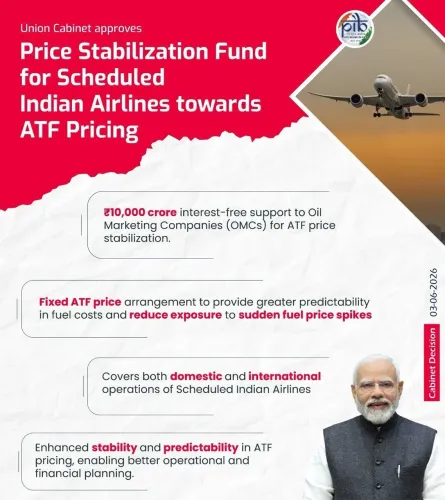
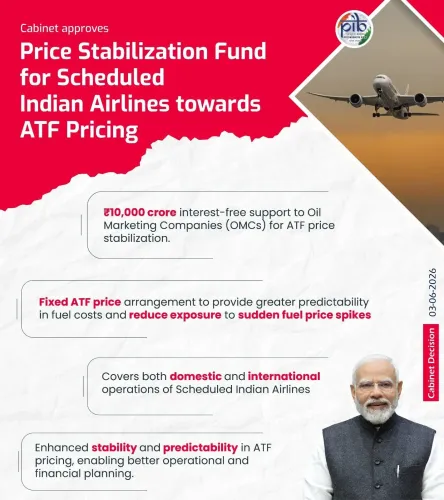
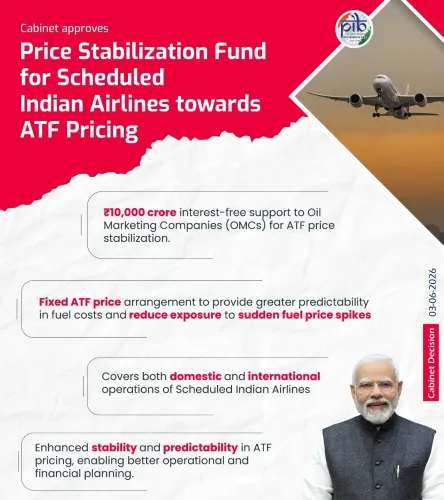
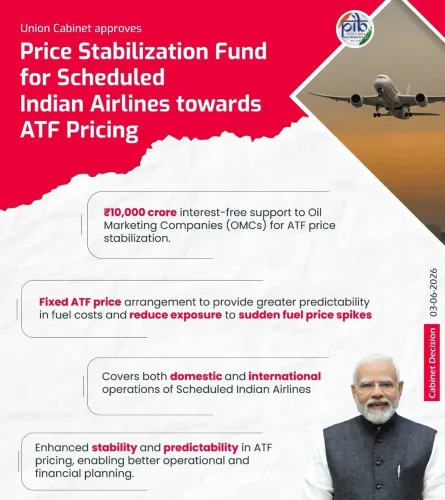
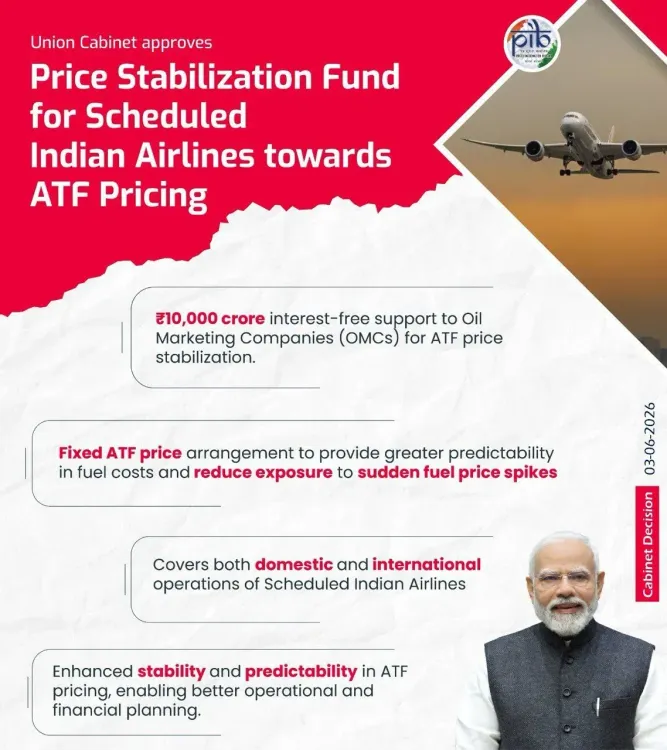
Union Home Minister Amit Shah hailed the Union Cabinet's approval of a Rs 10,000 crore Price Stabilisation Fund for Scheduled Indian Airlines on Aviation Turbine Fuel, calling it PM Modi's shield against the global energy crisis and a buffer for carriers against international price instability.
Key Takeaways
Union Cabinet has approved a Rs 10,000 crore Price Stabilisation Fund for Scheduled Indian Airlines on ATF pricing.
Union Home Minister Amit Shah described the fund as PM Modi's shield against the global energy crisis.
The corpus is designed to buffer carriers from international ATF price instability and ensure smooth operations.
The move builds on the 2022 excise duty cut on ATF during the Russia-Ukraine crude price spike.
The Ministry of Civil Aviation is expected to issue disbursement guidelines and price triggers.
Beneficiaries include all scheduled domestic carriers, with indirect impact on fares and connectivity.
Union Home Minister Amit Shah on Wednesday welcomed the Union Cabinet's approval of a Rs 10,000 crore Price Stabilisation Fund for Scheduled Indian Airlines aimed at cushioning carriers against volatile Aviation Turbine Fuel (ATF) pricing. In a post on X, Shah framed the decision as a protective measure crafted by Prime Minister Narendra Modi against turbulence in global energy markets.
'The Rs 10,000 crore Price Stabilisation Fund for Scheduled Indian Airlines towards Aviation Turbine Fuel pricing, approved by Union Cabinet, is Modi Ji's shield against global energy crisis,' Shah wrote, adding that the fund 'will buffer airlines from international price instability, ensuring smooth operations.'
Context
ATF typically accounts for a significant share of an Indian airline's operating cost, and sharp swings in global crude benchmarks have repeatedly squeezed carrier margins. The Cabinet-cleared corpus is positioned as a dedicated fiscal buffer for scheduled operators rather than a broader fuel subsidy.
Shah's intervention places a senior BJP voice behind what is primarily a civil aviation and finance ministry decision, signalling the political weight the government attaches to the move. He attributes the design of the shield directly to PM Modi, consistent with the government's framing of crisis-response economics.
Policy backdrop
The fund builds on a pattern of targeted fiscal interventions to insulate transport and logistics from international energy shocks. In 2022, the central government cut excise duties on ATF to cushion carriers from the rise in global crude prices triggered by the Russia-Ukraine conflict.
Successive administrations have used similar price-stabilisation mechanisms in other sectors, including agricultural commodities and fertilisers, where central corpora absorb part of the international price shock to keep domestic operations viable. The aviation fund extends that template to scheduled air transport for the first time at this scale.
India's aviation sector has expanded rapidly over the past decade, but ATF remains a recurring stress point because it is taxed by both the Centre and states and is closely tied to dollar-denominated crude benchmarks. A dedicated stabilisation pool is intended to smooth that exposure rather than eliminate it.
Stakeholders and impact
The primary beneficiaries are Scheduled Indian Airlines, the category of commercial carriers operating regular services across the country. Both full-service and low-cost operators fall within the eligible set, though disbursement criteria will determine the actual spread of relief.
For passengers, the indirect benefit lies in reduced pressure on fares during periods of global oil spikes, particularly on price-sensitive domestic routes and regional connectivity sectors. Airports, ground-handling firms, and ancillary aviation services also stand to gain from steadier carrier balance sheets.
For the exchequer, the fund represents a contingent fiscal commitment whose drawdown will depend on the trajectory of international ATF prices. Officials are expected to design triggers that activate support only when benchmark prices breach defined thresholds.
What's next
Attention now shifts to the Ministry of Civil Aviation, which is expected to issue detailed disbursement guidelines, including eligibility, price triggers, and accounting treatment for the corpus. Carriers will look for clarity on whether support will be routed as direct transfers, tax adjustments, or a reimbursement mechanism.
Quarterly results of major scheduled operators will be a key indicator of how quickly the buffer translates into stabilised unit costs. State governments, which levy value-added tax on ATF at varying rates, will also be watched for any coordinated rationalisation alongside the central fund.
If implemented as framed by Shah, the Rs 10,000 crore corpus could become a template for shielding other energy-intensive sectors from future global price shocks, deepening the Centre's reliance on sector-specific stabilisation funds as a core crisis-response tool.
Point of View
A now-familiar pattern in the BJP's economic messaging. The move also marks the extension of India's price-stabilisation template, long used for farm commodities and fertilisers, into commercial aviation. It signals that the Centre views ATF volatility as a structural risk to connectivity and growth rather than a cyclical airline problem. The real test lies in disbursement design and whether states align their VAT regimes to amplify the buffer.
NationPress
13 Sept 2026
Frequently Asked Questions
What is the Rs 10,000 crore ATF Price Stabilisation Fund?
It is a Union Cabinet-approved corpus of Rs 10,000 crore meant to shield Scheduled Indian Airlines from volatility in Aviation Turbine Fuel prices linked to global energy markets. Union Home Minister Amit Shah described it as a buffer ensuring smooth airline operations.
Which airlines will benefit from the ATF stabilisation fund?
All Scheduled Indian Airlines, meaning commercial carriers operating regular domestic and international services from India, are the intended beneficiaries. Both full-service and low-cost operators fall within this category, subject to disbursement guidelines.
Will the ATF Price Stabilisation Fund reduce air ticket prices?
The fund is aimed at cushioning airline costs during global ATF price spikes, which can indirectly ease pressure on fares. However, ticket prices also depend on demand, taxes, route economics, and individual carrier strategy.
Why is ATF pricing such a big issue for Indian airlines?
Aviation Turbine Fuel typically forms a significant share of an Indian carrier's operating cost and is tied to dollar-denominated global crude prices. It is also taxed by both the Centre and states, making airlines highly exposed to international and domestic pricing swings.
How does this fund compare with the 2022 ATF excise duty cut?
In 2022, the Centre cut excise duties on ATF to ease pressure from the Russia-Ukraine-driven crude spike. The new Rs 10,000 crore fund is a dedicated standing corpus rather than a one-time tax change, designed to absorb future global price shocks for scheduled carriers.