India semiconductor sector draws $1.4 billion equity funding: Tracxn report
Synopsis
India's semiconductor sector has crossed $1.4 billion in cumulative equity funding, with nearly half raised since 2025 alone — a 36% five-year CAGR that places chips among India's fastest-growing deep-tech verticals. The data lands just days before PM Modi inaugurates SEMICON India 2026, signalling that policy ambition and private capital are finally moving in tandem.
Key Takeaways
India's semiconductor sector has attracted $1.4 billion in cumulative equity funding across 281 funded companies , per Tracxn .
Nearly half — around $701 million — was raised since 2025 ; $228 million has been secured in 2026 alone.
Annual funding grew from $49 million in 2021 to $473 million in 2025 , a five-year CAGR of over 36 per cent .
Electronic manufacturing services (EMS) led all segments with $313 million raised since 2025.
Bengaluru hosts 626 semiconductor firms (18% of total) and accounts for 40.1% of all equity funding.
62 acquisitions and 42 IPOs recorded as exits; acquisition takes an average 11.8 years , IPO 16.5 years from first funding.
India's semiconductor industry has attracted a cumulative $1.4 billion in equity funding across 281 funded companies, with nearly half of that total — roughly $701 million — raised since 2025, according to a report by market intelligence firm Tracxn. The findings underscore a sharp acceleration in investor confidence in India's chip ambitions, arriving days ahead of the SEMICON India 2026 conference in New Delhi.
Scale of the Sector
India currently hosts 3,557 semiconductor-related companies, according to the Tracxn analysis. Of these, 281 firms have secured funding, while 142 have specifically raised equity investments. In 2026 alone, the industry has garnered $228 million in funding so far, signalling that the current year is on track to sustain the momentum built over the last half-decade.
Annual funding in the sector surged from $49 million in 2021 to $473 million in 2025, representing a five-year compound annual growth rate (CAGR) of more than 36 per cent — among the fastest-growing trajectories in any Indian deep-tech vertical.
Leading Funding Segments
Electronic manufacturing services (EMS) emerged as the largest funding segment, attracting $313 million since 2025. Embedded hardware ranked second, securing $51.9 million over the same period — notably, all of it raised within the last 12 months. Power Management Integrated Circuits and Fabless Semiconductor Manufacturers also featured among the leading categories by funding volume.
Bengaluru Leads, But Others Are Closing In
Bengaluru retained its status as India's premier semiconductor hub, accounting for 626 companies — approximately 18 per cent of the sector's total firms — and contributing 40.1 per cent of all equity funding raised to date. However, Noida, Gurugram, Kochi, and Hyderabad followed in terms of funding share, pointing to a gradual geographic diversification of the ecosystem beyond the Silicon Valley of India.
Exit Landscape
On the exit front, acquisitions remained the preferred route, with 62 acquisitions recorded compared to 42 initial public offerings (IPOs). Companies reached acquisition in an average of 11.8 years from their first funding round, while firms that went public took an average of 16.5 years — a gap that reflects the capital-intensive and long-gestation nature of semiconductor businesses.
SEMICON India 2026 Context
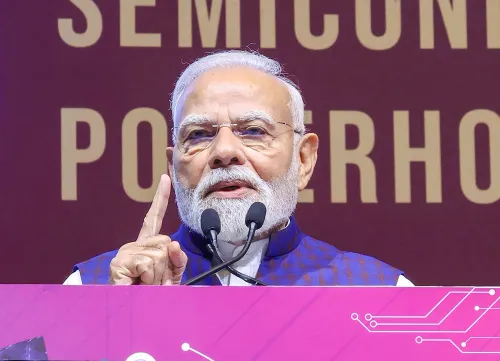
The Tracxn report was released ahead of the SEMICON India 2026 conference and exhibition, scheduled from 17 to 19 September in New Delhi, which is set to be inaugurated by Prime Minister Narendra Modi. The annual gathering serves as a key platform for policy announcements, global partnerships, and investment commitments in India's chip supply chain. This comes amid the Centre's broader push to position India as a credible alternative to East Asian semiconductor manufacturing hubs amid ongoing global supply-chain realignments.
Point of View
But context matters: the bulk of capital is flowing into EMS — assembly and packaging — rather than into the higher-value, higher-complexity fabless design or foundry segments that define true semiconductor self-reliance. India's 36% funding CAGR is real, but it largely reflects downstream manufacturing services, not the upstream IP creation that commands global pricing power. The 16.5-year average runway to IPO also signals that patient capital frameworks — not just government incentives — will determine whether this wave produces globally competitive chip companies or merely well-funded contract manufacturers.
NationPress
13 Sept 2026
Frequently Asked Questions
How much equity funding has India's semiconductor sector raised?
India's semiconductor sector has attracted a cumulative $1.4 billion in equity funding across 281 funded companies, according to a Tracxn report. Around $701 million of that total was raised since 2025, reflecting a sharp recent acceleration.
What is the growth rate of semiconductor funding in India?
Annual semiconductor funding in India grew from $49 million in 2021 to $473 million in 2025, representing a five-year CAGR of more than 36 per cent. In 2026, the sector has already attracted $228 million in funding.
Which city leads India's semiconductor ecosystem?
Bengaluru is India's leading semiconductor hub, hosting 626 companies — about 18 per cent of the sector's total firms — and accounting for 40.1 per cent of all equity funding raised to date. Noida, Gurugram, Kochi, and Hyderabad follow in funding share.
What is SEMICON India 2026 and why is it significant?
SEMICON India 2026 is a major semiconductor conference and exhibition scheduled from 17 to 19 September in New Delhi, to be inaugurated by Prime Minister Narendra Modi. It serves as a key platform for policy announcements, global industry partnerships, and investment commitments in India's chip supply chain.
How do semiconductor companies in India typically exit?
Acquisitions are the preferred exit route, with 62 acquisitions recorded compared to 42 IPOs. Companies reach acquisition in an average of 11.8 years from their first funding round, while those that go public take an average of 16.5 years.