BRICS Summit 2026: Experts hail grouping as key platform for Global South
Synopsis
At the 18th BRICS Summit in New Delhi, experts flagged three tangible takeaways: a push for expanded multilateral trade, forward movement on the India-China border standoff, and an India-Russia target of $100 billion in bilateral trade. With BRICS now representing over half the world's population and 40 per cent of global GDP, the Delhi Declaration signals the bloc's ambition to reshape global decision-making — but execution will be the real measure.
Key Takeaways
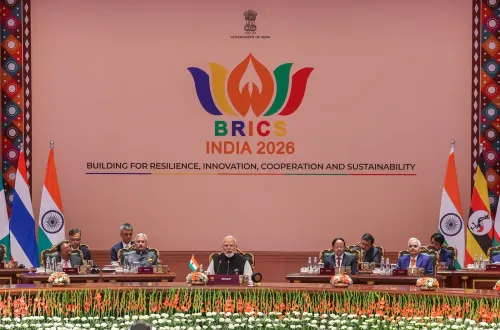
The 18th BRICS Summit held in New Delhi on 13 September 2026 focused on trade, investment, and multipolar world order on its second day.
SWFI Chairman Lakshmi Narayanan cited three key outcomes: multilateral trade expansion, progress on India-China border issues, and an India-Russia bilateral trade target of $100 billion .
The Delhi Declaration was adopted at the summit, described by defence expert Ranjit Rai as an important document for global security.
BRICS now represents more than half the world's population and approximately 40 per cent of global GDP , according to former SETU Commission Vice Chairman Rajshekhar Joshi .
Industry leaders said India's hosting of the summit enhanced the country's global diplomatic and economic profile.
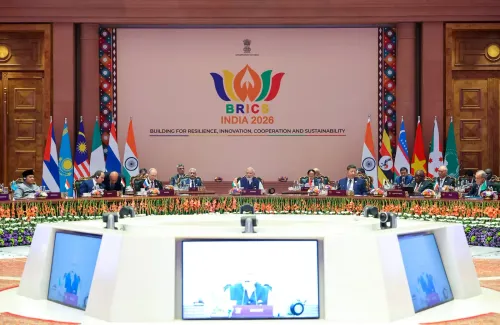
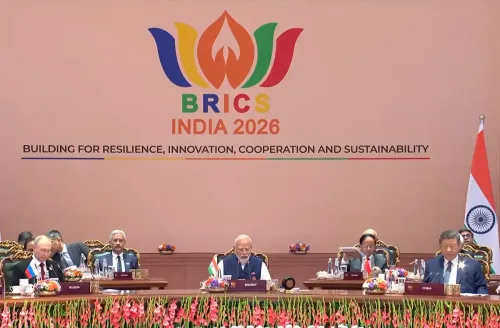
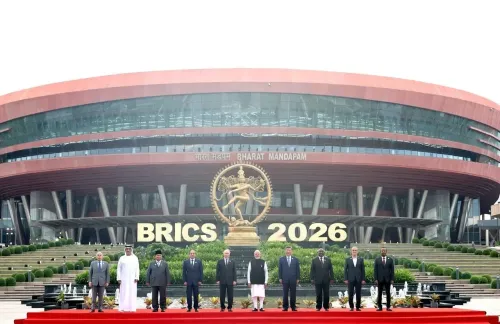
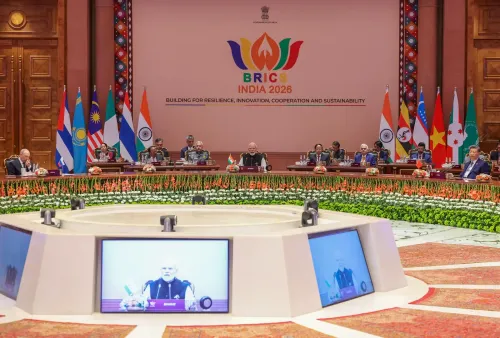
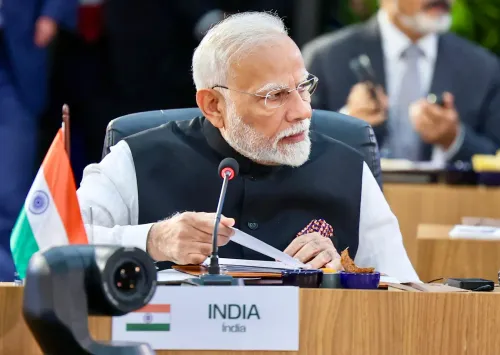
Trade, investment, strategic cooperation, and the vision of a multipolar world order took centre stage on the second day of the 18th BRICS Summit in New Delhi on Sunday, 13 September 2026, with experts and industry leaders describing the bloc as an increasingly consequential platform for the Global South. The summit, hosted by India, has drawn world leaders and senior diplomats at a time of heightened geopolitical tension and shifting trade alliances.
Three Key Outcomes From the Summit
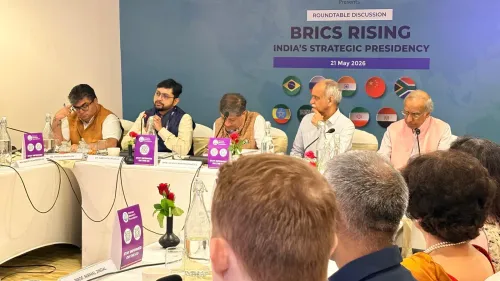
SWFI Chairman and IBRICS 2026 Lead Co-Chair Lakshmi Narayanan said the tariff-related challenges confronting several economies were not of BRICS' making but a consequence of the broader global trade environment — particularly the ripple effects of US trade policy. He noted that BRICS members had agreed to tackle these pressures through collective cooperation and coordinated economic action.
According to Narayanan, three significant outcomes crystallised at the summit: a concerted push to expand bilateral and multilateral trade among member states; positive forward movement on resolving India-China border-related issues; and a mutual understanding between India and Russia to scale bilateral trade to $100 billion. He said these developments held the potential to deepen both economic ties and strategic alignment within the grouping.
Narayanan also underscored the role of IBRICS as an action-oriented platform designed to convert summit-level dialogue into tangible investments, projects, and business opportunities — a bridge, he argued, between geopolitical ambition and commercial reality.
Delhi Declaration: A Document for Global Security
Defence expert Ranjit Rai characterised the Delhi Declaration adopted at the summit as an important instrument for global security and international cooperation. He said the summit offered world leaders a closer understanding of India's strategic priorities and reinforced the necessity of collective action on climate change, security, and economic development.
'BRICS' original objective is to strengthen a multipolar world order, where global decision-making is not limited to a few countries,' Rai said.
BRICS Represents Half the World's Population
Former Vice Chairman of the SETU Commission, Rajshekhar Joshi, described BRICS as among the most influential examples of Global South solidarity, noting that the grouping now represents more than half the world's population and approximately 40 per cent of global GDP. That demographic and economic weight, analysts argue, is precisely what gives BRICS its growing leverage in multilateral forums traditionally dominated by Western-led institutions.
This comes amid a broader realignment in global trade, with several emerging economies seeking alternatives to dollar-denominated settlement systems and Western-anchored supply chains. The BRICS framework, particularly after its 2023-24 expansion, has been positioned as a structural counterweight — though critics argue coherence among such a diverse membership remains a challenge.
India's Global Profile in the Spotlight
Industry representatives also weighed in on India's hosting of the event. Indo Wings Private Ltd CEO Paras Jain said India's management of the summit had strengthened the country's global standing, while Nick Booker of Indogenius argued that the participation of world leaders underscored India's rising importance in international diplomacy and economic engagement.
Notably, this is India's first time hosting the BRICS Summit since the bloc's significant expansion, making New Delhi's management of the event a statement of its own about the country's organisational and diplomatic capacity.
With the Delhi Declaration now on record and trade targets set, the focus shifts to whether BRICS members can translate summit commitments into verifiable outcomes — a test the grouping has faced repeatedly since its founding.
Point of View
India-China border progress, and the India-Russia $100 billion target — are significant on paper, but each carries its own credibility burden. India-China border 'progress' has been announced before, only to stall; bilateral trade targets between India and Russia have historically been hamstrung by payment settlement complications that sanctions have made worse, not better. The Delhi Declaration's language on multipolarity is symbolically potent but institutionally thin — BRICS lacks the enforcement architecture of the WTO or IMF. India's hosting does consolidate its image as the Global South's convening power, but the real test is whether New Delhi can convert that soft-power moment into durable frameworks rather than communiqué rhetoric.
NationPress
13 Sept 2026
Frequently Asked Questions
What were the key outcomes of the 18th BRICS Summit in New Delhi?
Three key outcomes were cited at the summit: a push to expand bilateral and multilateral trade among BRICS members, positive progress on resolving India-China border-related issues, and an agreement between India and Russia to target $100 billion in bilateral trade. The Delhi Declaration on global security was also formally adopted.
What is the Delhi Declaration adopted at the BRICS Summit 2026?
The Delhi Declaration is a formal document adopted by BRICS leaders at the 18th summit, described by defence experts as significant for global security and international cooperation. It addresses collective action on climate change, economic development, and security, and reaffirms the grouping's commitment to a multipolar world order.
How large is BRICS in terms of global population and GDP?
BRICS represents more than half the world's population and approximately 40 per cent of global GDP, according to former SETU Commission Vice Chairman Rajshekhar Joshi. This scale gives the grouping considerable weight in global economic and diplomatic forums.
What is IBRICS and what role does it play at the BRICS Summit?
IBRICS is a platform focused on translating BRICS summit discussions into concrete investments, projects, and business opportunities. SWFI Chairman Lakshmi Narayanan, who serves as IBRICS 2026 Lead Co-Chair, described it as a bridge between high-level geopolitical dialogue and real-world commercial outcomes.
Why is India hosting the BRICS Summit significant in 2026?
This is India's first time hosting the BRICS Summit since the bloc's significant expansion, making New Delhi's stewardship a statement of the country's growing diplomatic capacity. Industry observers noted that the participation of world leaders reinforced India's rising importance in international diplomacy and economic engagement.