BRICS 2025: AI, trade and cross-border payments top expert agenda
Synopsis
At the BRICS Summit in New Delhi, experts mapped out an ambitious agenda: agentic AI collaboration, a BRICS Pay network to bypass dollar-dominated systems, and India-Russia trade deepening anchored in complementary industrial strengths. The conversation signals a coordinated push by the Global South to build independent economic and digital infrastructure.
Key Takeaways
Industry experts at the BRICS Summit on 12 September 2025 in New Delhi identified AI, trade integration, and cross-border payments as priority areas.
Economist Rajiv Sahoo said India and Russia have complementary strengths in food, petroleum refining, defence, and technology.
Egyptian AI expert Ahmed Gamal described India as a rapidly emerging global AI hub and flagged a global shift from generative to agentic AI .
ASSOCHAM President Nirmal K Minda welcomed India's BRICS leadership, citing emphasis on local-currency settlements, AI, and supply chain resilience.
The proposed BRICS Pay framework would connect member nations' domestic payment networks, with India's UPI cited as a model for global adoption.
BRICS Pay India head Pawan Josh said Russia could support India's Make in India and Atmanirbhar Bharat goals.
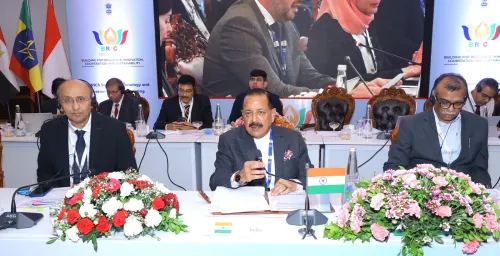
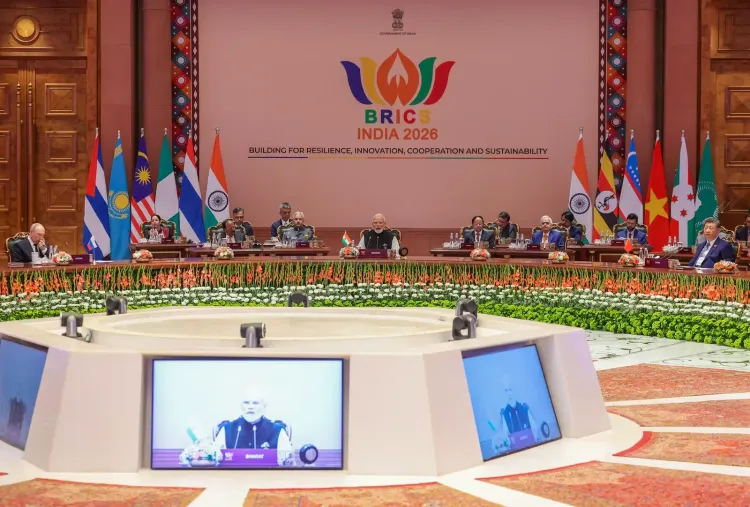
Industry experts and economists attending the BRICS Summit on 12 September 2025 in New Delhi said the grouping presents a transformative opportunity for member nations to deepen economic cooperation, accelerate technological innovation — particularly in artificial intelligence — and build an integrated cross-border financial architecture. Discussions spanned India-Russia trade complementarities, the global pivot to agentic AI, and the proposed BRICS Pay framework for seamless multi-currency transactions.
India-Russia Ties and Trade Complementarities
Economist Rajiv Sahoo said India and Russia possess complementary economic strengths that are well-suited for deeper bilateral engagement within the BRICS framework. He noted that India holds competitive advantages in food products, petroleum refining, and services, while Russia brings significant capabilities in defence, technology, and strategic industries.
Sahoo further argued that India, Russia, and China — three of BRICS' largest economies — could collectively contribute to a more diversified global trade framework, reducing dependence on any single trade corridor. He also described Chinese President Xi Jinping's visit to India as a positive development that could help address long-standing bilateral issues and improve relations between the two neighbours.
Artificial Intelligence as a BRICS Priority
Artificial intelligence emerged as a defining theme of this year's summit. Egyptian AI expert Ahmed Gamal described BRICS as an important platform for promoting technological cooperation among developing economies and characterised India as a rapidly emerging global AI hub.
Gamal said the scope for AI collaboration between India and Egypt is significant, and that sustained dialogue among BRICS members could lay the groundwork for joint research projects, innovation partnerships, and knowledge-sharing programmes. He also signalled a broader global shift: the world economy, he said, is moving beyond generative AI towards agentic AI — systems capable of autonomous decision-making — which has the potential to transform workplaces and improve productivity across sectors if effectively adopted by governments and industries.
Industry Perspective: What BRICS Must Deliver
ASSOCHAM President Nirmal K Minda welcomed India's leadership in advancing what he called a pragmatic and future-ready BRICS agenda. He described the summit as 'a significant step towards building a more inclusive, resilient and growth-oriented global economic architecture.'
From industry's standpoint, Minda said the summit's emphasis on 'expanding trade and investment, strengthening supply chains, promoting local-currency settlements, digital transformation, AI, energy security and sustainable development is particularly encouraging.' The statement reflects Indian industry's expectation that BRICS translate headline commitments into actionable bilateral and multilateral frameworks.
BRICS Pay and the Cross-Border Payments Opportunity
BRICS Business Council head Andrey Mikhaylishin outlined the proposed BRICS Pay framework, which aims to connect the national payment systems of member countries. He described the initiative as a bridge between domestic payment networks, enabling travellers and businesses to conduct cross-border transactions more seamlessly — reducing reliance on the US dollar-dominated SWIFT infrastructure.
BRICS Pay India head Pawan Josh highlighted the long-standing trust between India and Russia, particularly in the defence sector, and said Moscow could play a meaningful role in supporting India's Make in India and Atmanirbhar Bharat missions. Josh also pointed to India's Unified Payments Interface (UPI) as a model of how locally adapted payment technology can evolve into a globally recognised digital payments standard — a blueprint, he suggested, that BRICS Pay could follow.
What Comes Next
With the BRICS grouping now encompassing a broader coalition of emerging economies, the pressure to convert summit rhetoric into binding cooperation agreements is higher than ever. Whether on AI governance, local-currency trade settlement, or cross-border digital payments, the architecture being discussed in New Delhi could reshape how the Global South engages with global trade and technology in the years ahead.
Point of View
It chips away at dollar primacy in intra-BRICS trade. However, the grouping's expanding membership also means the distance between shared rhetoric and binding commitments is growing. India's challenge is to leverage its UPI credibility and AI momentum without ceding ground on standards-setting to China, whose interests within BRICS do not always align with New Delhi's.
NationPress
13 Sept 2026
Frequently Asked Questions
What were the main themes at the BRICS Summit 2025 in New Delhi?
The BRICS Summit on 12 September 2025 focused on three principal themes: artificial intelligence cooperation among developing economies, deepening India-Russia trade ties, and the proposed BRICS Pay cross-border payments framework. Experts also discussed local-currency settlements and supply chain resilience.
What is the BRICS Pay framework?
BRICS Pay is a proposed initiative to connect the national payment systems of BRICS member countries, enabling businesses and travellers to transact seamlessly across borders without relying on the US dollar or SWIFT infrastructure. India's UPI has been cited as a potential model for the framework.
Why is agentic AI significant in the BRICS context?
Egyptian AI expert Ahmed Gamal said the global economy is moving beyond generative AI towards agentic AI — systems capable of autonomous decision-making — which could transform workplaces and improve productivity if adopted by governments and industries. BRICS is being positioned as a platform for joint AI research and knowledge-sharing among developing nations.
How do India and Russia complement each other within BRICS?
According to economist Rajiv Sahoo, India's strengths in food products, petroleum refining, and services complement Russia's capabilities in defence, technology, and strategic industries, making the two economies well-suited for deeper bilateral engagement under the BRICS framework.
What did ASSOCHAM say about India's role at the BRICS Summit?
ASSOCHAM President Nirmal K Minda welcomed India's leadership in advancing a pragmatic BRICS agenda. He said the summit's focus on trade, investment, local-currency settlements, digital transformation, AI, energy security, and sustainable development was 'particularly encouraging' from an industry perspective.