BRICS Parliaments back equitable AI access for Global South at New Delhi meet
Synopsis
BRICS parliamentary representatives gathered in New Delhi on 27 October and backed equitable AI access for the Global South — a signal that the bloc's expanding membership is pushing to reshape global digital governance on its own terms. The joint statement also endorsed India's 2026 BRICS Chairship and called on developed nations to fund climate adaptation for developing countries, signalling a coordinated push to rebalance the global economic and technological order.
Key Takeaways
Parliamentary representatives of 10 BRICS member countries met in New Delhi on 27 October 2026 , issuing a joint statement under the theme 'Fostering Parliaments For People-Centric Development' .
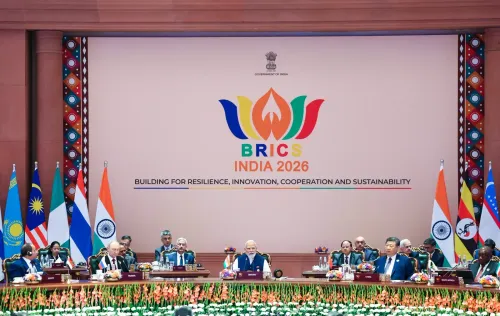
The statement strongly backed India's BRICS Chairship in 2026 , themed 'Building for Resilience, Innovation, Cooperation and Sustainability' .
Members called for equitable access to AI for the Global South, stressing international cooperation on capacity building, data sovereignty, and energy-efficient AI systems.
On climate, BRICS representatives demanded developed nations provide additional, predictable financial resources and technology transfer to developing countries for adaptation.
The statement proposed launching a digital public infrastructure (DPI) repository for BRICS countries and pilot DPI projects for digital transformation.
Eradicating poverty — including extreme poverty — was identified as the most significant global challenge and a prerequisite for sustainable development.
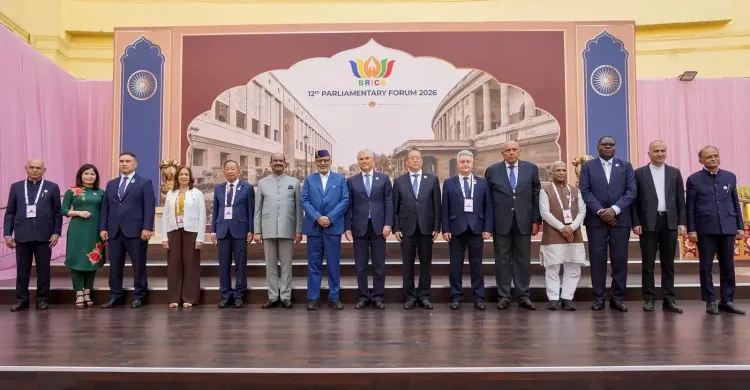
Representatives of the Parliaments of BRICS member countries on Tuesday, 27 October 2026, issued a joint statement from New Delhi backing equitable access to Artificial Intelligence for the Global South, accelerating the 2030 Agenda for Sustainable Development, and harnessing digital technologies to address the distinct challenges faced by developing nations. The gathering, held under the theme 'Fostering Parliaments For People-Centric Development', brought together Presiding Officers and parliamentary representatives from Brazil, China, Egypt, Ethiopia, India, Indonesia, Iran, Russia, South Africa and the UAE.
Key Outcomes of the Joint Statement
The joint statement strongly endorsed India's BRICS Chairship in 2026, themed 'Building for Resilience, Innovation, Cooperation and Sustainability', describing it as a reflection of a shared commitment to strengthening BRICS cooperation in a balanced, inclusive and forward-looking manner. Poverty eradication — including the elimination of extreme poverty — was identified as the most significant global challenge and a prerequisite for sustainable development. The statement also looked ahead to BRICS countries shaping the global development agenda beyond 2030.
AI and Digital Technologies: A Priority for the Global South
The parliamentary representatives acknowledged the transformative potential of emerging technologies, including Artificial Intelligence (AI) and Information and Communication Technologies (ICTs). The joint statement emphasised the necessity of ensuring an 'open, safe, secure, stable, equitably accessible, peaceful and interoperable' ICT environment, while explicitly respecting the sovereignty and national security of each member country.
'We recognise that Artificial Intelligence presents immense opportunity to stimulate economic growth and sustainable development for all. We further note the importance of international cooperation in enhancing equitable access to AI resources, capacity building, knowledge and opportunities in accordance with national priorities and applicable laws while ensuring the safe, secure inclusive and reliable development and use of AI,' the joint statement read.
The statement further called for promoting energy efficiency of AI systems, fostering AI science and innovation, leveraging AI for economic growth and social good, and mitigating potential risks — describing these as essential for a 'just, fair, equitable and prosperous future,' particularly for countries of the Global South. It also stressed the need to strengthen the digital sovereignty of BRICS member countries by protecting data privacy, personal information security, and building resilient national technological ecosystems.
Climate Change and Financial Responsibilities of Developed Nations
On climate, the BRICS parliamentary representatives called for intensifying dialogue and international cooperation to implement Nationally Determined Contributions (NDCs), strengthen mitigation and adaptation efforts, and promote just transition pathways aligned with the objectives of the UNFCCC and its Paris Agreement. Crucially, the statement called on developed countries to provide 'additional, adequate, predictable, accessible' financial resources, capacity-building support, and technology transfer to developing countries on mutually agreed terms — a long-standing demand of the Global South in climate negotiations.
Digital Infrastructure and Universal Connectivity
The joint statement reiterated BRICS commitment to achieving universal and meaningful connectivity for all, encouraging collaborative efforts to deploy digital infrastructure, including digital public infrastructure (DPI), to facilitate economic development, social inclusion, and improved public service delivery. Notably, it flagged a proposal to launch a DPI repository for BRICS countries along with pilot projects for digital transformation — a move that could accelerate technology sharing among the bloc's developing members.
This comes amid growing competition between Western-led and BRICS-aligned digital governance frameworks, with the bloc seeking to assert a distinct model that prioritises national sovereignty alongside openness. With BRICS now encompassing over 10 member countries and representing a significant share of the world's population and GDP, outcomes from such parliamentary meetings carry increasing weight in shaping the alternative multilateral order. The next step will be translating these parliamentary declarations into binding commitments at the leaders' level.
Point of View
At its core, a geopolitical document dressed in development language. The demand for 'equitable AI access' and 'digital sovereignty' is a direct counter-narrative to Western-dominated AI governance frameworks — and with the bloc now spanning 10 countries, it carries demographic and economic heft that earlier BRICS declarations lacked. The climate finance language, meanwhile, repeats demands developing nations have made for decades without securing binding commitments from the Global North. The real test will be whether India's 2026 Chairship converts these parliamentary resolutions into concrete deliverables at the leaders' summit — or whether they remain aspirational text, as many past BRICS statements have.
NationPress
27 Oct 2026
Frequently Asked Questions
What was decided at the BRICS parliamentary meeting in New Delhi on 27 October 2026?
Representatives of the Parliaments of 10 BRICS member countries issued a joint statement backing equitable access to AI for the Global South, endorsing India's 2026 BRICS Chairship, and calling for accelerated implementation of the 2030 Sustainable Development Agenda. The statement also addressed climate finance responsibilities of developed nations and proposed a digital public infrastructure repository for BRICS countries.
Which countries participated in the BRICS parliamentary meeting?
Presiding Officers and parliamentary representatives from Brazil, China, Egypt, Ethiopia, India, Indonesia, Iran, Russia, South Africa, and the UAE participated in the New Delhi meeting on 27 October 2026.
What did the BRICS joint statement say about Artificial Intelligence?
The statement recognised AI as an 'immense opportunity' for economic growth and sustainable development, and called for international cooperation to ensure equitable access to AI resources, capacity building, and knowledge — particularly for countries of the Global South. It also stressed energy efficiency of AI systems, digital sovereignty, and data privacy protections.
What is India's theme for its BRICS Chairship in 2026?
India's BRICS Chairship in 2026 is themed 'Building for Resilience, Innovation, Cooperation and Sustainability.' The joint statement strongly backed this theme as reflecting a shared commitment to strengthening BRICS cooperation in a balanced, inclusive and forward-looking manner.
What did BRICS parliamentarians say about climate change and finance?
The joint statement called for intensifying efforts to implement Nationally Determined Contributions (NDCs) under the Paris Agreement and demanded that developed countries provide additional, adequate, predictable, and accessible financial resources and technology transfer to developing nations for climate adaptation — a key demand of the Global South in international climate negotiations.