18th BRICS Summit in Delhi: Global media highlights Modi's diplomatic win
Synopsis
The 18th BRICS Summit in New Delhi produced a rare unanimous joint declaration on the Middle East — a feat global media credited to PM Modi's diplomatic maneuvering. But the real story, as US publications flagged, is the Modi-vs-Xi contest for leadership of the Global South, playing out inside a bloc that is increasingly hard to hold together.
Key Takeaways
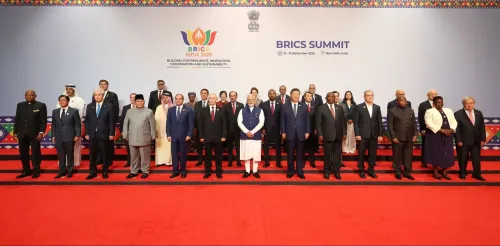
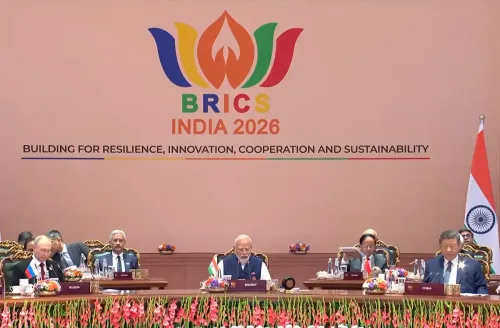
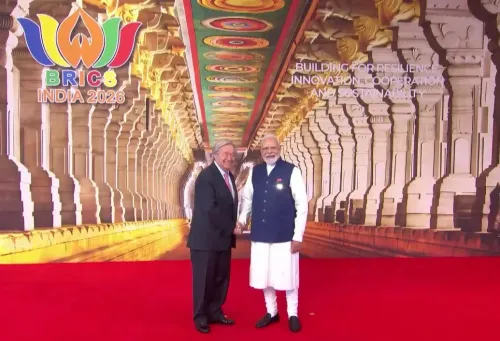
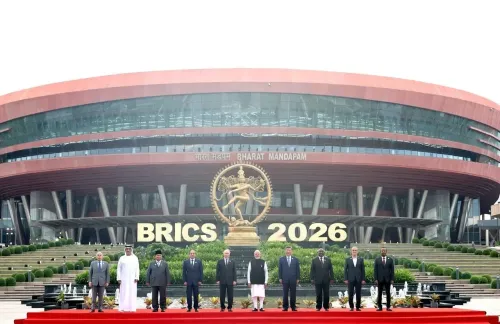
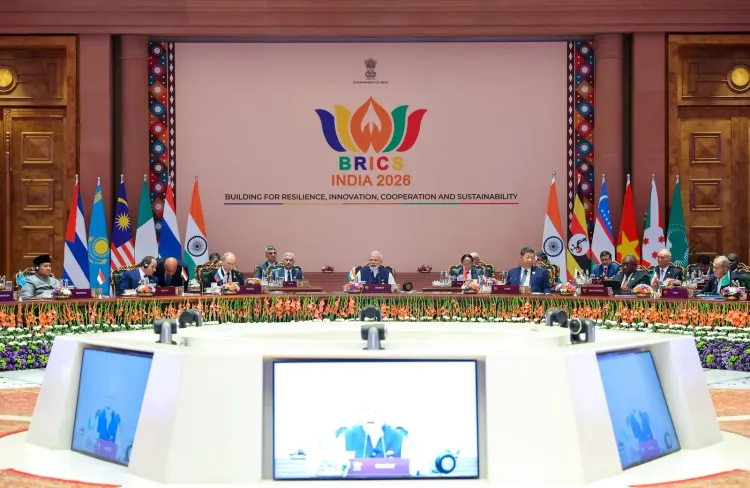
The 18th BRICS Summit was held at Bharat Mandapam, New Delhi on 13 September 2026 under India's chairship .
PM Modi secured a consensus joint declaration from 10 full members and Saudi Arabia , calling for 'maximum restraint' in the Middle East and protection of civilian and nuclear infrastructure.
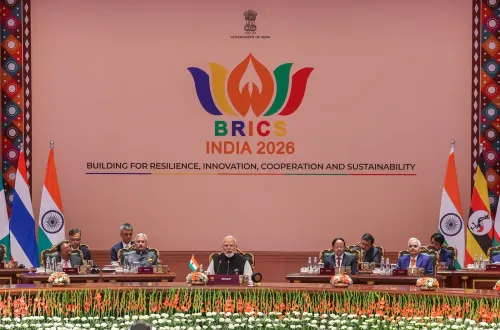
Modi called for a 20-year BRICS vision and stronger implementation mechanisms in his opening address.
The BRICS Business Forum focused on intra-BRICS trade, digital economy, MSMEs and value chain integration.
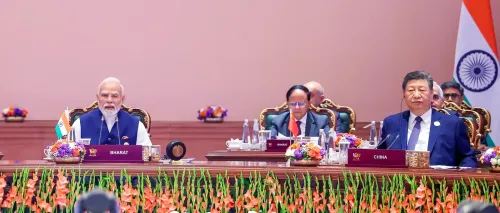
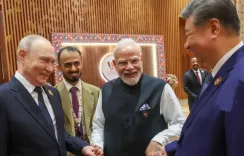
The New York Times and Wall Street Journal framed the summit as a contest between Modi and Xi Jinping for influence over the developing world.
The Wall Street Journal noted that US-India and US-China tensions have opened space for India-China bilateral easing .
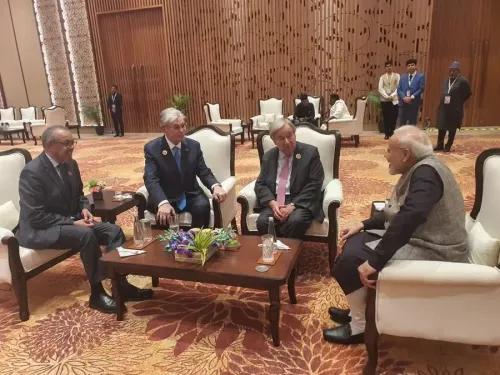
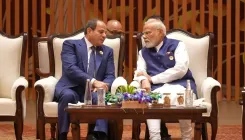
The 18th BRICS Summit, held at Bharat Mandapam in New Delhi on 13 September 2026 under India's chairship, drew extensive coverage from leading international publications, which framed the two-day gathering as a landmark moment in a shifting global order. Prime Minister Narendra Modi secured a significant diplomatic breakthrough, steering 10 full BRICS members and Saudi Arabia toward a strongly worded joint declaration despite deep divisions over the escalating Middle East conflict.
The Joint Declaration and Middle East Tensions
The Japan Times reported that the summit's joint statement stopped short of naming specific countries but called for 'restraint and for the avoidance of actions that could further aggravate the situation.' The declaration raised 'serious concern over deliberate attacks' on civilian infrastructure and nuclear facilities — diplomatic language that, according to analysts, reflects the bloc's effort to project unity without fracturing over individual members' bilateral alignments.
Al Jazeera noted that BRICS nations unanimously adopted the joint declaration, which also underscored the importance of collective efforts to ensure 'the uninterrupted flow of global trade, supply chains and energy' — a direct response to disruptions caused by wars in the Middle East and Ukraine. The outlet observed that India assumed the 11-member bloc's presidency at a 'difficult moment,' with tariffs squeezing members and BRICS countries at odds over how to address either conflict.
Modi's Vision: 'Coming of Age' for BRICS
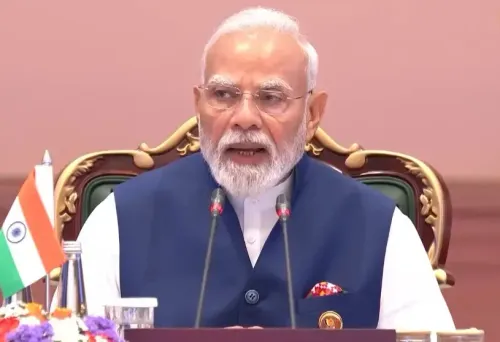
In his opening remarks at the BRICS leaders' meeting, Prime Minister Modi urged the bloc to adopt an ambitious 20-year vision and build mechanisms to ensure continuity and implementation of its decisions. 'Today, BRICS has reached a moment of coming of age. Over the past two decades, the grouping has shaped its unique identity on the global stage. We respect each other's positions and move forward based on consensus,' Modi said. He added that the time had come to 'transform our unity and consensus within BRICS into tangible results on the global stage.'
BRICS Business Forum: Trade, Tech and MSMEs
On the economic front, the BRICS Business Forum brought together business leaders, ministers and heads of state to exchange views on trade, investment, finance, technology and development challenges confronting BRICS economies. According to reports, its conclusions and the BRICS Business Council's recommendations are regularly reflected in summit declarations, particularly in areas such as intra-BRICS trade, the digital economy, micro, small and medium enterprises (MSMEs), standards cooperation and value chain integration.
US Press: Modi vs Xi — Who Speaks for the Global South?
Major American publications framed the summit through the lens of great-power rivalry. The New York Times noted that the central question hanging over the gathering was 'whether Prime Minister Narendra Modi or Chinese President Xi Jinping would emerge as the more influential voice of the developing world.' The Wall Street Journal observed that uncertainty in both India's and China's relationships with the United States had created space for the two nuclear-armed neighbours to ease bilateral tensions — a notable geopolitical subtext to what was officially a multilateral development forum.
This comes amid a broader reconfiguration of global alliances, with BRICS now comprising 11 members after its 2024 expansion and representing a significant share of global GDP and population. The summit's ability to produce a consensus statement — even a carefully hedged one — on the Middle East signals that the bloc retains diplomatic utility even as ideological fault lines deepen. All eyes now turn to how the bloc's decisions translate into follow-up action under India's continued stewardship.
Point of View
But its carefully hedged language — 'maximum restraint,' no named parties — reflects the limits of consensus inside a bloc that includes Russia, China, Iran-friendly members and Gulf states simultaneously. The more consequential subplot is the Modi-Xi dynamic: two leaders with unresolved border tensions now competing for the mantle of the Global South within the same forum. India's BRICS chairship gives Modi a rare structural advantage in that contest, but converting summit optics into durable geopolitical influence is a different challenge altogether. Whether the Business Forum's MSMEs-and-digital-economy agenda produces measurable intra-BRICS trade shifts — or remains declaration fodder — will be the real test of this summit's legacy.
NationPress
13 Sept 2026
Frequently Asked Questions
What was decided at the 18th BRICS Summit in New Delhi?
BRICS nations unanimously adopted a joint declaration at the 18th Summit in New Delhi on 13 September 2026, calling for 'maximum restraint' in the Middle East and warning against attacks on civilian infrastructure and nuclear facilities. The declaration also emphasised protecting global trade, supply chains and energy flows.
What did PM Modi say at the BRICS Summit?
PM Modi described BRICS as having reached a 'coming of age' moment and urged members to adopt a 20-year vision with stronger implementation mechanisms. He said the bloc must 'transform our unity and consensus within BRICS into tangible results on the global stage.'
Why did global media give so much attention to the New Delhi BRICS Summit?
International outlets framed the summit as a window into a changing global order shaped by Middle East and Ukraine wars, strained US alliances, and growing Washington-Beijing rivalry. US newspapers specifically flagged whether Modi or Xi Jinping would emerge as the more influential voice of the developing world.
What is the BRICS Business Forum and what did it discuss?
The BRICS Business Forum is a platform that brings together business leaders, ministers and heads of state to discuss trade, investment, finance, technology and development. At the New Delhi summit, it focused on intra-BRICS trade, the digital economy, MSMEs, standards cooperation and value chain integration.
How many members does BRICS have after the 2024 expansion?
BRICS currently has 11 full members following its 2024 expansion. At the New Delhi summit, Saudi Arabia also participated alongside the 10 full members in endorsing the joint declaration.