Cabinet Clears ₹1,857 Cr Khelo India Sports Goods Scheme
Synopsis
The Union Cabinet approved the Khelo India Sports Goods Manufacturing Scheme on October 28, 2026, with an outlay of ₹1,856.67 crore over seven years to build a globally competitive domestic sports equipment manufacturing ecosystem.
Key Takeaways
The Union Cabinet approved the Khelo India Sports Goods Manufacturing Scheme on October 28, 2026 .
Total financial outlay is ₹1,856.67 crore , covering the period 2026 to 2033–34 .
The scheme aims to build a globally competitive sports goods manufacturing ecosystem in India.
It extends the existing Khelo India programme , launched in 2017 , from sports development into industrial manufacturing.
Key stakeholders include domestic sports goods manufacturers and young athletes who currently depend on imported equipment.
Next steps include release of scheme guidelines, identification of manufacturing clusters, and fund disbursement timelines.
India is placing a serious manufacturing bet on its sporting ambitions. The Union Cabinet, chaired by Prime Minister Narendra Modi, on Wednesday, October 28, 2026, approved the Khelo India Sports Goods Manufacturing Scheme — a dedicated industrial push to build a globally competitive ecosystem for sports equipment production inside India, with a total financial outlay of ₹1,856.67 crore spanning 2026 to 2033–34.
From grassroots fields to factory floors
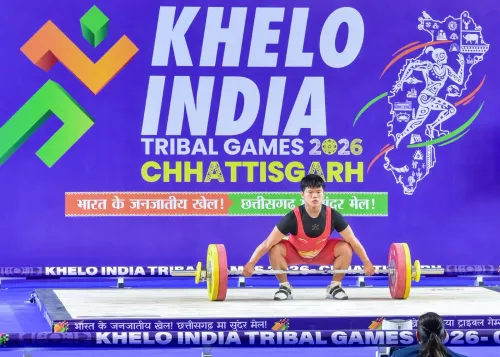
The Khelo India programme has been India's flagship grassroots sports initiative since its launch in 2017, funnelling investment into talent identification, training infrastructure, and competition pathways across the country. What the Cabinet has now approved is a logical — and ambitious — industrial extension of that vision: rather than just nurturing athletes, India now wants to manufacture the equipment they compete with.
The new scheme directly targets domestic manufacturing capacity in the sports goods sector — a niche but strategically significant industry where India has historically depended on imports for higher-end equipment. By anchoring production at home, the scheme aims to serve both the domestic sports boom and the global export market.
₹1,856.67 crore across seven years — what the money means
An outlay of nearly ₹1,857 crore over seven years is not incidental — it signals a sustained, multi-phase commitment rather than a one-budget gesture. The seven-year horizon through 2033–34 is designed to allow manufacturing clusters to be identified, supply chains to be built, and export competitiveness to be developed with enough runway to show results. Stakeholders who stand to benefit most immediately include domestic sports goods manufacturers and the young athletes who currently rely on imported gear.
The scheme sits at the intersection of two of the government's most visible policy threads: sports development and the broader 'Make in India' industrial drive to reduce import dependence across niche sectors. In that sense, it is as much an industrial-policy announcement as a sports one.
What to watch as the scheme takes shape
Approval is the starting gun, not the finish line. The critical milestones ahead include the release of scheme guidelines, the identification and notification of designated manufacturing clusters, and the release of disbursement timelines. How efficiently those clusters are operationalised — and whether smaller manufacturers can access the scheme's benefits alongside larger players — will determine whether the ₹1,857 crore translates into an industry transformation or a well-funded pilot.
India's sports goods sector, particularly the traditional hub of Jalandhar in Punjab, has long had the craft base to compete globally. A structured government-backed scheme of this scale could finally give it the infrastructure and financial architecture to match that potential.
India set out to build champions. Now it wants to build everything they need to win.
Point of View
857 crore over seven years, the Cabinet is signalling that sports infrastructure now means factories and supply chains, not just stadiums and training centres. The move also carries an implicit import-substitution argument: India's growing athlete base and rising sports culture create a captive domestic market that should, in the government's view, be served by Indian manufacturers. Whether the scheme delivers on that thesis will hinge on execution details — cluster identification, credit access for small manufacturers, and export facilitation — that will emerge in the months ahead.
NationPress
28 Oct 2026
Frequently Asked Questions
What is the Khelo India Sports Goods Manufacturing Scheme?
It is a Union Cabinet-approved scheme designed to build a globally competitive sports goods manufacturing ecosystem in India, with a total outlay of ₹1,856.67 crore for the period 2026 to 2033–34.
How much money has been allocated to the Khelo India Sports Goods Manufacturing Scheme?
The scheme has a total financial outlay of ₹1,856.67 crore, spread over the period from 2026 to 2033–34.
When was the Khelo India Sports Goods Manufacturing Scheme approved?
The Union Cabinet chaired by Prime Minister Narendra Modi approved the scheme on Wednesday, October 28, 2026.
What is the Khelo India programme?
Khelo India is India's national sports promotion programme, launched in 2017, to develop grassroots sports talent, infrastructure, and a sports culture across the country.
Who will benefit from the Khelo India Sports Goods Manufacturing Scheme?
The primary beneficiaries are domestic sports goods manufacturers and young Indian athletes who currently rely on imported sports equipment.