BRICS Delhi Summit 2026: Modi leads New Delhi Declaration, tree plantation with world leaders
Synopsis
India's hosting of the 18th BRICS Summit at Bharat Mandapam on 12 September 2026 produced the unanimous New Delhi Declaration — the first major BRICS communiqué since the bloc's historic expansion. With Putin, Xi, and leaders of eight other nations in the room, Modi's challenge now is turning summit language into measurable multilateral outcomes.
Key Takeaways
PM Narendra Modi hosted the 18th BRICS Summit at Bharat Mandapam, New Delhi on 12 September 2026 .
The New Delhi Declaration 2026 was unanimously adopted, with Modi calling for converting resolutions into 'concrete results.' Leaders including Vladimir Putin , Xi Jinping , Cyril Ramaphosa , and Masoud Pezeshkian participated in a joint tree plantation initiative.
Two commemorative postage stamps marking 20 years of BRICS were launched at the summit.
The summit focused on Inclusive Global Governance and Strengthening Multilateralism , the bloc's core agenda for 2026.
This is the first in-person BRICS Summit since the group's major 2023 expansion added Egypt, Ethiopia, Iran, and others.
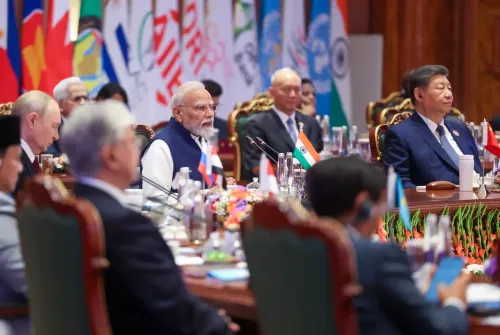
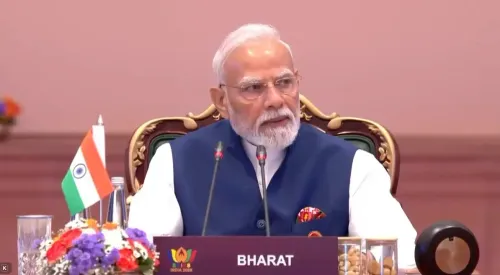
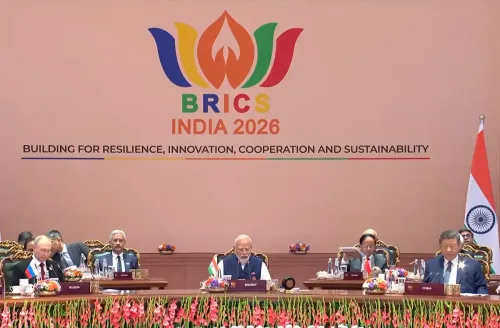
Prime Minister Narendra Modi on 12 September 2026 declared that BRICS is 'driven by cooperation and committed to shaping a more inclusive and prosperous world,' as India hosted the 18th BRICS Summit at Bharat Mandapam in New Delhi. The two-day summit brought together leaders of member and partner countries alongside outreach invitees, marking one of the most expansive gatherings in the bloc's two-decade history.
New Delhi Declaration and Key Announcements
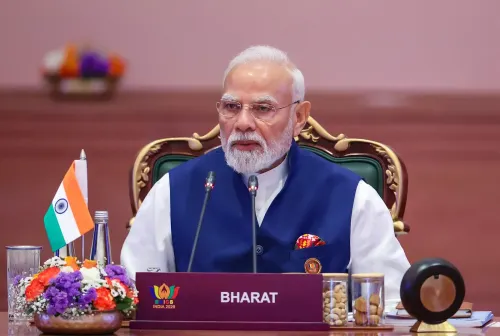
Prime Minister Modi announced the unanimous adoption of the New Delhi Declaration 2026 during the summit's session on 'Inclusive Global Governance and Strengthening Multilateralism.' In his closing remarks, he said, 'The New Delhi Declaration adopted today gives clear direction to our shared resolve. Now it is our responsibility to convert these resolutions into concrete results.'
Modi also launched two commemorative postage stamps marking 20 years of BRICS, underscoring the bloc's trajectory from a five-nation grouping to a significantly expanded multilateral platform.
World Leaders Gather at Bharat Mandapam
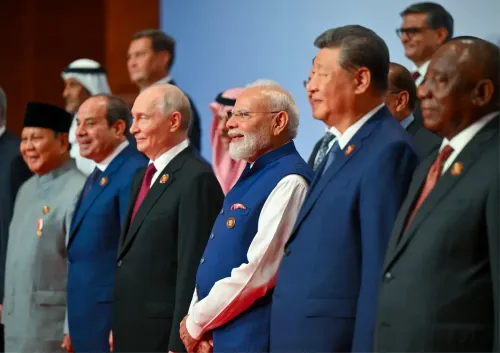
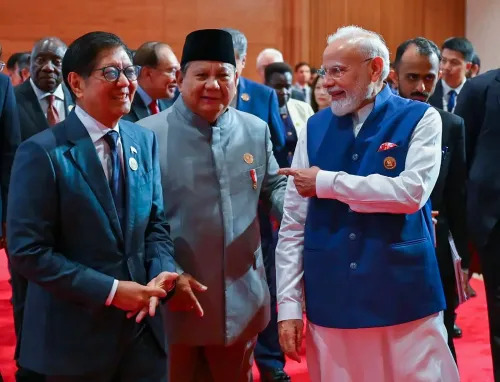
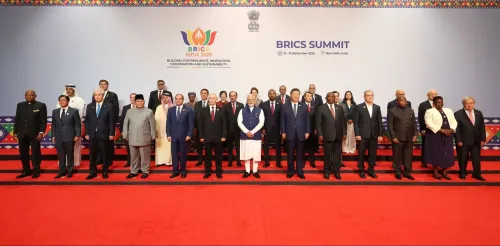
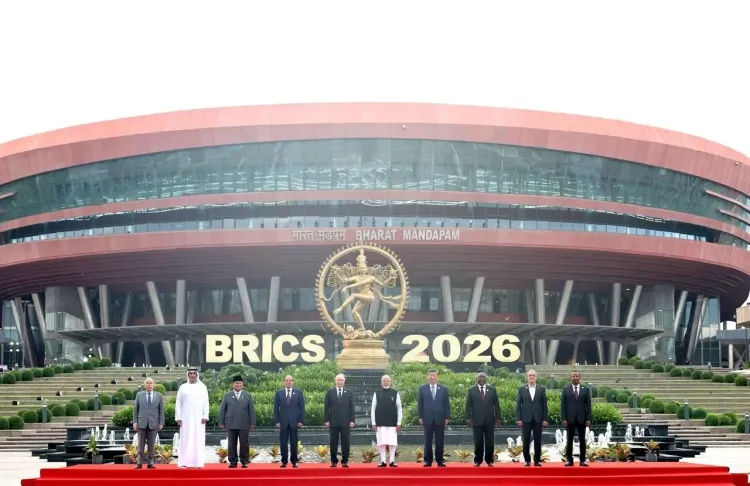
The summit saw an unprecedented assembly of global leaders. In attendance were Russian President Vladimir Putin, Chinese President Xi Jinping, Indonesian President Prabowo Subianto, South African President Cyril Ramaphosa, Egyptian President Abdel Fattah el-Sisi, Abu Dhabi Crown Prince Sheikh Khaled bin Mohamed bin Zayed Al Nahyan, Iranian President Masoud Pezeshkian, Ethiopian Prime Minister Abiy Ahmed Ali, and Brazil Foreign Minister Mauro Vieira.
All leaders participated in the traditional family photo, holding hands on the lawns of Bharat Mandapam — an image the Ministry of External Affairs (MEA) described as 'a moment of unity and shared purpose as BRICS leaders come together for the family photo at the 18th BRICS Summit in New Delhi.'
Tree Plantation Initiative Signals Shared Climate Commitment
In a symbolic gesture, Prime Minister Modi and all attending BRICS leaders jointly participated in a tree plantation initiative at the summit venue. The initiative brought together heads of state and government in a visible signal of environmental solidarity, even as the bloc's communiqués on multilateral climate financing have drawn varying interpretations from member nations.
Notably, this is the first BRICS Summit hosted by India since the bloc's historic expansion in 2023, which added Egypt, Ethiopia, Iran, Saudi Arabia, and the UAE as members or partners. The New Delhi gathering thus represents the expanded BRICS in its most consequential in-person format to date.
Agenda: Inclusive Governance and Multilateralism
The summit's central session focused on Inclusive Global Governance and Strengthening Multilateralism, with discussions covering key regional and global issues and priorities to further deepen BRICS cooperation, according to Prime Minister Modi. The session reflects broader BRICS ambitions to reshape global institutions — from the United Nations Security Council to international financial architecture — in ways that give the Global South a stronger voice.
This comes amid ongoing geopolitical tensions, with Russia and China pressing for de-dollarisation and alternative settlement mechanisms, while newer members like Egypt and Ethiopia seek development finance reform. India, as host, has positioned itself as a bridge between the bloc's more assertive voices and Western-aligned partners.
What Comes Next
With the New Delhi Declaration 2026 unanimously adopted, attention now shifts to implementation — translating summit-level resolutions into actionable frameworks on trade, development financing, and governance reform. The next BRICS chairmanship will determine how quickly the bloc moves from consensus language to concrete outcomes.
Point of View
But unanimity in a bloc this diverse often masks as much as it reveals — the harder test is what BRICS actually delivers on de-dollarisation, development finance, and UN reform in the months ahead. India's role as host gave Modi a rare convening platform, but New Delhi's strategic balancing act — staying non-aligned while hosting Putin alongside Western-partnered Gulf states — is itself a high-wire act. The tree plantation optics and family photo are easy wins; the structural tensions within an expanded BRICS, particularly between China's dominance and India's insistence on multipolarity, will outlast the summit declarations. Mainstream coverage tends to celebrate the gathering; the real story is whether the 'concrete results' Modi invoked have any enforcement architecture behind them.
NationPress
28 Oct 2026
Frequently Asked Questions
What is the 18th BRICS Summit and where was it held?
The 18th BRICS Summit is the annual gathering of BRICS member and partner country leaders, held on 12 September 2026 at Bharat Mandapam in New Delhi, hosted by India. The two-day summit focused on Inclusive Global Governance and Strengthening Multilateralism.
What is the New Delhi Declaration 2026?
The New Delhi Declaration 2026 is a consensus document unanimously adopted by BRICS leaders at the 18th Summit, providing a shared framework on global governance, multilateralism, and BRICS cooperation priorities. PM Modi said it 'gives clear direction to our shared resolve.'
Which world leaders attended the BRICS Summit in New Delhi?
Leaders attending included Russian President Vladimir Putin, Chinese President Xi Jinping, Indonesian President Prabowo Subianto, South African President Cyril Ramaphosa, Egyptian President Abdel Fattah el-Sisi, Abu Dhabi Crown Prince Sheikh Khaled bin Mohamed bin Zayed Al Nahyan, Iranian President Masoud Pezeshkian, Ethiopian Prime Minister Abiy Ahmed Ali, and Brazil Foreign Minister Mauro Vieira.
Why is the 2026 BRICS Summit significant?
It is the first major in-person BRICS Summit since the bloc's 2023 expansion, which brought in Egypt, Ethiopia, Iran, and Gulf partners, making it the most diverse gathering in the group's 20-year history. India's hosting signals its ambition to lead the expanded bloc's multilateral agenda.
What commemorative actions were taken at the BRICS Summit?
PM Modi launched two postage stamps commemorating 20 years of BRICS at the summit. All attending leaders also participated in a joint tree plantation initiative and posed for the traditional 'family photo' on the lawns of Bharat Mandapam.