BRICS Summit Day 2: Modi, Putin, Xi pose for family photo at Bharat Mandapam
Synopsis
The 18th BRICS Summit in New Delhi delivered a rare diplomatic consensus — a joint declaration signed on Day 1 despite stark geopolitical divides between member nations. The family photo on Day 2, featuring Modi alongside Putin, Xi, and a dozen other leaders, is as much a statement of India's growing multilateral clout as it is a summit ritual.
Key Takeaways
PM Modi hosted the 18th BRICS Summit at Bharat Mandapam, New Delhi on 13–14 September 2026 .
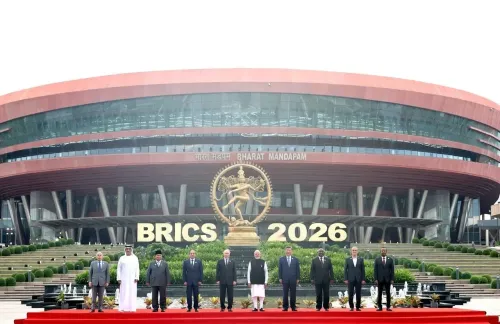
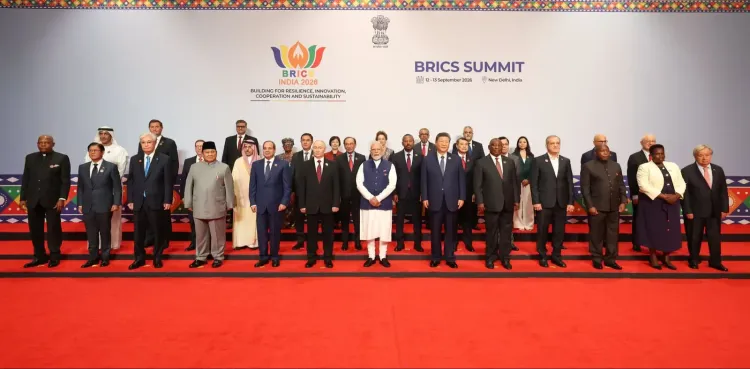
Leaders including Vladimir Putin , Xi Jinping , Prabowo Subianto , Cyril Ramaphosa , and WHO chief Antonio Guterres joined the summit's traditional family photo on Day 2.
The New Delhi Declaration was adopted on Day 1 (Saturday) — described as a 'major diplomatic breakthrough' given divergent geopolitical positions among member nations.
India's chairship was formally credited with injecting 'new impetus' to international cooperation within the BRICS framework.
The declaration reaffirms cooperation across three pillars: political and security , economic and financial , and cultural and people-to-people .
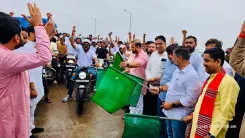
Summit activities included a joint tree plantation drive, the Bharat Innovates Exposition , and a gala dinner hosted by PM Modi on Saturday evening.
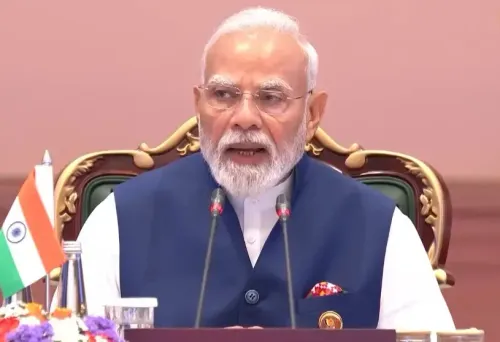
Prime Minister Narendra Modi joined world leaders for the traditional 'family photo' on the second day of the 18th BRICS Summit at Bharat Mandapam in New Delhi on Sunday, 14 September 2026, as the landmark gathering drew toward its close with a landmark joint declaration already in hand.
Who Was in the Frame
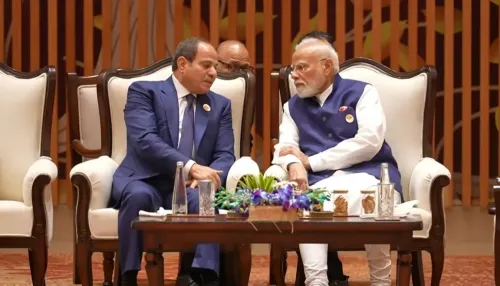
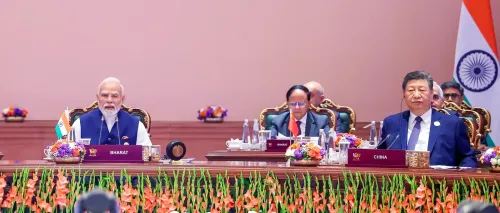
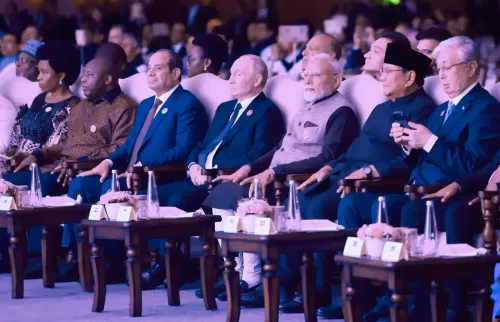
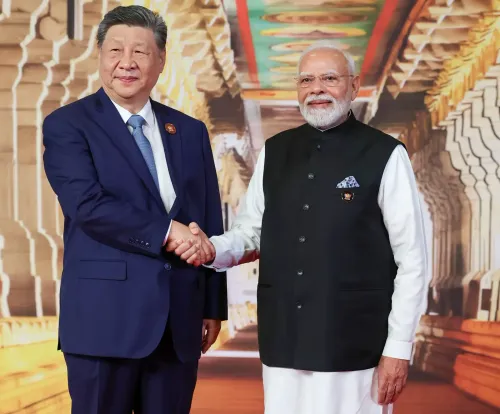
The photo brought together an unprecedented assembly of global leadership. Standing alongside PM Modi were Russian President Vladimir Putin, Chinese President Xi Jinping, Indonesian President Prabowo Subianto, South African President Cyril Ramaphosa, Malaysian Prime Minister Anwar Ibrahim, Ethiopian Prime Minister Abiy Ahmed Ali, Iranian President Masoud Pezeshkian, and World Health Organisation (WHO) Secretary-General Antonio Guterres, among several other heads of state and representatives of international organisations. The gathering reflected the expanded BRICS format — spanning both core member countries and outreach partner nations.
Day 2 Proceedings
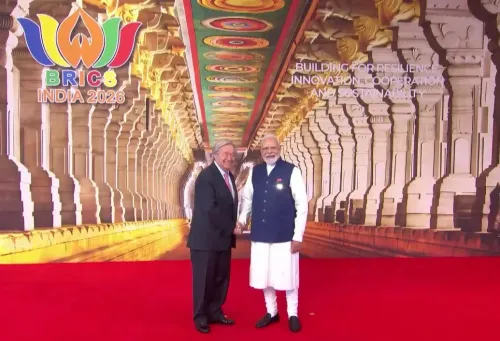
Earlier on Sunday, PM Modi personally welcomed arriving leaders at Bharat Mandapam as the summit entered its second and final day. Leaders also participated in a joint tree plantation drive and visited the Bharat Innovates Exposition, showcasing India's innovation ecosystem to the assembled delegations.
The New Delhi Declaration: A Diplomatic Milestone
The diplomatic centrepiece of the summit had already been delivered on Saturday, when BRICS nations adopted the 'New Delhi Declaration' — a joint statement reached on the very first day of the India-hosted summit. Given the sharply divergent geopolitical positions held by member countries — including nations under Western sanctions, active conflict zones, and US-aligned partners — the consensus was widely described as a 'major diplomatic breakthrough'.
The declaration formally commended India for hosting the Outreach/BRICS Plus Dialogue segment and asserted that India's chairship had injected 'new impetus' to international cooperation and solidarity. The summit operated under the theme 'Building for Resilience, Innovation, Cooperation and Sustainability'.
What the Declaration Commits To
Building on two decades of the BRICS framework, the New Delhi Declaration commits member countries to deepening cooperation across three pillars: political and security, economic and financial, and cultural and people-to-people engagement. Leaders reaffirmed the BRICS spirit of mutual respect, sovereign equality, solidarity, openness, and consensus — language that takes on fresh significance given the bloc's expanded membership and increasingly multipolar ambitions.
Summit Sidelines
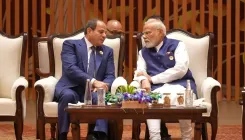
Beyond the formal proceedings, the summit featured a gala dinner hosted by PM Modi at Bharat Mandapam on Saturday evening for BRICS leaders — an occasion that typically enables informal bilateral exchanges away from the negotiating table. Such margins are often where diplomatic groundwork is quietly laid, and this summit — given its rare convergence of leaders from Russia, China, Iran, and the Global South — was especially closely watched for bilateral signals.
The 18th BRICS Summit, the first to be hosted by India since the bloc's significant expansion, is expected to shape the bloc's agenda on multilateral reform, de-dollarisation discussions, and South-South cooperation well into the next year.
Point of View
But the New Delhi Declaration is the real story — and it is a significant one. Getting Russia, China, Iran, South Africa, and a dozen other nations with competing interests to sign a joint statement on Day 1 is a genuine diplomatic achievement, and one that reflects India's careful chairship strategy. What the mainstream coverage risks understating is the structural tension within BRICS: the bloc is simultaneously being pulled toward an anti-Western identity by Russia and China, and toward multipolar pragmatism by India and its Global South partners. The New Delhi Declaration threads that needle for now, but the contradictions will resurface the moment concrete proposals — on de-dollarisation, trade settlement, or UN reform — move from declaration language to implementation.
NationPress
13 Sept 2026
Frequently Asked Questions
What happened on Day 2 of the 18th BRICS Summit in New Delhi?
On the second day of the summit at Bharat Mandapam, PM Modi welcomed leaders for a traditional 'family photo' that included Russian President Putin, Chinese President Xi Jinping, and heads of state from across the expanded BRICS grouping. Leaders also participated in a joint tree plantation drive and visited the Bharat Innovates Exposition.
What is the New Delhi Declaration adopted at the BRICS Summit?
The New Delhi Declaration is a joint statement adopted by BRICS nations on the first day of the 18th BRICS Summit on Saturday. It commits member countries to strengthening cooperation across political, economic, and cultural pillars, and commends India's chairship for adding 'new impetus' to international solidarity.
Why was the BRICS joint statement called a 'major diplomatic breakthrough'?
Reaching consensus on a joint statement on Day 1 was considered a significant achievement because BRICS member countries hold sharply divergent geopolitical positions — including nations under Western sanctions, countries in active conflicts, and US-aligned partners. Getting all parties to agree on shared language within hours of the summit opening was widely noted as exceptional.
Which leaders attended the 18th BRICS Summit in New Delhi?
The summit was attended by PM Narendra Modi, Russian President Vladimir Putin, Chinese President Xi Jinping, Indonesian President Prabowo Subianto, South African President Cyril Ramaphosa, Malaysian PM Anwar Ibrahim, Ethiopian PM Abiy Ahmed Ali, Iranian President Masoud Pezeshkian, WHO Secretary-General Antonio Guterres, and several other leaders of BRICS member, partner, and outreach countries.
What is the theme of the 18th BRICS Summit?
The 18th BRICS Summit, hosted by India at Bharat Mandapam in New Delhi, operated under the theme 'Building for Resilience, Innovation, Cooperation and Sustainability.' It is India's first time hosting the summit since the bloc's significant expansion to include new member and partner nations.