BRICS Summit Day 2: Modi hosts world leaders at Bharat Mandapam, New Delhi
Synopsis
India pulled off a rare diplomatic feat at the 18th BRICS Summit — securing a joint declaration on Day 1 despite deep geopolitical divides among the expanded grouping. On Day 2, PM Modi welcomed UN chief Guterres, leaders from Malaysia, Ghana, Vietnam, the Philippines, Saudi Arabia and beyond for open-session talks on inclusive growth, as New Delhi cements its role as a consensus broker in a fragmented multilateral order.
Key Takeaways
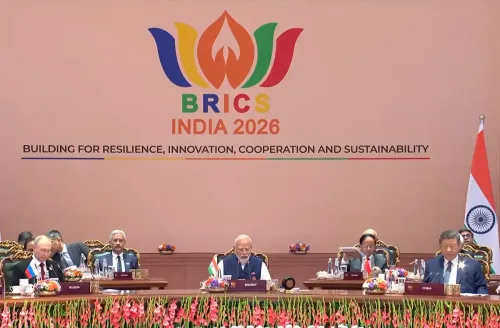
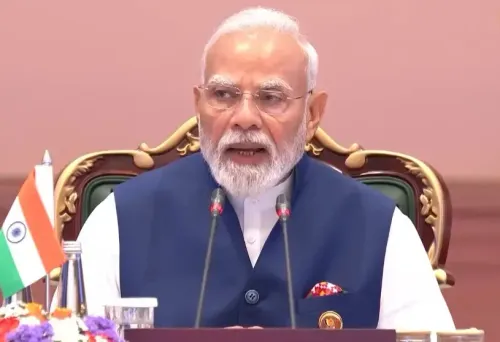
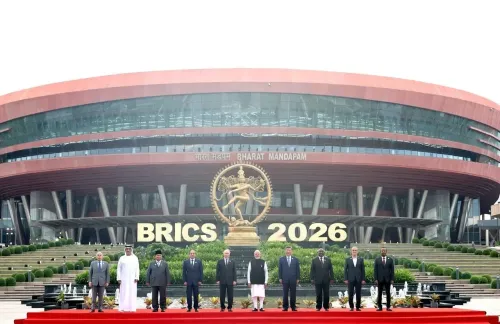
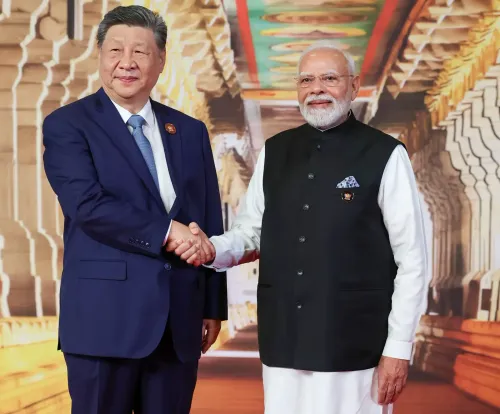
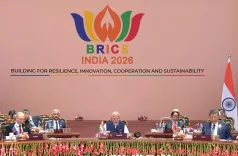
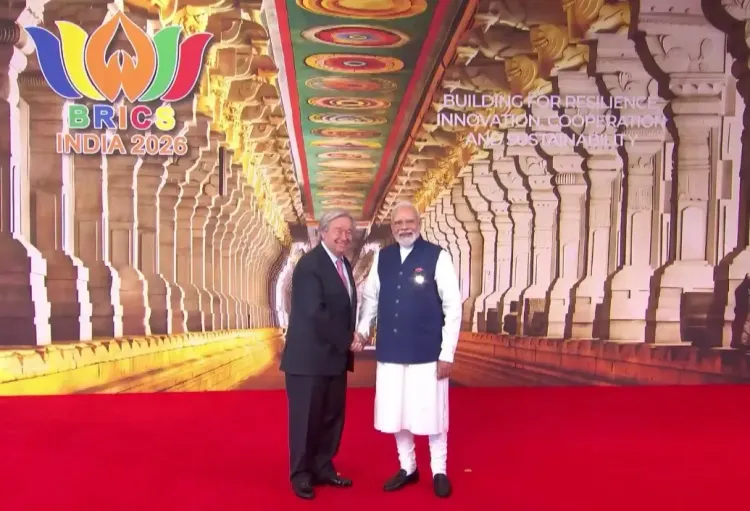
PM Narendra Modi welcomed global leaders at Bharat Mandapam, New Delhi on Sunday, 13 September 2026 for Day 2 of the 18th BRICS Summit .
Leaders including UN Secretary-General António Guterres , Malaysian PM Anwar Ibrahim , Philippine President Ferdinand R.
Marcos , and Saudi Foreign Minister Faisal bin Farhan Al Saud participated in the Outreach/BRICS Plus session.
The 'New Delhi Declaration' was adopted on Day 1, hailed as a 'major diplomatic breakthrough' given divergent geopolitical stances among member states.
The declaration commits BRICS to cooperation across three pillars: political and security , economic and financial , and cultural and people-to-people .
Saturday's gala dinner featured a vegan menu and cultural performances including the BRICS Symphony 'One Rhythm, Many Cultures' .
India's chairship was recognised for injecting 'new impetus' to international cooperation across the expanded grouping's two-decade evolution.
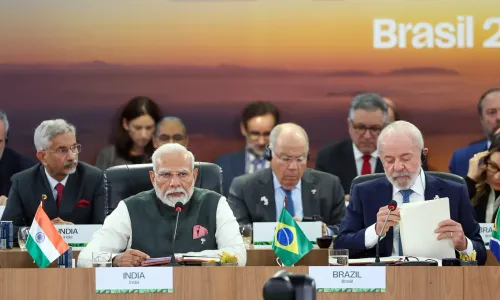
Prime Minister Narendra Modi on Sunday, 13 September 2026, welcomed an array of global leaders to Bharat Mandapam in New Delhi for the second day of the 18th BRICS Summit, as the expanded grouping convened an open session centred on inclusive global growth. The summit, hosted under India's chairship, has already delivered what observers are calling a major diplomatic breakthrough — a joint declaration adopted on Day 1 despite sharply divergent geopolitical positions among member states.
Leaders Who Arrived on Day 2
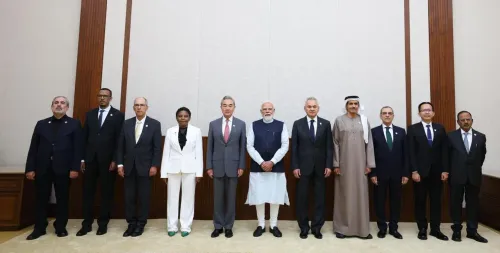
Among the dignitaries who arrived at Bharat Mandapam for the second day were United Nations Secretary-General António Guterres, Malaysian Prime Minister Anwar Ibrahim, Ghana President John Mahama, Burundi President Evariste Ndayishimiye, Vietnamese Prime Minister Le Minh Hung, Kazakhstan President Kassym-Jomart Tokayev, Philippines President Ferdinand R. Marcos, and Saudi Foreign Minister Faisal bin Farhan Al Saud.
Their arrival marked the beginning of the Outreach/BRICS Plus Dialogue segment, which brought together both full member states and partner nations for deliberations on the summit's core agenda.
Day 2 Open Session: The Four Pillars
The open session on Sunday focused on the year's summit theme — 'Resilience, Innovation, Cooperation and Sustainability: Shaping the Future for Inclusive Global Growth'. Leaders deliberated on areas of mutual interest and explored ways to deepen cooperation across sectors among member and partner countries. The discussions built on commitments made during the first day's closed-door meetings.
Notably, the grouping reaffirmed its commitment to the BRICS spirit of mutual respect, sovereign equality, solidarity, democracy, openness, inclusiveness, collaboration and consensus — principles that were tested this year given the geopolitical fissures among several member nations.
The New Delhi Declaration: A Diplomatic Milestone
On Saturday, BRICS nations adopted the 'New Delhi Declaration', commending India for hosting the Outreach/BRICS Plus Dialogue segment and asserting that India's chairship has injected 'new impetus' to strengthen international cooperation and solidarity. The declaration underscored a commitment to strengthening cooperation under three pillars: political and security, economic and financial, and cultural and people-to-people cooperation.
Reaching consensus on a joint statement on the very first day of the summit was described as a 'major diplomatic breakthrough', given the widely divergent stances on conflicts and trade among the expanded grouping's members — which now spans continents and competing geopolitical blocs.
Saturday Evening: Gala Dinner and Cultural Showcase
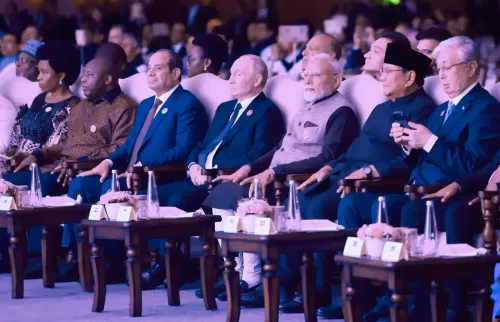
On Saturday evening, Prime Minister Modi hosted a gala dinner at Bharat Mandapam for BRICS leaders and delegates. Russian President Vladimir Putin, Indonesian President Prabowo Subianto, Egyptian President Abdel Fattah el-Sisi, and World Health Organization (WHO) Director-General Tedros Adhanom Ghebreyesus were among the dignitaries who attended.
A specially curated vegan gala dinner formed the centrepiece of the evening, with a plant-based menu designed to celebrate India's culinary diversity while reflecting the summit's overarching principles of sustainability and inclusivity. The evening also featured a special cultural performance titled 'Navarasa — The Universe of Shared Emotions', alongside the BRICS Symphony, 'One Rhythm, Many Cultures' — a collaborative musical performance featuring artists from BRICS member and partner countries.
What Comes Next
With the New Delhi Declaration already in place and Day 2 deliberations underway, the summit's outcomes are expected to shape the BRICS agenda for the coming year. India's ability to steer consensus across an increasingly heterogeneous grouping — spanning two decades of BRICS evolution — will be closely watched as a template for managing multilateralism in a fragmented world order.
Point of View
Saudi Arabia, the Philippines, and Ghana, each carrying irreconcilable positions on Ukraine, West Asia, and global trade, is a genuine test of India's diplomatic architecture. Modi's BRICS chairship has leaned heavily on process — themed summits, cultural diplomacy, and plant-based dinners — but the harder question is whether the three-pillar framework translates into binding deliverables or remains aspirational text. The expanded BRICS risks becoming unwieldy: the more heterogeneous the membership, the shallower the consensus. India's real challenge is not hosting the summit but sustaining its relevance as a bridge between a Global South that wants reform and a Global North that controls the institutions being reformed.
NationPress
13 Sept 2026
Frequently Asked Questions
What happened on Day 2 of the 18th BRICS Summit?
On Sunday, 13 September 2026, PM Modi welcomed world leaders including UN Secretary-General António Guterres, Malaysian PM Anwar Ibrahim, and Philippines President Ferdinand R. Marcos at Bharat Mandapam for the Outreach/BRICS Plus session. Leaders held an open session deliberating on inclusive global growth under the summit's theme of Resilience, Innovation, Cooperation and Sustainability.
What is the New Delhi Declaration adopted at the BRICS Summit?
The New Delhi Declaration is a joint statement adopted by BRICS nations on Day 1 of the 18th Summit, commending India's chairship and committing member states to cooperation across political, economic, and cultural pillars. It was described as a 'major diplomatic breakthrough' given the sharply divergent geopolitical positions among the expanded grouping's members.
Which leaders attended the BRICS Summit gala dinner hosted by PM Modi?
Russian President Vladimir Putin, Indonesian President Prabowo Subianto, Egyptian President Abdel Fattah el-Sisi, and WHO Director-General Tedros Adhanom Ghebreyesus were among the dignitaries at the Saturday evening gala. The dinner featured a specially curated vegan menu celebrating India's culinary diversity and sustainability principles.
What is the theme of the 18th BRICS Summit hosted by India?
The 18th BRICS Summit is being held under the theme 'Building for Resilience, Innovation, Cooperation and Sustainability', with the open session day focusing on 'Shaping the Future for Inclusive Global Growth'. India holds the BRICS chairship for this edition, hosted at Bharat Mandapam in New Delhi.
Why is the BRICS Summit consensus significant this year?
Reaching a joint declaration on the first day of the summit — across a grouping with members holding sharply divergent views on conflicts and geopolitics — has been labelled a major diplomatic achievement. The expanded BRICS now spans continents and competing blocs, making consensus-building considerably more complex than in earlier editions of the grouping.