Cabinet Clears PM VGSY With ₹7,395 Cr for Village Governance
Synopsis
The Union Cabinet under PM Modi approved the Pradhan Mantri Viksit Gram Swaraj Yojana (PM VGSY) on October 28, 2026, committing ₹7,395.55 crore to strengthen grassroots governance and holistic village development across India's panchayats.
Key Takeaways
The Union Cabinet approved PM Viksit Gram Swaraj Yojana (PM VGSY) on October 28, 2026 .
The scheme carries a total outlay of ₹7,395.55 crore .
Its core mandate is strengthening grassroots governance and promoting holistic village development .
The scheme follows the Rashtriya Gram Swaraj Abhiyan (2018) in the lineage of Panchayati Raj support schemes.
Implementation will depend on the nodal ministry releasing guidelines and states submitting execution plans before funds are disbursed.
The initiative aligns with the Modi government's broader Viksit Bharat 2047 goal of self-reliant villages.
A ₹7,395.55 crore bet on India's villages — that is what the Union Cabinet under Prime Minister Narendra Modi placed on Wednesday, October 28, 2026, approving the Pradhan Mantri Viksit Gram Swaraj Yojana (PM VGSY), a new centrally sponsored scheme designed to strengthen grassroots governance and drive holistic rural development. Union Minister Dr. Jitendra Singh announced the Cabinet decision on X, framing it as a foundational step toward self-reliant villages.
What PM VGSY Promises for India's Panchayats
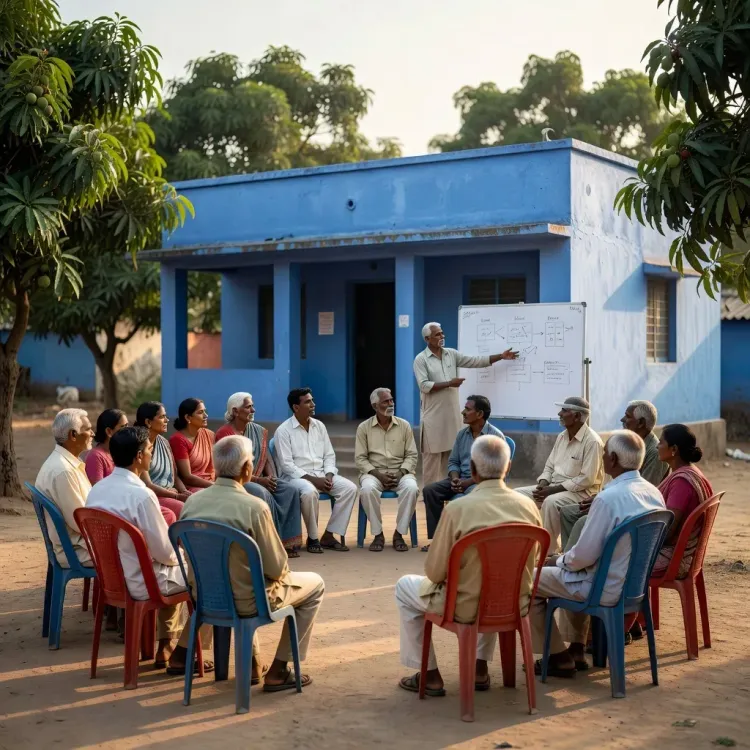
The scheme's twin mandate — shoring up grassroots governance structures and enabling 'holistic village development' — places it squarely within the constitutional architecture of Panchayati Raj. Village panchayats and rural local bodies are the primary intended beneficiaries, equipped through this outlay to plan, execute, and account for local development work with greater institutional capacity.
The ₹7,395.55 crore allocation signals a serious central commitment. Rural governance schemes of this scale typically flow funds through state governments to district and block-level panchayats, with the nodal ministry setting outcome frameworks and audit norms.
From Rashtriya Gram Swaraj Abhiyan to PM VGSY
The policy lineage here matters. The Rashtriya Gram Swaraj Abhiyan (RGSA), launched in 2018, was the last major centrally sponsored scheme dedicated to strengthening Panchayati Raj institutions — funding capacity-building, e-governance tools, and elected-representative training across rural local bodies. PM VGSY appears to be the next chapter in that story, updated and scaled for the Viksit Bharat 2047 goal of self-reliant, well-governed villages.
Successive governments since the 73rd Constitutional Amendment of 1992 — which gave panchayats constitutional status — have layered scheme after scheme onto this foundation. The current administration has accelerated that pattern, linking rural governance directly to its flagship 2047 vision.
What Comes Next: Guidelines and State Plans
Approval is the starting gun, not the finish line. The next critical milestones are the release of scheme guidelines by the nodal ministry — widely expected to be the Ministry of Panchayati Raj — and the submission of state-level implementation plans. Funds flow only once those frameworks are in place, meaning the real test of PM VGSY's ambition will be how quickly states translate central intent into village-level action.
For India's roughly 2.5 lakh gram panchayats, the question is whether this injection of resources and institutional focus can produce measurably better local governance — or whether it joins a long queue of schemes whose design outpaced their delivery.
With the Cabinet's signature on the file, the clock has started — and villages across India are waiting to see if the promises in New Delhi become reality at the panchayat level.
Point of View
Arriving eight years after the Rashtriya Gram Swaraj Abhiyan and carrying a substantially larger outlay — a signal that panchayat capacity-building has been re-prioritised ahead of the 2047 development horizon. The scheme's success will hinge less on the Cabinet announcement and more on the speed and quality of state-level uptake, which has historically been the weak link in centrally sponsored rural schemes. Framing village governance as a 'Viksit Bharat' pillar is politically astute, connecting local-body strengthening to the administration's flagship long-term narrative. Whether PM VGSY delivers measurable gains in panchayat capability or becomes another layered addition to an already complex scheme architecture is the defining question to watch.
NationPress
28 Oct 2026
Frequently Asked Questions
What is the Pradhan Mantri Viksit Gram Swaraj Yojana (PM VGSY)?
PM VGSY is a new centrally sponsored scheme approved by the Union Cabinet on October 28, 2026, with an outlay of ₹7,395.55 crore, aimed at strengthening grassroots governance through village panchayats and promoting holistic rural development across India.
How much money has been allocated to PM VGSY?
The Union Cabinet has approved a total outlay of ₹7,395.55 crore for the Pradhan Mantri Viksit Gram Swaraj Yojana.
Who will benefit from PM VGSY?
The primary beneficiaries are village panchayats, elected panchayat representatives, and rural communities across India whose local governance institutions the scheme aims to strengthen.
How is PM VGSY different from the Rashtriya Gram Swaraj Abhiyan?
The Rashtriya Gram Swaraj Abhiyan, launched in 2018, focused on capacity-building and e-governance for Panchayati Raj institutions. PM VGSY is the next-generation scheme in the same lineage, with a significantly larger financial outlay and a broader mandate for 'holistic village development' aligned with Viksit Bharat 2047.
When will PM VGSY funds reach villages?
Cabinet approval is the first step. Fund disbursement to states and ultimately panchayats will follow once the nodal ministry releases scheme guidelines and state governments submit implementation plans — a process that typically takes several months.