Cabinet Approves 3% DA Hike for Central Govt Staff, Pensioners

Synopsis
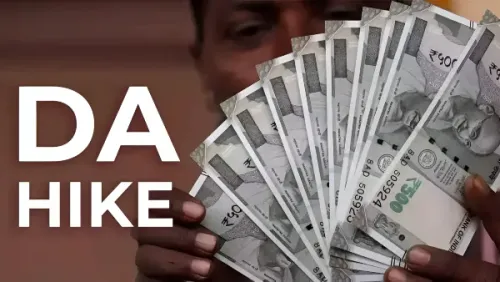
The Union Cabinet chaired by PM Narendra Modi approved a 3% rise in Dearness Allowance for central government employees and Dearness Relief for pensioners on October 28, 2026, following the biannual CPI-IW-linked revision formula set by the 7th Pay Commission.
Key Takeaways
The Union Cabinet approved a 3% increase in Dearness Allowance (DA) for central government employees on October 28, 2026 .
Pensioners receive a matching 3% rise in Dearness Relief (DR) under the same Cabinet decision.
The revision follows the biannual schedule mandated under the 7th Central Pay Commission framework implemented from 2016.
Quantum is determined by the All India Consumer Price Index for Industrial Workers (CPI-IW) , compiled by the Labour Bureau — not by discretionary political decision.
This automatic DA adjustment mechanism has been in operation since the 1990s , spanning successive governments.
The next DA revision is expected around March-April 2027 , subject to fresh CPI-IW data.
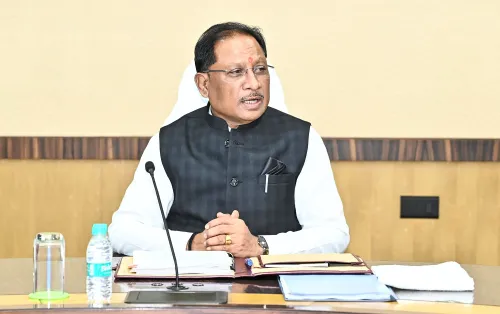
Millions of central government employees and pensioners across India woke up to better news on Wednesday, October 28, 2026 — the Union Cabinet, chaired by Prime Minister Narendra Modi, cleared a 3% increase in Dearness Allowance (DA) for serving employees and a matching rise in Dearness Relief (DR) for retirees. Union Minister of State (Independent Charge) for Science and Technology Dr. Jitendra Singh announced the decision on X under the #CabinetDecisions hashtag.
What the 3% DA revision means for crores of beneficiaries
Dearness Allowance is the inflation-linked top-up built into the pay structure of central government employees, while Dearness Relief serves the same purpose for pensioners — ensuring that rising prices do not silently erode real incomes. A 3-percentage-point hike, though it sounds modest, multiplies across a large base pay to deliver a meaningful monthly gain for recipients ranging from frontline staff to retired bureaucrats drawing lifelong pensions.
The revision is calibrated against the All India Consumer Price Index for Industrial Workers (CPI-IW), compiled by the Labour Bureau. Under the framework set by the 7th Central Pay Commission — implemented from 2016 — the government is obligated to revise DA twice a year, typically in March-April and September-October, making this a built-in protection against inflation rather than a discretionary gesture.
A formula that has outlasted governments
This automatic index-linked mechanism has been in continuous operation since the 1990s, cutting across administrations and party lines. The Cabinet of India does not decide the quantum — it ratifies what the CPI-IW arithmetic produces. In that sense, the October 2026 revision follows a well-worn constitutional groove: Labour Bureau releases fresh CPI-IW data, the Finance Ministry runs the formula, and the Cabinet stamps approval. The 3% rise announced today is the direct output of that process.
For pensioners specifically, the Dearness Relief increase mirrors the DA hike — a principle that has ensured retired civil servants are not left behind as active salaries climb. Together, the twin announcements protect the purchasing power of a vast segment of households tied to central government service.
What comes next on the DA calendar
With today's revision in place, attention now turns to the next CPI-IW data cycle. Under the biannual schedule, the Cabinet would ordinarily take up the following DA revision around March-April 2027, depending on when fresh index figures are published and cleared. The direction and size of that revision will be determined entirely by where consumer prices move in the intervening months.
For now, the October hike lands at the start of the festive and winter season — timing that tends to amplify its feel-good impact on household spending, even if the mechanism behind it is purely mathematical.
Point of View
But its political optics are never entirely neutral — a government that announces a pay-and-pension boost ahead of the winter session of Parliament banks goodwill even when the arithmetic is on autopilot. The Modi Cabinet's continuation of the index-linked mechanism reinforces its positioning as a steward of predictable, formula-driven governance rather than arbitrary wage intervention. At a macro level, the 3% hike injects additional purchasing power into a large, geographically dispersed base of households, with a marginal but real stimulus effect on consumption. The more consequential question going forward is whether the CPI-IW trajectory — and any future Pay Commission recommendations — keeps the DA formula in sync with broader inflation trends experienced by government workers.
NationPress
28 Oct 2026
Frequently Asked Questions
What is the new Dearness Allowance rate after the October 2026 Cabinet decision?
The Cabinet approved a 3% increase in Dearness Allowance for central government employees in October 2026. The exact revised cumulative DA rate depends on the pre-existing base rate before this hike was added.
Who benefits from the DA and DR hike approved by the Cabinet?
Central government employees receive the higher Dearness Allowance, while retired central government personnel receive an equivalent increase in Dearness Relief — both approved in the same Cabinet decision.
How is Dearness Allowance calculated in India?
DA is calculated using the All India Consumer Price Index for Industrial Workers (CPI-IW) published by the Labour Bureau. The 7th Central Pay Commission, implemented from 2016, set the current formula for biannual revisions.
How often is Dearness Allowance revised by the Indian government?
DA and DR are revised twice a year — typically around March-April and September-October — based on CPI-IW data, following a schedule maintained since the 1990s.
When is the next Dearness Allowance revision expected?
The next DA revision is expected around March-April 2027, subject to the release and review of fresh CPI-IW figures by the Labour Bureau.