Gadkari: Cabinet clears ₹1,856 cr sports goods manufacturing scheme
Synopsis
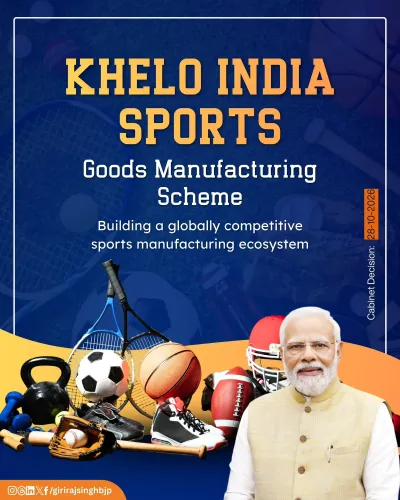
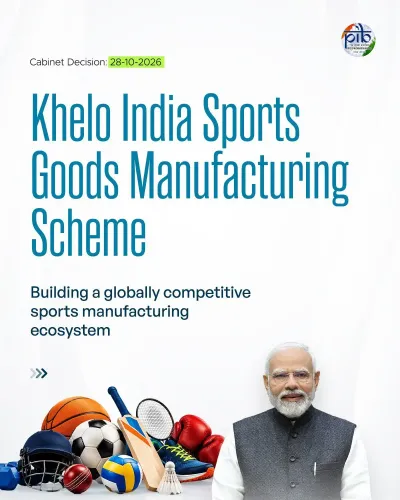
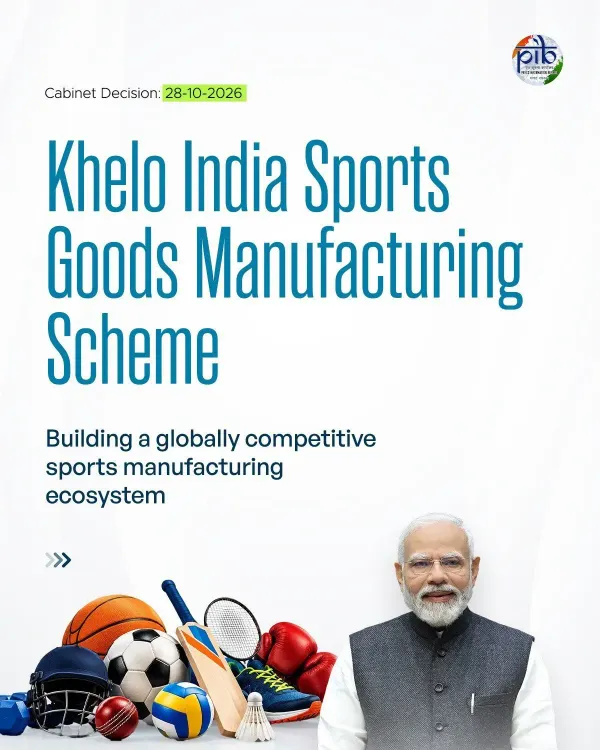
The Union Cabinet has approved the Khelo India Sports Goods Manufacturing Scheme with an outlay of ₹1,856.67 crore for 2026–2033–34, targeting investment, exports, skill development, and integration into global supply chains — announced by Minister Nitin Gadkari on 28 October 2026.
Key Takeaways
The Union Cabinet , chaired by PM Narendra Modi , approved the Khelo India Sports Goods Manufacturing Scheme on 28 October 2026 .
Total outlay is ₹1,856.67 crore , covering the period 2026 to 2033–34 .
The scheme was first announced in the Union Budget 2026–27 and is now formally sanctioned.
Key goals include boosting investment, technology adoption, R&I, skill development, and exports in the sports goods sector.
The initiative aligns with Make in India , Atmanirbhar Bharat , and Khelo Bharat Niti 2025 .
India's existing sports goods manufacturing clusters in Meerut and Jalandhar are the primary beneficiaries.
India just made a calculated bet on turning cricket bats, badminton rackets, and athletic gear into an export powerhouse. Union Road Transport and Highways Minister Nitin Gadkari announced on Wednesday, 28 October 2026, that the Union Cabinet, chaired by Prime Minister Narendra Modi, has approved the Khelo India Sports Goods Manufacturing Scheme — a ₹1,856.67 crore outlay spanning 2026 to 2033–34.
₹1,856 crore and a seven-year runway
The scheme, first signalled in the Union Budget 2026–27, is built around five pillars: boosting investment, accelerating technology adoption, funding research and innovation, scaling skill development, and driving exports. At its core is a straightforward industrial ambition — take a sector where India already has legacy manufacturing clusters and wire it into global supply chains at far greater scale.
The Cabinet approval gives the initiative formal financial sanction and a clear mandate through the end of the decade. That long runway matters: sports goods manufacturing is capital-intensive at the higher end, and cluster upgrades — machinery, testing labs, design capabilities — do not happen overnight.
Where Meerut, Jalandhar, and 'Make in India' converge
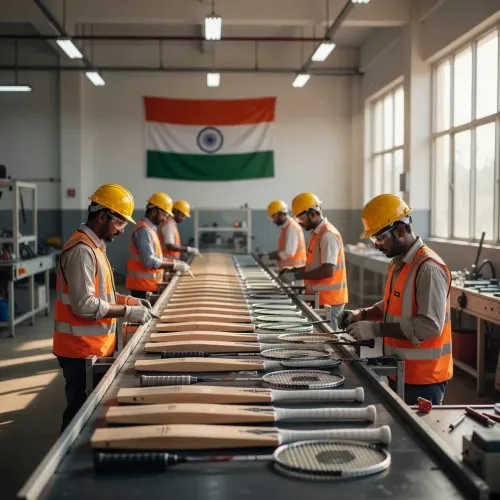
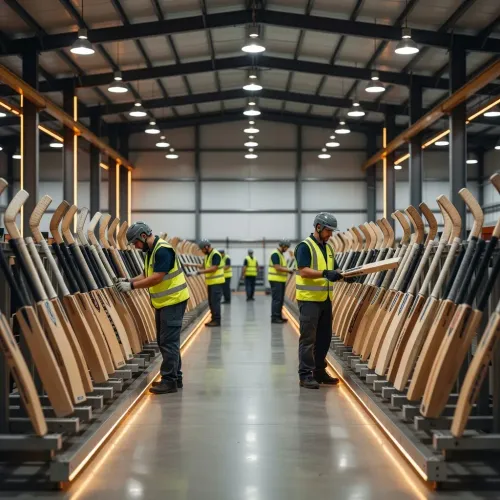
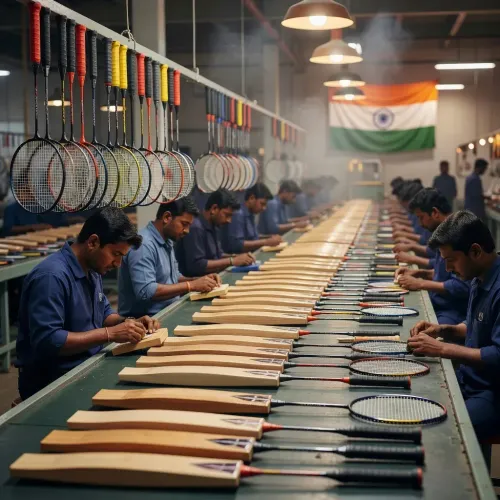
India's sports goods manufacturing has historically been concentrated in two clusters: Meerut in Uttar Pradesh and Jalandhar in Punjab, which together account for the bulk of the country's sports equipment exports. Both clusters are home to thousands of MSME units that supply everything from inflatable balls to professional-grade cricket equipment to international buyers.
The new scheme slots directly into the architecture of Make in India (launched September 2014) and Atmanirbhar Bharat (announced May 2020), which together form the government's sustained push to expand domestic manufacturing beyond traditional heavy industries into specialised, export-ready sectors. Gadkari's post also flags alignment with Khelo Bharat Niti 2025, the overarching sports policy framework, linking industrial output to grassroots athletic development for the first time in a single scheme.
The Khelo India programme itself dates to 2017, when it was launched to develop sports infrastructure and identify talent at the district level. Attaching a manufacturing scheme to that brand signals a deliberate policy pivot: sports development is no longer just about stadiums and academies — it is also about who makes the equipment filling them.
Employment, exports, and the global supply chain play
The scheme's stated goals — employment creation, investment attraction, and positioning India as a 'globally competitive sports goods manufacturing hub' — reflect a pattern visible across other PLI-adjacent initiatives. The logic is consistent: use public outlay to de-risk private investment, upgrade cluster infrastructure, and let export competitiveness follow.
For the tens of thousands of workers in Meerut and Jalandhar stitching footballs or hand-crafting willow blades, the practical test of the scheme will come in its implementation guidelines: which clusters are prioritised, what the technology-upgrade incentives look like, and how skill development programmes are delivered on the ground. Those details are what to watch as the scheme moves from Cabinet approval into execution.
India has the clusters, the craft heritage, and now the policy firepower — the question is whether ₹1,856 crore over seven years can turn a cottage-industry strength into a genuine global export identity.
Point of View
Not parallel silos. For legacy MSME clusters in Meerut and Jalandhar, the seven-year horizon offers stability, but the real test will be in scheme guidelines — whether incentives reach small unit owners or concentrate in larger firms. The ₹1,856.67 crore number also suggests this is a targeted, cluster-specific push rather than a sector-wide subsidy, which could sharpen its impact if implementation is disciplined.
NationPress
28 Oct 2026
Frequently Asked Questions
What is the Khelo India Sports Goods Manufacturing Scheme?
It is a Union Cabinet-approved scheme with an outlay of ₹1,856.67 crore for 2026–2033–34, aimed at boosting investment, technology, exports, and skill development in India's sports goods manufacturing sector, aligned with Make in India and Atmanirbhar Bharat.
How much money has been allocated to the sports goods manufacturing scheme?
The scheme has been allocated ₹1,856.67 crore over the period 2026 to 2033–34 , as approved by the Union Cabinet on 28 October 2026.
Where are India's major sports goods manufacturing clusters?
India's primary sports goods manufacturing clusters are in Meerut (Uttar Pradesh) and Jalandhar (Punjab), which together produce the majority of India's sports equipment for both domestic use and exports.
How does this scheme relate to Make in India and Atmanirbhar Bharat?
The Khelo India Sports Goods Manufacturing Scheme is explicitly aligned with Make in India (launched 2014) and Atmanirbhar Bharat (launched 2020), extending their manufacturing-first, export-oriented logic into the specialised sports goods sector.
What is Khelo Bharat Niti 2025?
Khelo Bharat Niti 2025 is India's overarching national sports policy framework; the new manufacturing scheme is designed to align with it, linking industrial output and export capacity directly to the country's broader sports development goals.