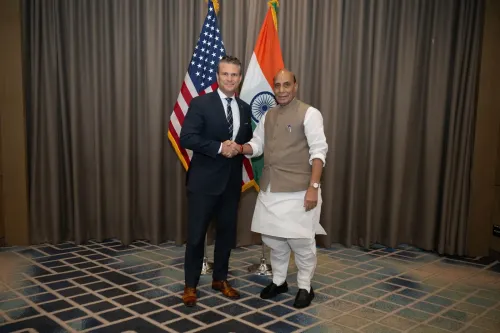
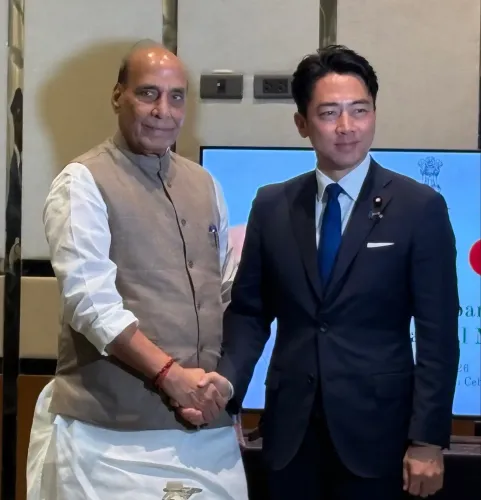
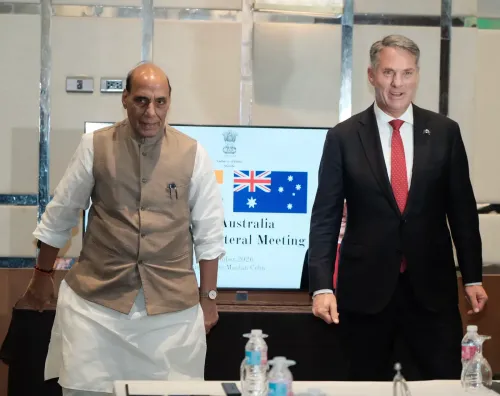
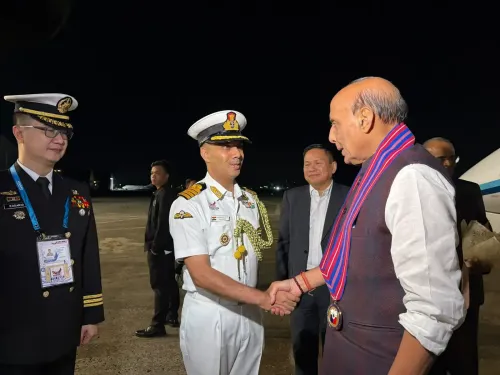
Rajnath Singh meets South Korea's Defence Minister at ADMM-Plus
Synopsis
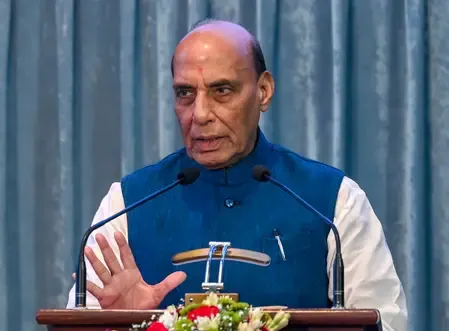
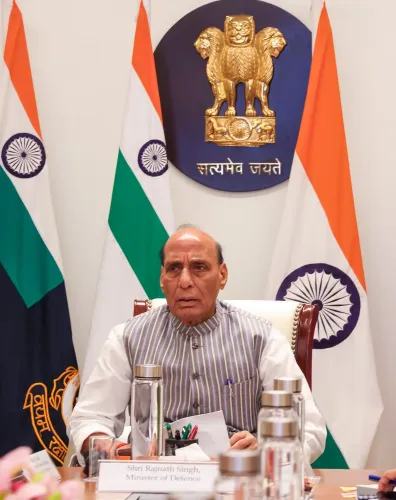
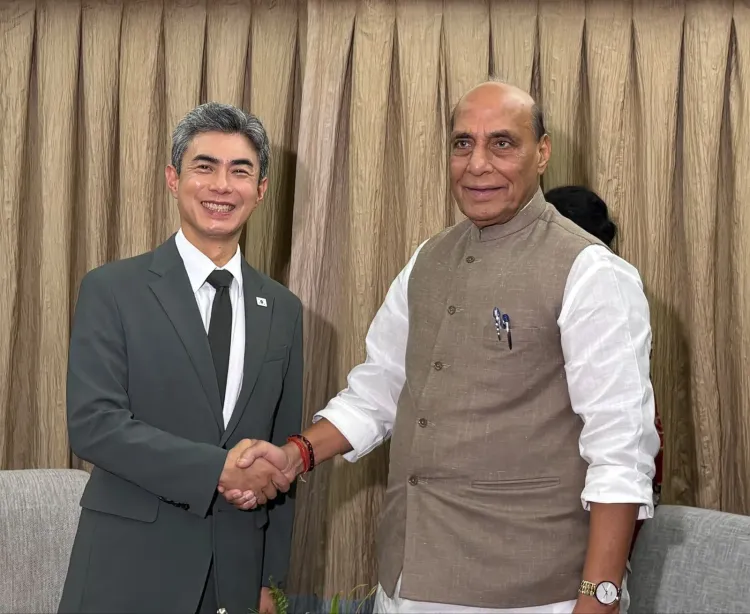
Union Defence Minister Rajnath Singh met South Korean Defence Minister Kang Shin-chul on the sidelines of the 13th ADMM-Plus in Cebu, Philippines, on October 28, 2026, to review bilateral defence cooperation and explore military technology co-development in the Indo-Pacific.
Key Takeaways
Rajnath Singh held a bilateral meeting with South Korean Defence Minister Kang Shin-chul at the 13th ADMM-Plus in Cebu, Philippines on October 28, 2026 .
Both sides reviewed their 'expanding bilateral defence cooperation' and discussed co-development of military technologies.
Strengthening regional security in the Indo-Pacific was a central agenda point of the meeting.
The India-South Korea strategic partnership was established in 2010 and has since included regular defence dialogues and industrial cooperation.
The meeting fits India's broader strategy of deepening bilateral defence ties within multilateral forums under its Act East Policy .
Follow-up joint working group meetings on technology co-development projects are the next milestone to watch.
On the sidelines of a major Indo-Pacific security forum in the Philippines, Union Defence Minister Rajnath Singh sat down with South Korean Minister of National Defense Kang Shin-chul on Wednesday, October 28 — turning a multilateral gathering into a focused bilateral push on military technology and regional security.
What was on the table in Cebu
The meeting took place on the margins of the 13th ASEAN Defence Ministers' Meeting Plus (ADMM-Plus) in Cebu, Philippines — a forum that brings together ASEAN's ten members and eight dialogue partners, including India and South Korea, for high-level security dialogue. Singh described the meeting as 'productive', with both sides reviewing 'expanding bilateral defence cooperation' and discussing 'ways to co-develop military technologies and strengthen regional security in the Indo-Pacific.'
The choice of venue is deliberate and well-worn in defence diplomacy. Multilateral forums like ADMM-Plus give senior ministers the rare chance to hold focused bilateral conversations without the logistics of a formal state visit — compressing weeks of preparation into a single margins meeting that still carries real political weight.
India-South Korea: a strategic partnership with growing defence ambitions
The India-Republic of Korea strategic partnership, formalised in 2010, has quietly deepened across defence dialogue, trade, and industrial cooperation over the past decade and a half. For India, South Korea represents a technologically advanced partner that sits squarely within the strategic logic of New Delhi's Act East Policy — a framework that treats the Indo-Pacific not as a distant theatre but as India's extended strategic neighbourhood.
Both countries have signalled interest in moving beyond buyer-seller defence transactions toward genuine co-development and co-production. That ambition — echoed in Singh's remarks about 'co-developing military technologies' — fits a broader pattern India has pursued with like-minded partners across the region, prioritising industrial partnerships that build domestic defence capability rather than simply adding to an import ledger.
India's Indo-Pacific defence push gathers pace
Singh's Cebu engagement is one of several bilateral defence conversations India has pursued within multilateral frameworks in recent years, reflecting a deliberate strategy of layering bilateral depth onto multilateral breadth. As Indo-Pacific security architectures grow more contested, partnerships anchored in technology-sharing carry outsized long-term value — both for interoperability and for supply-chain resilience in critical defence systems.
The next signal to watch: whether follow-up joint working group meetings on specific technology co-development projects are announced, which would translate Wednesday's conversation into concrete programme-level cooperation.
Point of View
A pivot driven by the 'Make in India' defence doctrine. For South Korea, deepening ties with India offers both a growing export market and a like-minded partner in an increasingly uncertain regional security environment. If working-group-level outcomes follow, this conversation could mark a meaningful step-up in one of Asia's quieter but increasingly consequential bilateral defence relationships.
NationPress
28 Oct 2026
Frequently Asked Questions
Where did Rajnath Singh meet South Korea's Defence Minister?
The meeting took place on the sidelines of the 13th ADMM-Plus in Cebu, Philippines on October 28, 2026 .
What did India and South Korea discuss in their defence meeting?
Both sides reviewed their expanding bilateral defence cooperation and discussed ways to co-develop military technologies and strengthen regional security in the Indo-Pacific .
When was the India-South Korea strategic partnership established?
India and the Republic of Korea established their strategic partnership in 2010 , which has since included regular defence dialogues and industrial cooperation.
What is India's Act East Policy and how does South Korea fit in?
India's Act East Policy treats the Indo-Pacific as its extended strategic neighbourhood, with South Korea identified as a key partner given its advanced defence technology capabilities and shared interest in regional stability.