Rajnath Singh flies to Cebu for 13th ADMM-Plus meet

Synopsis
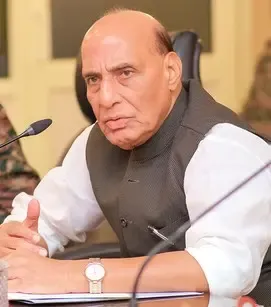
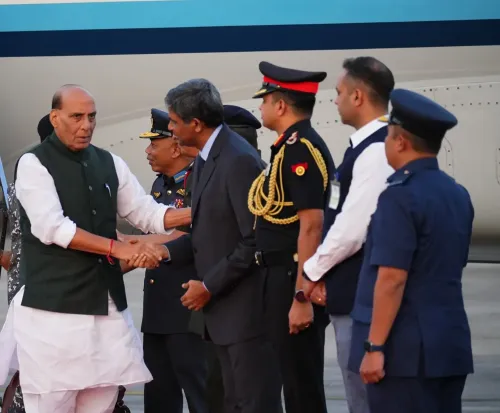
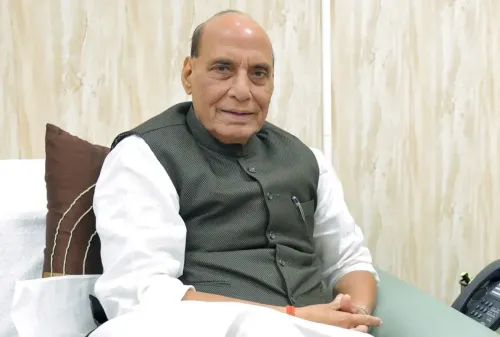
Union Defence Minister Rajnath Singh has departed for Cebu, Philippines, to attend the 13th ADMM-Plus forum, where he will address regional security issues and hold bilateral meetings with counterpart defence ministers from participating nations.
Key Takeaways
Rajnath Singh departed New Delhi on 27 October 2026 for Cebu, Philippines to attend the 13th ADMM-Plus .
The ADMM-Plus , established in 2010 in Hanoi , is the Indo-Pacific's premier multilateral defence dialogue, bringing together 10 ASEAN states and 8 dialogue partners including India.
Singh will address the forum on shared regional and international security issues.
He will hold several bilateral meetings with counterpart defence ministers on the sidelines to review ongoing ties and explore new strategic partnerships.
India's participation is anchored in the Act East Policy , launched in 2014 , which elevated ASEAN engagement as a primary strategic priority.
India has affirmed its commitment to ASEAN centrality as the foundational principle for regional security architecture in the Indo-Pacific.
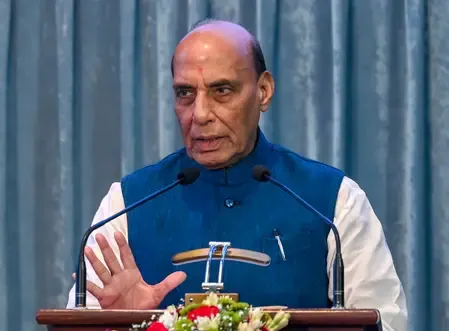
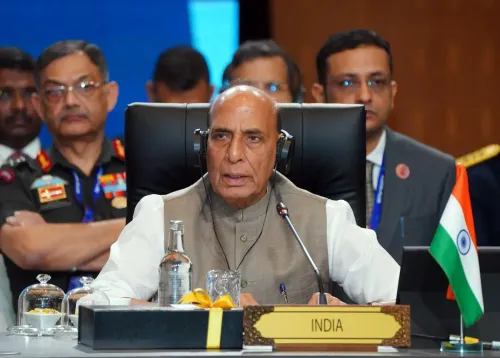
Union Defence Minister Rajnath Singh departed New Delhi on Tuesday, 27 October 2026, bound for Cebu, Philippines, to represent India at the 13th ASEAN Defence Ministers' Meeting Plus (ADMM-Plus) — the region's most consequential multilateral defence dialogue. He will address the forum on shared regional and international security challenges and hold a series of bilateral meetings with counterparts from participating nations.
What the ADMM-Plus actually is — and why it matters now
Established in 2010 in Hanoi, the ADMM-Plus brings together the ten ASEAN member states and eight dialogue partners — including India, the United States, China, Japan, Australia, and Russia — making it the Indo-Pacific's premier forum for defence-level engagement. It is the room where maritime security doctrine, counter-terrorism frameworks, and humanitarian assistance protocols get negotiated not in communiqués alone, but between the officials who actually run defence establishments. Singh's attendance signals that India treats this platform as substantive, not ceremonial.
Act East Policy: from Myanmar declaration to Cebu table
India's presence at the 13th ADMM-Plus is rooted in a deliberate strategic pivot. In 2014, Prime Minister Narendra Modi upgraded India's passive Look East Policy to the more assertive Act East Policy at the ASEAN-India Summit in Myanmar — signalling that Southeast Asia was no longer a peripheral interest but a primary strategic theatre. The shift has since translated into expanded joint military exercises, capacity-building programmes, and defence industrial partnerships with ASEAN nations. Cebu is the latest milestone in that arc.
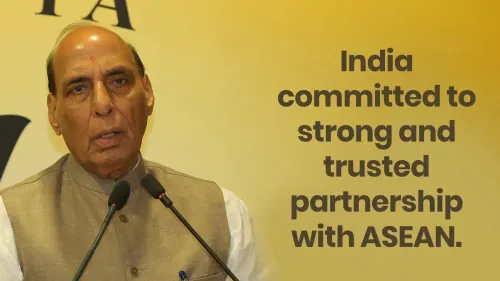
Singh reaffirmed this commitment in his departure statement, writing that 'India is firmly committed to ASEAN centrality and the peace, stability, and collective growth of the Indo-Pacific region under our Act East Policy.' That phrase — ASEAN centrality — carries diplomatic weight: it is India's public acknowledgement that ASEAN-led mechanisms, not any single great-power framework, should anchor regional order. In a multipolar Indo-Pacific increasingly pulled between competing security architectures, that position is neither neutral nor accidental.
Bilateral margins: where the real work happens
Beyond the plenary, Singh will hold several bilateral meetings with counterpart defence ministers from participating nations. These sideline engagements are typically where operational specifics get discussed — from access arrangements and logistics agreements to joint-patrol protocols and defence exports. India has deepened individual defence ties with several ASEAN partners in recent years, and the margins of a forum like the ADMM-Plus compress months of diplomatic groundwork into a single corridor window. Watch for any announcements on defence cooperation agreements or new joint-exercise frameworks in the days following the meeting.
Philippines as host: the geography of the moment
The choice of Cebu as venue is itself a data point. The Philippines sits at the intersection of the South China Sea's most contested maritime corridors, and Manila has in recent years recalibrated its own strategic posture with heightened urgency. Hosting the ADMM-Plus allows the Philippines to set the agenda's regional texture — and for India, engaging a like-minded partner in that geography reinforces the practical content of its Indo-Pacific commitments beyond declaratory policy.
India's defence minister is now in the room. The question is what he brings back from it.
Point of View
Which has progressively shifted from declaratory commitment to institutional engagement over the past decade. The bilateral margins of this forum have historically produced more tangible defence cooperation outputs than the plenary — making the sideline meetings as consequential as the address itself. India's insistence on ASEAN centrality also serves a broader balancing function, anchoring its Indo-Pacific posture within a multilateral framework rather than ceding the narrative to any single bilateral axis. The Cebu visit continues a pattern of India using ASEAN-led platforms to signal both regional reliability and strategic autonomy simultaneously.
NationPress
27 Oct 2026
Frequently Asked Questions
What is the ADMM-Plus and why is India attending?
The ADMM-Plus (ASEAN Defence Ministers' Meeting Plus) is the Indo-Pacific's premier multilateral defence forum, established in 2010, comprising 10 ASEAN states and 8 dialogue partners including India. India attends as a dialogue partner under its Act East Policy to engage on regional security, maritime stability, and defence cooperation.
Where is the 13th ADMM-Plus being held?
The 13th ADMM-Plus is being held in Cebu, Philippines.
What will Rajnath Singh do at the 13th ADMM-Plus?
Rajnath Singh will address the forum on shared regional and international security issues, and hold several bilateral meetings with counterpart defence ministers from participating nations to review defence ties and explore new strategic partnerships.
What is India's Act East Policy?
The Act East Policy is India's strategic framework, launched in 2014 at the ASEAN-India Summit in Myanmar, to deepen economic, strategic, and defence ties with Southeast Asian nations. It upgraded the earlier Look East Policy to a more active engagement posture.
What is ASEAN centrality and why does India support it?
ASEAN centrality is the principle that ASEAN-led multilateral mechanisms should remain the primary institutional anchor for regional security and cooperation in Asia. India's support signals that it favours inclusive, ASEAN-driven frameworks over great-power-dominated security architectures in the Indo-Pacific.