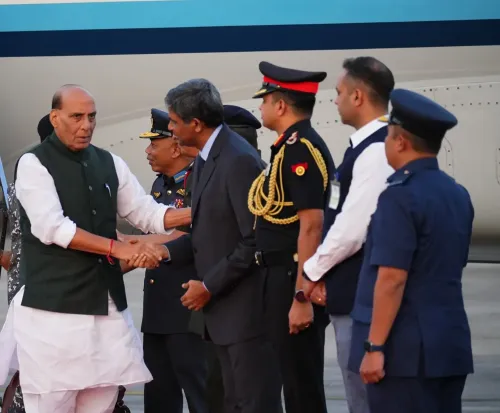
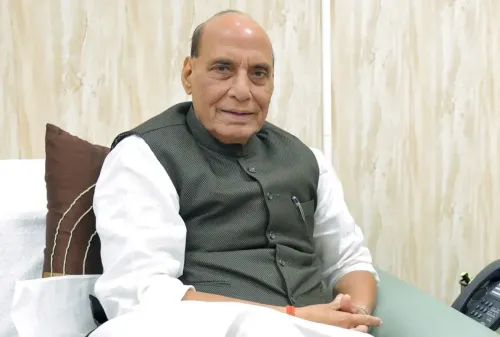
Rajnath Singh to lead India at 13th ADMM-Plus in Philippines' Cebu
Synopsis
Defence Minister Rajnath Singh heads to Cebu this week for the 13th ADMM-Plus — the highest defence forum in ASEAN — where India co-chairs the Counter-Terrorism working group and its naval ships have already docked at Subic Bay. The visit signals that India's Act East Policy is moving from rhetoric to regular operational engagement across the Indo-Pacific.
Key Takeaways
Rajnath Singh will lead India's delegation at the 13th ADMM-Plus in Cebu, Philippines , on 28–29 October 2026 .
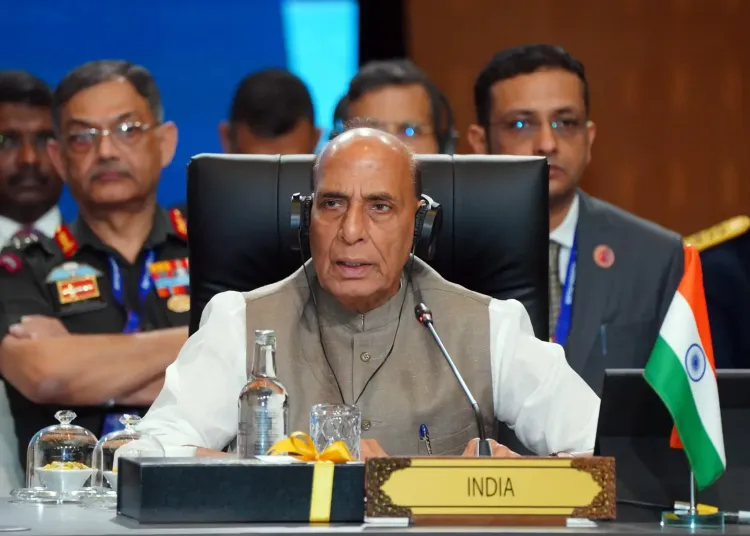
Singh will address the forum on 'Exchange of Views on Regional and International Security Issues' and hold bilateral talks with counterparts on the sidelines.
India is co-chairing the Experts Working Group on Counter-Terrorism with Malaysia for the 2024–2027 cycle under ADMM-Plus.
Indian Naval Ships Sahyadri and Kulish recently arrived at Subic Bay for the ADMM-Plus Joint Cooperation Activity (JCA).
The visit is anchored in India's Act East Policy and the MAHASAGAR doctrine of multilateral maritime security cooperation.
The Philippines chairs ADMM-Plus for 2026 ; India has been an ASEAN Dialogue Partner since 1992 .
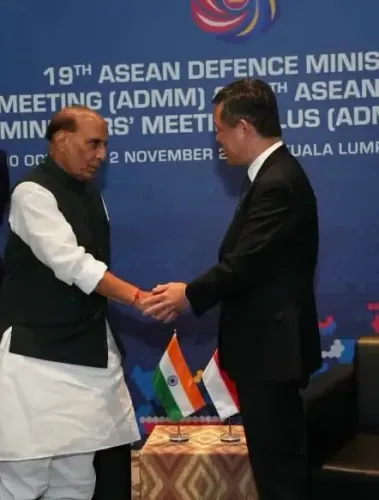
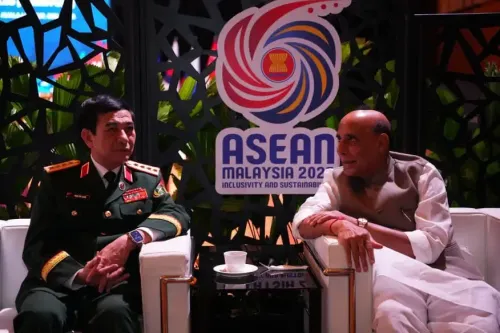
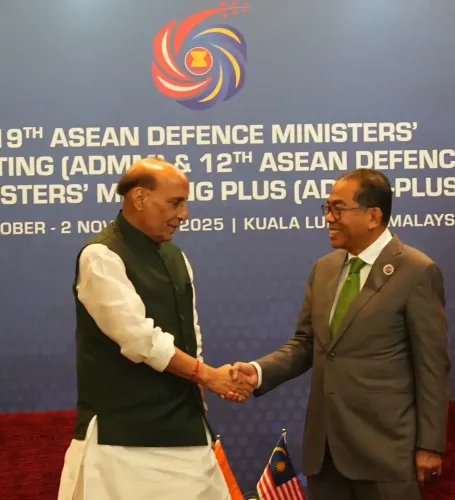
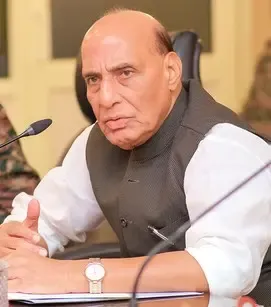
Defence Minister Rajnath Singh will lead the Indian delegation at the 13th ASEAN Defence Ministers' Meeting (ADMM)-Plus in Cebu, Philippines, from 28–29 October 2026, the Ministry of Defence confirmed on Monday. Singh is expected to address the forum on 'Exchange of Views on Regional and International Security Issues' and hold bilateral talks with counterparts from participating nations on the sidelines.
Agenda and Key Engagements
At the meeting, Rajnath Singh will review existing defence ties with member and dialogue-partner nations while exploring avenues to deepen strategic partnerships. The visit comes as the Philippines holds the chair of ADMM-Plus for 2026, lending added weight to India's engagement with Manila at this edition.
Beyond the plenary, Singh's bilateral meetings on the sidelines are expected to reinforce India's positioning as a reliable security partner across the Indo-Pacific — a message consistent with the government's Act East Policy.
What the ADMM-Plus Is
The ADMM-Plus is widely regarded as the highest defence consultative and cooperative mechanism in ASEAN. It brings together the 10 ASEAN member states — Brunei, Cambodia, Indonesia, Lao PDR, Malaysia, Myanmar, Philippines, Singapore, Thailand, Timor Leste and Vietnam — and eight Dialogue Partners: India, the United States, China, Russia, Japan, South Korea, Australia and New Zealand.
India became an ASEAN dialogue partner in 1992. The first ADMM-Plus ministerial was held in Hanoi, Vietnam, in 2010. Since 2017, the format has shifted to annual ministerial-level meetings to accelerate defence cooperation among the grouping's members.
India's Role Within the Framework
Under the current ADMM-Plus cycle, India is co-chairing the Experts Working Group on Counter-Terrorism with Malaysia for the period 2024–2027 — a role that underlines New Delhi's growing operational stake in regional security architecture.
This comes amid a broader deepening of India's defence diplomacy in Southeast Asia. Last month, Indian Naval Ships Sahyadri and Kulish arrived at Subic Bay in the Philippines to participate in the ADMM-Plus Joint Cooperation Activity (JCA), an exercise designed to enhance maritime interoperability among ASEAN member states and Dialogue Partners.
MAHASAGAR and the Act East Vision
The naval deployment and Singh's upcoming visit are both framed under India's MAHASAGAR (Mutual and Holistic Advancement for Security and Growth Across Regions) doctrine, which positions New Delhi as a net security provider across the wider maritime region. The Ministry of Defence described the engagements as reflecting India's 'continued commitment to multilateral maritime cooperation and constructive engagement with regional partners.'
With tensions in the South China Sea remaining elevated and ASEAN nations actively seeking diversified security partnerships, India's presence at Cebu carries significance beyond the routine. Singh's meetings and the positions India stakes out at the forum will be watched closely by both regional capitals and major powers present at the table.
Point of View
Every bilateral India secures on the sidelines in Cebu is also a quiet contest for influence in a region that most ASEAN capitals want to keep multi-polar. Singh's agenda will matter less for what is said in the hall than for the bilateral signals sent in the corridors.
NationPress
26 Oct 2026
Frequently Asked Questions
What is the ADMM-Plus and why does it matter for India?
The ADMM-Plus is the highest defence consultative mechanism in ASEAN, bringing together the 10 ASEAN member states and eight Dialogue Partners — including India, the US, China, Russia, Japan, South Korea, Australia and New Zealand. For India, it is a key multilateral platform to advance its Act East Policy and deepen strategic partnerships across the Indo-Pacific.
When and where is the 13th ADMM-Plus being held?
The 13th ADMM-Plus will be held in Cebu, Philippines, on 28–29 October 2026. The Philippines is the chair of ADMM-Plus for 2026.
What will Rajnath Singh do at the ADMM-Plus meeting?
Singh will address the forum on 'Exchange of Views on Regional and International Security Issues,' review existing defence ties, and hold bilateral meetings with counterparts on the sidelines. He will also explore ways to further strengthen India's strategic partnerships with participating nations.
What role does India currently play within the ADMM-Plus framework?
India is co-chairing the Experts Working Group on Counter-Terrorism with Malaysia for the 2024–2027 cycle. Indian naval ships also recently participated in the ADMM-Plus Joint Cooperation Activity at Subic Bay in the Philippines.
What is India's MAHASAGAR doctrine and how does it connect to this visit?
MAHASAGAR stands for Mutual and Holistic Advancement for Security and Growth Across Regions — India's framework for positioning itself as a net security provider in the wider maritime region. The Ministry of Defence has cited it as the guiding vision behind both the naval deployment to Subic Bay and Singh's participation in the Cebu forum.