Rajnath Singh begins Vietnam-South Korea tour to boost Indo-Pacific defence ties
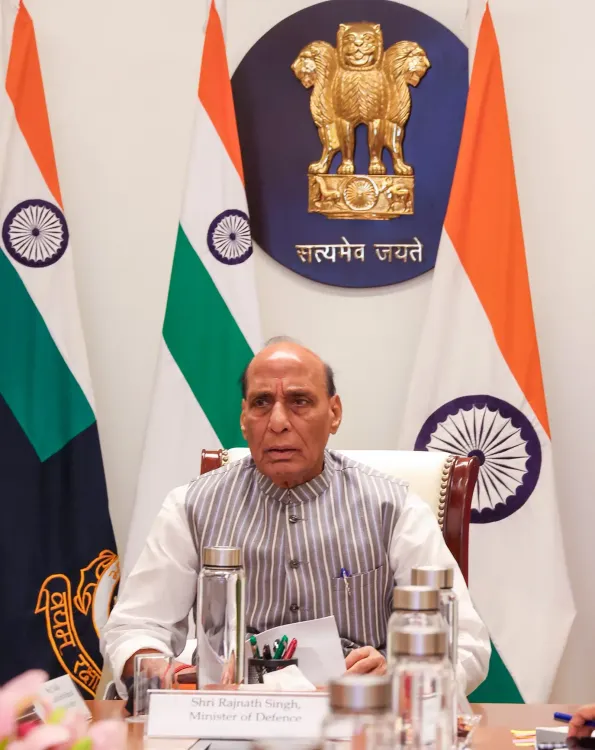
Synopsis
Rajnath Singh's two-nation tour to Vietnam and South Korea is more than a diplomatic routine — it is India's most concentrated Indo-Pacific defence push in months. Coming days after Vietnam's president upgraded bilateral ties to an Enhanced Comprehensive Strategic Partnership and joined the Indo-Pacific Oceans Initiative, this visit signals that New Delhi is systematically building a maritime security coalition across Southeast and Northeast Asia.
Key Takeaways
Defence Minister Rajnath Singh departed for Vietnam and South Korea on 18 May to advance Indo-Pacific defence ties.
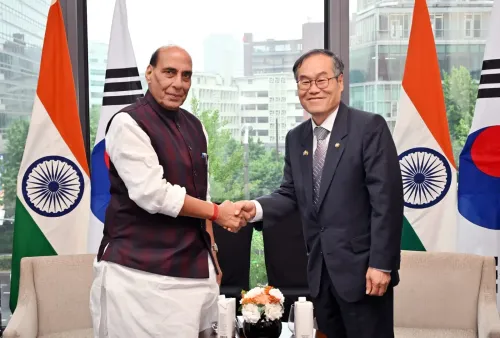
Talks in Hanoi focus on military cooperation and defence industrial partnerships; Seoul discussions centre on bilateral defence ties.
On 6 May , Singh met Vietnam's Defence Minister Gen Phan Van Giang in New Delhi to strengthen bilateral defence cooperation.
Vietnamese President To Lam visited India earlier in May; ties were upgraded to an Enhanced Comprehensive Strategic Partnership .
India and Vietnam set a bilateral trade target of USD 25 billion by 2030 ; Vietnam joined the Indo-Pacific Oceans Initiative (IPOI) .
Defence Minister Rajnath Singh departed for a two-nation visit to Vietnam and South Korea on 18 May, with the tour centred on deepening strategic military cooperation, advancing defence industrial partnerships, and reinforcing maritime security collaboration across the Indo-Pacific region. The visit marks one of India's most substantive defence engagements in Southeast and Northeast Asia this year.
Key Objectives of the Tour
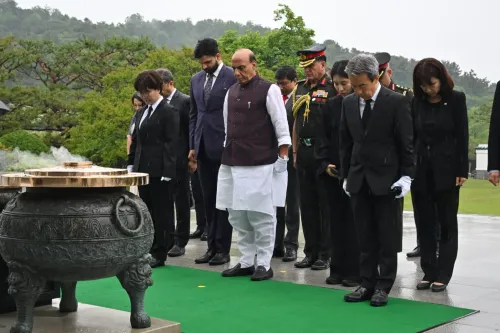
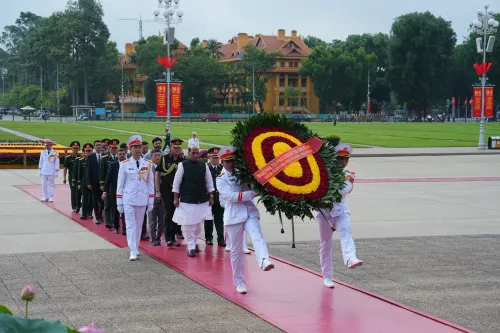
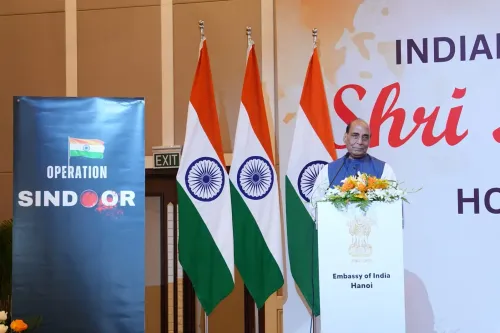
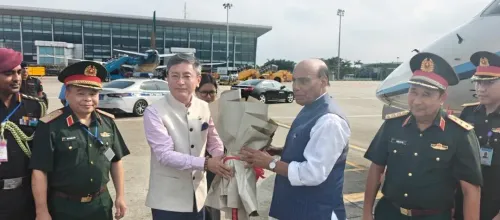
Singh arrived in Hanoi on Monday as the first leg of the trip, where talks are focused on expanding military-to-military ties and defence industrial collaboration with Vietnam. He is subsequently scheduled to travel to South Korea to discuss bilateral defence ties and strategic cooperation. In a post on X, Singh stated, 'Today, 18th May, I shall be reaching Hanoi. Looking forward to visiting Vietnam and South Korea this week to further expand the scope of our engagement.' He added that he would 'focus on deepening strategic military cooperation, strengthening defence industrial partnerships, and boosting maritime collaboration, promoting peace and stability in the Indo-Pacific region.'
India-Vietnam: A Partnership Gaining Momentum
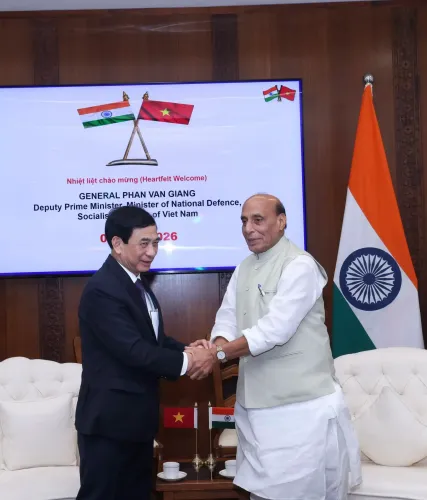
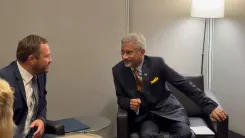
The visit builds on a flurry of recent high-level engagement between New Delhi and Hanoi. On 6 May, Singh had held talks in New Delhi with Vietnam's Deputy Prime Minister and Defence Minister Gen Phan Van Giang, with discussions aimed at injecting fresh momentum into bilateral defence cooperation. Singh described the meeting as 'excellent' and noted that 'the recent developments reflect the positive momentum in our engagement.'
Days earlier, Vietnamese President To Lam visited India and met Prime Minister Narendra Modi. The two leaders agreed to elevate bilateral ties to an Enhanced Comprehensive Strategic Partnership — a significant diplomatic upgrade. They set a target to expand bilateral trade to USD 25 billion by 2030, and Vietnam formally joined the Indo-Pacific Oceans Initiative (IPOI). Their talks spanned defence and security, trade and investment, science and technology, development partnership, maritime cooperation, critical and rare earth minerals, space, renewable energy, and atomic energy.
Why the Indo-Pacific Angle Matters
India's intensified outreach to Vietnam and South Korea is consistent with its broader strategic posture in the Indo-Pacific — a region where maritime security, supply chain resilience, and defence industrial cooperation have become interlinked priorities. Vietnam, which shares the South China Sea with several competing claimants, is a natural partner for India's maritime security agenda. South Korea, meanwhile, represents a significant defence manufacturing ecosystem with which India has been exploring co-production opportunities. Notably, this tour follows a period of elevated diplomatic activity, suggesting New Delhi is actively consolidating its Indo-Pacific partnerships ahead of potential regional inflection points.
What Comes Next
The outcomes of Singh's meetings in Hanoi and Seoul are expected to feed into formal defence cooperation frameworks and potentially accelerate joint production proposals. Industry observers will watch for any announcements on defence supply agreements or maritime domain awareness initiatives. The visit reinforces India's intent to position itself as a credible security partner across the Indo-Pacific arc.
Point of View
Then receiving its president, and now flying to Hanoi — suggests a deliberate sequencing rather than coincidence. India is not merely deepening ties with Vietnam; it is anchoring Vietnam into a broader Indo-Pacific framework through IPOI membership and an Enhanced Comprehensive Strategic Partnership. The South Korea leg adds a defence-industrial dimension that could eventually translate into co-production deals. What mainstream coverage underplays is the cumulative signalling: India is building a layered network of maritime partners at a pace that outstrips formal alliance structures, betting that partnerships-without-alliances can deliver strategic depth without the political cost of formal commitments.
NationPress
25 Sept 2026
Frequently Asked Questions
Where is Rajnath Singh visiting and why?
Defence Minister Rajnath Singh is on a two-nation visit to Vietnam and South Korea beginning 18 May 2025. The tour aims to deepen strategic military cooperation, strengthen defence industrial partnerships, and boost maritime security collaboration in the Indo-Pacific region.
What was agreed during Vietnamese President To Lam's visit to India?
During President To Lam's visit, India and Vietnam agreed to elevate their bilateral ties to an Enhanced Comprehensive Strategic Partnership. The two sides set a bilateral trade target of USD 25 billion by 2030, and Vietnam formally joined the Indo-Pacific Oceans Initiative (IPOI).
What did Rajnath Singh and Gen Phan Van Giang discuss on 6 May?
Singh met Vietnam's Deputy Prime Minister and Defence Minister Gen Phan Van Giang in New Delhi on 6 May 2025. Their talks focused on adding momentum to bilateral defence cooperation, with Singh expressing India's readiness to deepen the strategic partnership further.
Why is Vietnam a strategic priority for India's Indo-Pacific policy?
Vietnam is a key maritime partner for India given its position in the South China Sea and shared interest in regional stability. The recent upgrade to an Enhanced Comprehensive Strategic Partnership and Vietnam's entry into the Indo-Pacific Oceans Initiative reflect the growing alignment between the two countries on maritime security.
What is the significance of the South Korea leg of Singh's tour?
South Korea represents an important defence manufacturing partner for India, with potential for co-production and technology-sharing arrangements. The bilateral defence discussions in Seoul are expected to explore ways to deepen India-South Korea cooperation within the broader Indo-Pacific security framework.